A China security analyst and Tokyo urban researcher whose working life also includes voluntary communities, Jewish cultural association and evacuation advocacy.
Joe McReynolds works in two fields that ordinarily produce quite different careers. He is a China security specialist, with a long record of research on information warfare, military organization and technology industries. He is also a researcher affiliated with Jorge Almazán’s laboratory at Keio University, a coauthor and research editor of Emergent Tokyo, and a writer on what other cities might learn from Tokyo. In a May 2026 interview he described dividing his life between Washington and Tokyo and continuing doctoral study at Keio. The public record supports both careers; a completed doctorate is not among the credentials established here.1, 2, 3, 4, 5, 6
His preparation included language study, Georgetown training, and periods living and studying in both Japan and China. A 2019 visiting fellowship with Japan’s Ministry of Defense then made a prolonged Tokyo stay possible, during which he contacted Almazán and entered a research collaboration. The second career grew alongside an existing profession, with a different institutional home.7, 8, 9, 10
His own website gives substantial space to other parts of his life: helping organize Ephemerisle, a temporary floating gathering in California; administering a Jewish online community; and Afghan evacuation work, which he presents through the Jewish obligation of tikkun olam, or repairing the world. Contemporary reporting and public records corroborate portions of these accounts. Their responsibilities differ from those of a researcher, and they deserve room in the portrait without being made illustrations of one overarching theory.11, 12, 13, 14, 15
The evidence is fuller about his writing, collaborators and public appearances than about family background or private circumstances. It nevertheless allows a detailed account of how languages became professional skills, how different employers and institutions supported his work, and how a second research life developed beside the first. It also shows occasions when his judgment was questioned—in a courtroom, through book criticism, and in a trade hearing—alongside the more familiar invitations to explain his expertise.
Before 2010: Japanese study, Georgetown, and a question about surveillance
McReynolds’s first publicly described route toward East Asia began with Japanese classes at a California public high school. In a May 2026 interview, he recalled studying abroad in Japan and later spending roughly a decade in Washington doing national-security work focused on China while continuing to collect Japanese books about cities. This is retrospective testimony. It establishes a sustained linguistic interest and the overlap of the two pursuits; it does not supply an exact school, a complete family history, or a year when one interest displaced another.16
Professional biographies identify him as a graduate of Georgetown University’s School of Foreign Service and its graduate Security Studies program, able to read and speak Chinese and Japanese, with periods of living and studying in Nagoya, Guilin, and Beijing. These places locate the formation within both countries rather than explaining Japanese urbanism as a later hobby acquired without preparation. The publicly available biographies do not date every stay or explain how they were financed. A description of the sequence should therefore preserve what is known—degrees, languages, and cities—without attaching invented summers, mentors, or scholarship histories.17, 18
One dated incident places him in a research conversation by April 2010. At the Brookings Institution’s “Censors and Hackers” event on Internet control in China, McReynolds introduced himself as a graduate of Georgetown’s Security Studies program. He said he had recently lived in Chinese cities and asked James Mulvenon about surveillance as bandwidth-intensive voice and video communication spread. The question concerned the practical ability and cost of monitoring changing forms of communication, rather than an abstract assertion that censorship was total or ineffective. The transcript records a young analyst trying to connect observations of a country to the technological and institutional mechanics of control.19
The transcript does not establish how McReynolds first met Mulvenon. It records his participation in Washington’s public research world before their later joint publications. The subsequent relationship is visible in work, rather than in a documented personal mentor story: they would write together on digital infrastructure, military informatization and industrial dependence.20, 21, 22, 23
His language training put both Chinese and Japanese sources within reach. Chinese became central to his paid security work, while Japanese reading continued alongside it. That overlap is important to the later Tokyo transition: he did not need to begin acquiring a second language after deciding to enter urban research. The sources do not establish his exact study routine or the date at which his urban collection began.24, 25, 26
Georgetown also supplied a credential through which research could become employable. Security studies offered an institutional vocabulary for strategic problems; living and studying abroad supplied linguistic and observational resources; Washington supplied audiences that paid attention to technological and military change. Those conjunctions are a firmer explanation of his early career than speculation about a childhood fascination with spies. The publicly documented profession is open-source analysis, with later testimony explicitly describing research from unclassified materials. No evidence here warrants presenting him as a clandestine operative.27
2013–2014: working at Defense Group Inc.
By 2013 McReynolds was part of Defense Group Inc.’s research environment. The U.S.–China Economic and Security Review Commission’s September 5 release of Red Cloud Rising identifies him alongside Mulvenon, Leigh Ann Ragland, and Matthew Southerland. The report examined China’s cloud-computing ecosystem, including commercial development, policy, security regulation, and possible relationships with state security bodies. Its publication through a congressionally established commission gave contractor research a public policy audience. The commission’s release expressly distinguished publication from institutional endorsement.28
A report of this kind is made through distributed work. Some people can read the relevant language; others can reconstruct a sector, evaluate a technical assertion, relate a company to policy, or make the conclusions legible to commissioners and public readers. A coauthored title indicates collective production, but does not reveal an exact allocation of chapters or hours. In McReynolds’s case, the repeated relationships with Mulvenon and Ragland show an analyst developing within teams rather than first establishing a solitary academic oeuvre.29, 30
The object of research also differed from the simple image of “Chinese hackers.” A cloud industry is a conjunction of companies, infrastructure, rules, customers, technical vulnerabilities, and state demands. The report’s warnings involved that conjunction; they did not make every cloud service intrinsically malign because it was Chinese. This distinction is important in reconstructing a career later associated with stronger U.S. scrutiny of technology supply chains. The concrete practice is to assemble connections among actors and systems, while the argumentative responsibility is to specify which connection creates which risk.31
A January 2014 research brief on the People’s Liberation Army’s Integrated Command Platform provides a clearer view of institutional and technical process. McReynolds coauthored it with Kevin Pollpeter, Eric Anderson, Ragland, and Gary Lee Thomas for the University of California, San Diego’s Study of Innovation and Technology in China project. It appeared in a research setting supported by the U.S. Army’s Minerva program, with the usual distinction between authors’ arguments and government views. Its account follows requirements, development, integration, and use, including the participation of military and technical experts and testing units.32
The subject illustrates the analyst’s task at a manageable scale. An “integrated” military system does not arrive simply because a government wants information superiority. It must connect requirements with equipment, users, and organizations. The brief examines successive stages and the tension between incorporating existing resources and creating a new architecture. To study that process, an analyst needs to distinguish a declared objective from a development milestone, deployment from effective use, and technical integration from institutional cooperation. These are the distinctions that keep a national-security profile from turning into a catalogue of threatening technologies.33
These publications gave McReynolds different working audiences: a university project for the command-platform brief and a congressional commission for the cloud report. He remained one contributor among named colleagues, developing a record that could be used in subsequent invitations and professional biographies. Publication through those channels did not itself give him a government position.34, 35
In April 2014, the National Bureau of Asian Research held a discussion of Assessing the People’s Liberation Army in the Hu Jintao Era. McReynolds appeared as a Defense Group Inc. speaker; the book’s bibliographic record identifies his chapter with Mulvenon on informatization. The event joined NBR, the U.S. Army War College’s Strategic Studies Institute, and the U.S. Pacific Command’s research world, with Representative Rick Larsen delivering the keynote. The evidence establishes a place in a professional conversation about the Hu years, not that McReynolds set U.S. policy or enjoyed the authority of all the organizations present.36, 37
This was an apprenticeship through publication and institutional adjacency. Repeated work on cloud computing, command systems, and informatization moved from industries and networks to the military’s organizational capacity. It also trained a particular form of authorship: write a contribution that fits a larger assessment while maintaining enough specificity to survive scrutiny by specialists in neighboring fields. That capacity would matter when he later edited a volume whose contributors covered different armed services and domains.38, 39
2015–2017: doctrinal interpretation and editorial responsibility
McReynolds’s 2015 essay on Chinese network warfare shows how he selected evidence. He treated the Academy of Military Science’s 2013 Science of Military Strategy as more informative about institutional thinking than isolated hawkish remarks by individual officers. A collectively produced professional text had a different evidentiary status from a provocative statement. His analysis examined distinctions among military forces, authorized civilian forces, and other actors, and considered the bureaucratic significance of those distinctions.40
Its most useful feature for a career study is the qualification built into the method. A military’s own strategic text is evidence of how it describes priorities and organizational claims. It is not a transparent inventory of all actual operational capability, nor proof that every declared ambition can be implemented. McReynolds considered some passages as possible attempts to stake an institutional claim. That is an inference, and the essay marked it as such. The practice therefore involved reading not only for technical content but also for the politics of authorship and jurisdiction.41
The essay shows McReynolds handling the text as an institutional document, weighing who produced it and what claims its distinctions might serve. That is a specific part of his analyst’s work. It also helps explain why an organizational interpretation can remain qualified even when the language of a source is readily translated.42
The 2015 Oxford collection China and Cybersecurity: Espionage, Strategy, and Politics in the Digital Domain, edited by Jon R. Lindsay, Tai Ming Cheung, and Derek Reveron, included a chapter by Robert Sheldon and McReynolds on civil-military integration and Chinese information-warfare militias. The contents establish the subject and collaboration. The chapter’s complete text was not available for close reading in this research pass, so no detailed findings are attributed to it here. Its bibliographic position nevertheless shows McReynolds working within an academic collection that sought to disaggregate Chinese cyber activity rather than present one unified actor.43
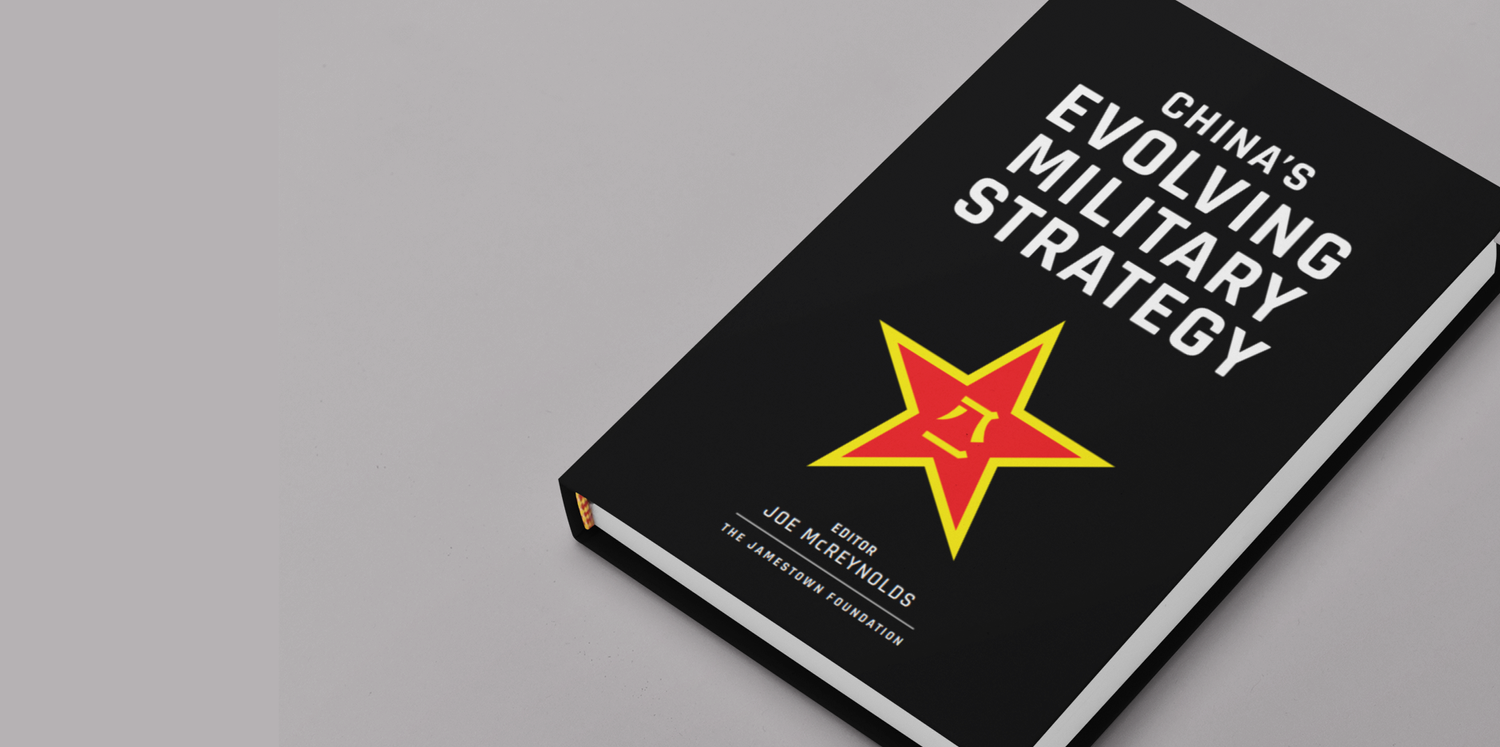
His next book expanded the responsibilities of authorship. China’s Evolving Military Strategy identifies him as editor, with the Jamestown volume appearing in 2016 and wider distribution in 2017. Its chapters compare the strategic views of different services and functional communities. Contributors include M. Taylor Fravel, Timothy Heath, Cristina Garafola, Andrew Erickson, Michael Chase, John Costello, Peter Mattis, Kevin Pollpeter, Jonathan Ray, Dennis Blasko, Morgan Clemens, and Daniel Alderman. McReynolds wrote the substantial network-warfare chapter as well as helping to organize the whole.44, 45
Editing a volume changes the practitioner’s problem. A chapter can develop one interpretation; a book must allow interpretations to be compared. Common sources, overlapping terminology, different service histories, and competing judgments need enough consistency that a reader can see where disagreements matter. The public contents do not expose his correspondence, revision schedule, or negotiations with contributors. They do demonstrate a shift from joining an existing research team to carrying responsibility for a multi-author explanatory object.
The project also positioned him among researchers with differing institutional homes. Specialists at universities, military educational organizations, policy institutes, and private firms could contribute to the same volume without becoming identical kinds of expert. A durable network in this setting depends partly on the ability to bring these specializations together. The editor’s contribution lies in making readers aware of service-specific questions and evidence rather than allowing the aggregate label “China’s strategy” to conceal every difference.46
Published commentary about the book came through that network as well. Erickson’s discussion situates it in the contemporary China-defense conference circuit. This is evidence of professional circulation and colleagues’ endorsement, but it is not an independent measure of operational influence. The volume’s availability in English, and subsequent Japanese-language circulation, made it usable beyond a narrow U.S. audience. Its usefulness is better described through the material it organized than through unverifiable claims that it changed decision-makers’ minds.47
The dates deserve care. Different catalogues attach 2016 or 2017 to China’s Evolving Military Strategy because publication and distribution records differ. Those dates should be explained rather than “resolved” by declaring all contrary records erroneous. Likewise, China’s Information Warfare appears repeatedly in later biographies as forthcoming. An announced book is part of his planned work, but the accessible sources do not establish a completed publication by October 2026. Treating every “forthcoming” title as a published achievement would make this career look tidier at the expense of truth.48, 49
The image could not be loaded. View the original using the source link below.
2017–2018: tracing a reorganization without privileged access
A particularly revealing collaboration developed with John Costello. Their China’s Strategic Support Force: A Force for a New Era appeared in October 2018 through the National Defense University, following a 2017 Taipei conference paper. It investigated the organization of information-related capabilities. Contributor biographies identify McReynolds by this period as a principal cyber analyst at SOS International.50, 51
The report’s methods make its findings assessable. Costello and McReynolds compared tenders, contracts, and publications, tracking addresses, personnel, telephone numbers, and unit identifiers across organizational changes. They explicitly identified an assumption that some operational responsibilities continued when units moved. That assumption was part of the reconstruction rather than secretly treated as direct observation.52
This is a concrete form of open-source research. Its difficulty is not simply finding a spectacular leaked document. It lies in recognizing that mundane administrative traces may become meaningful when combined. A phone number is not strategy. But a repeated identifier can help establish continuity, which then permits a more cautious interpretation of what a reform has actually reorganized. Language ability makes documents accessible; patient comparison makes them evidentially useful; explicit assumptions keep the reconstruction open to revision.
The report also has a visible production network: specialist review, Phillip Saunders’s editorial guidance, and language and reference assistance. Costello and McReynolds were associated with the China Cyber and Intelligence Studies Institute. The document joined primary-source collection to collaboration and a military-university publishing channel.53, 54
McReynolds’s work was becoming recognizable through this intersection of a specialist employer, a foundation fellowship, an independent research initiative, and a government educational publication. Those titles should not be collapsed into a single permanent job. Each could provide a different resource: paid analytic work, an outlet for commentary, a collaboration platform, or a venue for a longer report. Public biographies capture some of that arrangement, but not the contracts or exact allocation of his time.
The institutional interpretation remained qualified. Describing an organization is not equivalent to demonstrating flawless integration or field performance. The report discussed command challenges. More generally, any assessment belongs to the moment that its sources can establish. Later changes do not invalidate the attempt to understand that moment, but a 2018 report should not be presented as a current map of a military in 2026.55
During the 2010s: Ephemerisle and a Jewish online community
His professional specialization was only one setting in which McReynolds worked with organization. His website describes long involvement in Ephemerisle, a temporary floating gathering in California’s Sacramento–San Joaquin Delta, including captaining a large island and developing an enthusiastic-consent policy. These are self-reported roles. The gathering’s archived public description establishes its decentralized structure: people assemble boats and platforms, organize distinct islands, and make participation depend on arrangements among island captains and visitors rather than a single ticketing authority.56, 57
In the February 2023 Charter Cities interview, he described using a written consent policy and wristbands to confirm that island visitors had read it. Other islands relied more on people already knowing one another. He presented the arrangement as a choice among communities with different rules. The public account records a procedure, without independently demonstrating its enforcement or outcomes.58
McReynolds’s role should also be placed within the event’s history. Ephemerisle grew out of seasteading interests, but his later account describes a mixture of artists, technologists, people living on boats, and governance experimenters. The public archive describes multiple communities rather than a city he founded and controlled. The exact beginning of his captaincy and every successive island size cannot be independently dated from the available record. This profile therefore does not supply a spurious annual chronology of command.59, 60
Another form of association operated through a digital platform. In July 2018, Moment reported on the closed Facebook group “sounds goyish but ok,” identifying McReynolds as a cofounder and administrator. The article recorded nearly 11,750 members at that time. His account emphasized shared peoplehood without requiring religious observance. The reporter also noted that he neither posted nor particularly liked memes. The distinction is revealing: he was describing a place for recognition and release, rather than identifying himself chiefly with its conspicuous medium. The membership figure belongs to that date, not 2026.61
The reporting distinguishes his administrative role from the group’s most visible activity. Members circulated jokes, while McReynolds described shared peoplehood without insisting on religious observance. The article does not furnish his complete moderation history. It places Jewish cultural association in his life as an undertaking with other people, rather than as a biographical label inferred from a name.62
Ephemerisle and the Facebook group occupied very different parts of his life. One required temporary physical co-presence on boats and platforms; the other offered recurring cultural association online. His later Tokyo interests included places where people with unusual or particular interests could meet regularly in person. That resemblance is worth observing, but the available accounts do not establish that either community caused him to pursue urban research.63, 64
His Jewish identification also appears in a separate public account of civic responsibility. Under “Tikkun Olam,” he frames activity through the obligation to repair the world, and names both Afghan evacuation work and his commitment to the Xinjiang Initiative. The wording explains how he chose to present the relation between identity and action. It should not be expanded into a comprehensive theology, a statement about all his political views, or an inference from everyone he follows online.65, 66
By the end of the decade, then, McReynolds had several practical repertoires: interpreting foreign-language institutions; producing and editing research for specialists; participating in temporary physical communities; administering an online cultural group; and retaining questions about how urban space enables unusual forms of life. The next transition did not erase those repertoires. It gave one of them a new institutional home.
2019: a defense fellowship creates a second research life
The decisive urban turn was possible partly because of the career already built in national security. McReynolds retrospectively credited friendships with Japanese security researchers for the 2019 visiting fellowship with Japan’s Ministry of Defense. The fellowship supplied a year in Japan, during which he entered the Almazán laboratory’s research world. The account leaves the full financial and administrative arrangements unrecorded.67, 68
The choice was a practical wager rather than an automatic promotion. His own urban account describes a sustained source collection, and the later Rubin interview places urban reading alongside the Washington profession.69, 70 That prior activity makes the year intelligible as an opportunity to test a question. Oskow’s interview dates his laboratory entry to August 2019.71 The institutional opening could now connect reading with colleagues able to represent and investigate physical space.
The institutional complementarity is important. McReynolds brought Japanese reading, synthesis, and a sustained interest in policy and subculture. Almazán brought architectural training, a laboratory, existing surveys and publications, and experience in design and teaching. Naoki Saito and other researchers brought drawings and accumulated study of particular urban forms. None of these capacities is reducible to being a foreign resident with good taste. Together they could make a publication that combined observation, explanatory prose, and spatial representation.72, 73, 74
Affiliation also has limits. An affiliated researcher is not necessarily a tenured faculty member, licensed architect, or municipal planner. McReynolds’s later biography identifies doctoral study at Keio; that is a further stage, not evidence that he held a Ph.D. when the book was written. The career is interesting precisely because the route into urban scholarship was unusual. Giving him credentials he did not claim would conceal how the transition actually worked.75, 76
The object of research was personal without remaining merely subjective. He was interested in different possibilities for living and gathering: places where interests usually confined to occasional conventions or online exchanges could have recurring physical homes. To make that interest explanatory, he needed to ask about availability, ownership, rents, rules, and the permissions surrounding small spaces. The later working paper and essays show the movement from attraction to a place toward an account of how its possibilities are sustained.77, 78
A small reported incident places that interest in actual field experience. Kyodo’s September 2023 feature on Yoshitaka Hyodo’s privately operated Yashio museum records McReynolds’s first visit in November 2019 for an event connected to Blade Runner. His comments focused on an individual’s ability to give an idiosyncratic vision a physical urban presence. This is not proof that he approved every exhibit or worked as the proprietor’s adviser. It is evidence of the kind of unconventional place he considered relevant to understanding a city.79
At this turning point, his transnational life became more than travel appended to a Washington job. It supplied a sustained second setting for research, new colleagues, and a new audience. The collaboration would have to turn accumulated research into a book. The fellowship created an opening; it did not itself create the book or guarantee that an additional research career could be maintained.
2020–2022: collaboration, pandemic labor, and the production of a public book
The security research also continued during this interval. In October 2020, the Center for Intelligence Research and Analysis (CIRA) highlighted his chapter with LeighAnn Luce on the human-capital ecosystem for network warfare; it appeared in the Army War College’s 2021 edition of The People of the PLA 2.0. The chapter’s opening examines how personnel move through military schools, civilian universities, operational units, and technical research, including competition with civilian employers. It argues that developers and operators overlap more closely in network warfare than in conventional weapons production. These are the authors’ findings about the period they studied, not a claim that every later personnel arrangement remained identical.80
The dated publications put military personnel research and Tokyo urban work alongside one another. Their coexistence does not establish that one supplied the method of the other.81
The Tokyo collaboration became Emergent Tokyo: Designing the Spontaneous City, published by ORO Editions in April 2022. McReynolds is identified as research editor and coauthor; Almazán and Studiolab receive the principal cover attribution, while accounts of production also identify Saito. This is a collective publication with overlapping credits, not evidence that one participant supplied the whole conceptual framework while the others merely illustrated it. The publisher’s description and the participants’ accounts make the collaboration clear.82, 83
In Oskow’s solo interview, McReynolds said he and Almazán wrote and refined the text over the two pandemic years. Saito supplied the graphics; more than a dozen Studiolab graduate students and architects did field research and case studies. The distinction matters: the book joined research conducted by a group to the work of representing it visually and making its prose readable.84
The opportunity also imposed pressure. McReynolds recalled 100-hour weeks without a real paycheck, using Japanese professionally for the first time, in a field without formal training. These are his retrospective descriptions, not audited hours or a contract record. They make the second career’s beginning less effortless than its later public visibility might suggest.85
The pandemic also separated the making of the book from the uncomplicated experience of visiting the places it described. Its publication arrived in a period when travel, public gathering, and local business had been disrupted. The available author accounts support a prolonged production period; they do not supply a day-by-day diary from which to assign every revision to lockdown. The larger condition should therefore be acknowledged without turning a global event into an invented private causal story.
In the February 2023 Charter Cities interview, he described national security as his day job and urban research as nights-and-weekends work with little monetary return. He also described the transition as difficult and costly in his life. His existing profession made this experiment possible, but the public account does not show exactly how its demands were absorbed by other parts of his life.86
Producing the book gave his Japanese reading a different audience from his security reports. Readers needed both an explanation of a place and a reason to care about it. The new editorial work was therefore more than accumulating additional source material: the collaboration had to choose what would become intelligible outside the research group.
His own urban source collection became another resource. On his website, he describes a large private library of Japanese urban research and offers access to qualified researchers by arrangement. This is self-report about a collection, not a public archive whose holdings were independently inventoried here. No private scans were accessed for this profile. The detail matters because it shows that reading infrastructure preceded and accompanied his better-known public outputs: a second career needed a corpus, not only enthusiasm for a city.87
The book’s reception soon placed him in a wider public discussion. Author interviews and the Chicago Council’s 2023 shortlist connected the work with readers interested in cities, governance, and policy transfer. Yet a book’s circulation does not establish that its recommendations were adopted or that every example is representative of Tokyo. Recognition gave him opportunities to explain a position; it also created obligations to answer questions about history, inequality, ownership, and applicability.88

The image could not be loaded. View the original using the source link below.
2021: campaign networks, civil-rights advocacy, and the Afghan evacuation
The development of urban scholarship did not suspend McReynolds’s political and civic engagement. In February 2021, he and Elsa Kania published an argument in Lawfare calling for the Biden administration to review and rebuild the Trump administration’s China Initiative. They accepted the need to counter espionage and illicit technology transfer while criticizing overreach, racial bias, and the handling of disclosure cases. Their proposed remedies included a review of existing cases, a broader nation-state framework, safeguards against bias, and a limited amnesty for innocent failures to disclose foreign funding.89
The China Initiative was a U.S. Justice Department enforcement program addressing espionage and technology-transfer risks. Kania and McReynolds’s objection concerned how its execution affected the people and institutions whose cooperation security work required. Their article records a position taken within his professional world, alongside his continuing assessment of Chinese military capabilities; influence on the government’s later decisions remains unestablished.90
That distinction also places limits on retrospective political labels. His public record includes concern about Chinese military and technological power and concern about the costs of indiscriminate suspicion. It does not require treating one as insincere because the other exists. A researcher can regard a threat as substantial while questioning whether a particular enforcement architecture serves its stated purpose. The career’s intellectual interest lies partly in this insistence on specifying a mechanism before endorsing a slogan.
Campaign involvement supplied another route between research and politics. The résumé described in a July 2022 judicial opinion included foreign-policy advisory work for Hillary Clinton’s 2016 campaign and Joe Biden’s 2020 campaign. Those entries do not reveal payment, hierarchy or authorship of a campaign platform. His later interview describes the Clinton work as voluntary participation.91, 92
CIRA’s June 23, 2021 announcement of his election as a Council on Foreign Relations term member supplies another dated anchor. It identifies him as a CIRA China analyst and describes the program as a fixed period of professional exchange. This was access to a foreign-policy network, not an appointment to make policy for the Council or the U.S. government. Read alongside campaign participation and specialist publishing, it shows several routes through which his expertise circulated. The record does not establish which connection led to which subsequent opportunity.93
A very different test came with the August 2021 evacuation from Afghanistan. Reuters reported McReynolds’s advocacy concerning Afghan-born U.S. service members and veterans whose families were trying to leave. He told the reporter that he knew of a dozen such cases and only one successful departure at that point. This is a contemporaneous account of advocacy and knowledge of cases, not a final tally of all people he helped or all subsequent evacuations. The article’s successful rescue narrative concerned other named people; it should not be appropriated as his own achievement.94
His website later described helping organize evacuation flights and becoming a co-leader of the Mazar-e-Sharif Operations Coordination Cell. The public account is substantial enough to establish the strand of work but not to reconstruct every flight, logistical chain, partner, or outcome. A January 2025 AfghanEvac transition letter independently lists his name with the Mazar-e-Sharif cell, demonstrating a continuing public connection beyond the immediate crisis. The letter called for relocation support and more secure status for Afghan allies.95, 96
The public sources place him in evacuation advocacy and coordination, but they do not reconstruct a working day in the operations cell. They leave unresolved which transport, documentation and receiving arrangements he personally handled. That limit should not erase the activity, or allow an account of another person’s successful evacuation to become his own rescue story.97, 98, 99
His framing of this work through tikkun olam connects civic obligation to a publicly stated Jewish identity. The link is his own, not an interpretation imposed from outside. The independent reporting and later signature provide evidence that the strand was more than an abstract self-description. They still leave room for uncertainty about scale and internal roles. A rigorous career profile can recognize a commitment while declining to turn a sparse operational record into a heroic story.100, 101, 102
These 2021 activities are a turning point in the breadth of the publicly visible career. McReynolds was writing for policy specialists, producing an urban book, advocating a more careful counterespionage system, and taking part in emergency civic work. The record does not show that one experience caused all the others. What it shows is that his networks and analytic capacities were being used under different standards of urgency and accountability.
2022: public expertise, cross-examination, and a solo urban argument
The conditions under which security expertise is used became unusually visible in United States v. Ji Chaoqun. In July 2022, Judge Ronald Guzman rejected a defense motion to exclude McReynolds’s proposed expert testimony. The opinion described his education, experience, research, and subject-matter knowledge, and considered objections concerning the fit between that expertise and the issues at trial. A judicial decision admitting testimony establishes legal admissibility in that case; it is not an endorsement of every conclusion he has ever published.103
The record matters for biography because it supplies a dated institutional account beyond promotional speaker introductions. It describes unclassified open-source work and a substantial research history. It also exposes the difference between possessing a broad specialization and showing that it is relevant to a specific proceeding. The defense challenged that connection. The judge found the proposed expertise sufficiently grounded to proceed, leaving the usual role for examination and competing argument at trial.104
The challenge put his qualifications and their relevance to a particular case into a public record. That was a different use of his profession from publishing a report or speaking at a specialist conference. The opinion was read for this study; his entire subsequent courtroom performance was not available here.105
Teaching offered another channel. NBR’s November 2022 executive education course listed McReynolds with Peraton Labs for a session on the Strategic Support Force. The three-day program brought together service, strategy, technology, and operational specialists for an audience of analysts and practitioners, combining seminars with a simulation. The record gives an employer affiliation at that date and a concrete instructional subject. It does not permit an exact date for his transition from SOS International, nor prove that he held every title listed on an undated website simultaneously.106
The course gave McReynolds a specific teaching responsibility within a program led by several specialists. It is another dated record of how his security expertise was used, and provides the Peraton affiliation that some less current biographies omit. It does not establish a university faculty appointment.107
In December 2022, a solo publication gave his second field a clearer independent form: Mercatus’s “Understanding Tokyo’s Land Use: The Power of Microspaces.” Dated November internally and December 8 on the release page, it identifies him as a Keio affiliated researcher and examines interacting historical, economic, regulatory, and informal conditions for an American policy audience.108
The paper’s methodological note describes fieldwork, Japanese literature, official records, and land-use data combined with architectural surveys. It credits the laboratory’s graphics and Aditi Gorur’s support. Mercatus identifies provisional findings and academic evaluation, distinguishing the author’s views from institutional positions. A working paper should be treated as research in progress rather than promoted into a journal article.109
A solo author credit therefore did not mean solitary production. The laboratory supplied spatial research resources, and a policy institute supplied evaluation and a public channel. This is a useful stage in the career because it shows how the second field could acquire its own outputs while retaining collaborative infrastructure. The book’s shared argument could become a more specifically policy-facing essay without requiring the author to pretend that all the evidence was collected alone.
2023–2024: becoming a public interpreter without surrendering the first career
The book brought McReynolds onto podcasts and into debates whose host institutions had distinct commitments. The Charter Cities Institute’s February 2023 interview moved between Tokyo and Chinese military issues. He resisted a culturally essentialist account of Japanese cities and said he preferred engaging organizations on lessons that created tension with their usual ideology. That preference is a self-reported intellectual strategy. It explains why appearance in a market-oriented venue should not automatically be treated as assent to every position associated with the host.110
Independent criticism of the Tokyo book supplied a useful counterweight to enthusiastic interviews. Benjamin Bansal’s Urban Studies review asked for more postwar political economy. Colin Marshall’s 2025 review praised the visual explanation while questioning how confidently cultural factors could be set aside when comparing countries. These are readers’ interpretations, not proof that the book failed or a substitute for its contents. They identify questions a public interpreter needs to answer beyond the attractive example.111, 112
The urban book’s circulation brought questions of transfer into his public appearances. His later New York essays addressed narrower subjects—housing and toilets—than a comprehensive claim to reproduce Tokyo. Those pieces record the uses he was finding for the research after publication, without establishing that a receiving city adopted his proposals.113, 114
His national-security work meanwhile extended into industrial dependence. Reuters’ November 2024 coverage of Displays Are the New Batteries, a Pamir Consulting report coauthored with Mulvenon, quoted him on the importance of displays in modern military equipment. The report’s concern connected subsidized manufacturing, commercial market share, and possible strategic dependence. The news article is evidence of the report and its argument; the report’s entire supporting dataset was not independently reproduced here.115
Earlier that year, the object of his 2018 study changed dramatically. After the PLA announced the Strategic Support Force’s dissolution in April 2024, he and Costello published “Planned Obsolescence.” Their accessible summary proposes that the SSF had served as a transitional home for capabilities later placed in separate branches, while bringing critical resources under more direct Central Military Commission oversight. They frame these explanations as likely interpretations. The summary is evidence of their reassessment, rather than proof of every motive behind the reorganization.116
For the career, the significant action is returning to a prior explanatory structure when the institution changes. A substantial report does not permanently settle its subject. The same collaborators can use a new event to revise the periodization, ask which functions survive a changed label, and distinguish organizational continuity from a durable headquarters. This is a particularly concrete example of a research relationship extending through time: Costello and McReynolds were again interpreting the force whose formation they had previously reconstructed.
Pamir’s public statement identifies McReynolds as a senior China analyst in 2025 and describes a team of more than two dozen linguist-analysts. This is an employer’s account of its analytic resources, not a disclosure of his personal clients or income. The paid profession can produce public reports, commercial advice, and government-facing analysis without making every deliverable available. A biography must acknowledge this uneven visibility: what becomes public is a sample of the work, not an exhaustive inventory of his working days.117
The recurrent collaboration with Mulvenon, now visible across more than a decade, is one of the most substantial relationships in the professional record. It joins earlier studies of digital infrastructure and military organization to newer analyses of industrial exposure. The evidence establishes repeated joint work. It does not supply a private mentor narrative, interpersonal hierarchy, or explanation of every job move. Naming the relationship accurately is more useful than filling those gaps with a conventional story of patronage.
2025: the hearing as a record of analytic practice
On March 11, 2025, McReynolds appeared at the Office of the U.S. Trade Representative’s Section 301 hearing on China’s semiconductor industry. The official agenda identifies him with Pamir Consulting, speaking on behalf of Mulvenon. This was a USTR public hearing held at the U.S. International Trade Commission, not congressional testimony. The distinction matters because the venue, procedure, and institutional purpose determine what the appearance actually represents.118
His statement focused on silicon carbide and the risks he associated with Chinese industrial development and U.S. dependence. He described links among subsidy policy, commercial production, and military applications. The account included industry forecasts about future Chinese capacity; those forecasts are evidence of what he argued in March 2025, not verified outcomes merely because the predicted year has subsequently arrived.119
The question period provides unusually concrete evidence of how an analyst supports and limits a claim. Asked about ties to China’s defense system, he referred to publicly accessible Chinese program and industry materials. Asked about forced technology transfer involving particular semiconductor processes, he said he could not speak to specific examples. His argument about dependence did not rely on pretending to have direct evidence of every alleged transfer mechanism. The transcript preserves the boundary between the source base he could cite and a question he could not answer.120
The exchange preserves McReynolds’s willingness to state a limit in front of officials: he supplied public sources for one connection and declined to claim specific evidence for another. It is a concrete record of his judgment under questioning, beyond a prepared report’s account of its own method.121
By this date, the contemporary record supports a Pamir affiliation. It does not erase earlier Peraton, SOS International, or CIRA roles, nor establish that every undated biography had been updated. The defensible employment chronology uses dated records: Defense Group Inc. in the mid-2010s, SOS International by the later 2010s, Peraton Labs in the November 2022 course, and Pamir in 2024–2025 report and hearing contexts. Exact starts, ends, and overlaps remain partly unavailable.122, 123, 124, 125, 126
Later that March, he and Sunny Cheung published “Autonomous Battlefield,” reprinted by RealClearDefense on March 31. They assembled Chinese military and defense-academic discussions of the Russia–Ukraine war, particularly drones, countermeasures, and AI, and emphasized continuing disagreement about AI’s role. The study gives another example of source selection becoming interpretation: it asks what Chinese writers are learning, rather than treating their accounts as an impartial operational history of the war. Its evidence ranges across institutional research and online commentary.127
2025–2026: Tokyo becomes a comparative instrument for New York
McReynolds’s September 2025 Vital City essay, “Teachings from Tokyo,” addressed New York’s housing discussion. Rather than explaining the city’s built form through an ineffable national preference, he emphasized the interaction of rules, density, development permissions, and the kinds of small spaces that can result. The piece is his policy argument, not a legal opinion or an independently verified census analysis supplied by this profile. Its career significance is a change in use: Tokyo research was being directed toward a concrete debate in an American city.128
The October 2025 EconTalk conversation with Russ Roberts made that economic question concrete. McReynolds’s illustrative example was a bookshop below an older landlord’s living quarters. In his account, mixed-use permissions allow residential ground floors to become commercial premises; the owner welcomes the activity without requiring a chain tenant’s returns. Smallness alone is therefore not the explanation: permission makes the room usable for trade, while ownership and rent expectations help determine whether a small proprietor can occupy it. Neither condition follows automatically from attractive décor.129
Roberts also asked how tiny establishments earn a living and sustain regular customers. The exchange moves from a visitor’s impression of charm to the arrangement supporting it: who controls the premises, what uses are allowed, and whose income expectations must be met. This is McReynolds’s 2025 illustration, not verified accounts for a particular bookshop or a representative rent, opening-cost or profit estimate; its transfer to another city remains an argument to examine, not established policy advice.130
His March 2026 essay on Tokyo’s toilets narrows the comparison further. The article distinguishes the semi-public facilities of rail stations from toilets open without fares or other barriers; discusses accessibility, cleaning, and accountability; and argues that New York could learn from operational standards as well as from attractive design. It also acknowledges defects and historical changes in Tokyo provision. The relevant achievement is the articulation of a service system, not the assertion that every Japanese toilet is exemplary.131
For the toilet essay, McReynolds examined cleaning, inspection and access alongside design. It extended his policy writing into a service maintained over time by identifiable operators. The piece’s attention to fare gates also qualified a comparison based simply on counting facilities: toilets available to passengers are not accessible to every passerby.132
Jamie Rubin’s May 2026 interview introduced him as chief for global information operations and cyber at the Center for Intelligence Research and Analysis (CIRA), a title also used on his undated website. That dated host introduction deserves inclusion beside Pamir’s 2024–2025 records; it does not resolve whether the affiliations overlapped or changed. In the conversation, McReynolds described splitting his life between Washington and Tokyo and continuing his Keio doctorate. He also mentioned some California Forever planning involvement, without claiming to be its architect or to have built a new city.133, 134
A University of Vienna lecture scheduled for June 11, 2026 extended the urban work into an academic public program. Its announcement identifies McReynolds with Keio and describes a forthcoming book, The Railway Empires of Tokyo. The source confirms the announced subject and planned publication, not a completed manuscript or published edition. The advertised lecture joins housing, transit, and urban policy, showing how the research could circulate in Japanese-studies and architectural settings as well as U.S. policy forums.135
Washington, Tokyo, and work still in progress
McReynolds’s working life has accumulated rather than passed neatly from one occupation to the next. Chinese security research preceded the Tokyo book and continued after it. The commercial research affiliations changed, while colleagues such as Mulvenon and Costello remained visible across successive projects. Keio supplied a different, continuing group of collaborators. His May 2026 description of dividing his life between Washington and Tokyo gives a concrete geographical form to this arrangement, without providing a timetable for each working week.136, 137, 138, 139
His 2023 description of a security day job supporting urban work matters to the career’s economics. Dated employer records identify professional settings, but disclose neither salary, consultancy fees and royalties nor the expense of living in two countries. The self-description and the employment evidence answer different parts of that question.140, 141, 142
Much of the ordinary work is collaborative: preparing a chapter for a larger volume, matching Chinese institutional traces with a colleague, editing prose against an architect’s drawings, or explaining a specialist subject to other analysts. These activities have different deadlines and audiences. The books and reports are their most visible products, but the repeated coauthorships also show relationships maintained over years. McReynolds’s source collection and Almazán’s laboratory gave the urban work a research infrastructure beyond a traveler’s experience of appealing neighborhoods.143, 144, 145, 146
The voluntary activities have their own settings and obligations. An Ephemerisle island needs material preparation and rules for visitors; an online cultural group needs administration; an evacuation operation needs coordination under urgent circumstances. The public record is uneven about his exact contribution and the outcomes of each. His own Jewish framing of civic responsibility belongs in the account, as do the independent records of activity. Neither requires a biographer to make these undertakings the inevitable expression of his security or urban expertise.147, 148, 149, 150
Some positions remain in tension. His security work can favor restrictions on technology exchange, while his urban writing seeks fewer obstacles for small businesses and informal gathering places. His criticism of the China Initiative shows that he also questions the reach and execution of security policy. The evidence permits these distinctions to stand. It does not establish a single political doctrine from which every decision can be deduced.151, 152, 153
As of October 2026, his urban doctorate and announced railway book remain in progress, while the public security record extends into technology supply chains and the military lessons being drawn from Ukraine. The timing is part of the portrait: he has become publicly associated with Tokyo without completing or leaving every other undertaking. His path depends on languages learned well before that association, a paid specialization, specific opportunities to live abroad, long collaborations, and work pursued beyond formal employment. Those circumstances explain a considerable part of how this particular life has been made possible; the less public parts remain less public.154, 155, 156, 157
Chronological cross-check
| Period | Documented activity | Evidentiary qualification |
|---|---|---|
| Before April 2010 | California Japanese study; Georgetown undergraduate and graduate formation; time in East Asia. | Retrospective interview and professional biographies; exact school and degree years not established here. |
| April 19, 2010 | Asks a surveillance question at Brookings as a Georgetown Security Studies graduate. | Dated event transcript. |
| 2013–2014 | Defense Group Inc.; cloud and command-system research; Hu-era PLA discussion. | Coauthored report/brief and contemporary event record. |
| 2015 | Network-warfare essay; chapter with Robert Sheldon in the Oxford cybersecurity volume. | Essay read; chapter researched through contents and bibliographic records. |
| 2016–2017 | Edits China’s Evolving Military Strategy. | Jamestown publication and later distribution dates differ. |
| 2017–2018 | Costello collaboration; Strategic Support Force conference paper and NDU report; SOS International affiliation. | Public report and contributor records. |
| By 2018 | Jewish online community administration; continuing Ephemerisle participation. | Contemporary Moment report; exact island captaincy years partly self-reported. |
| 2019 | Ministry of Defense visiting fellowship; joins Almazán laboratory’s research orbit. | First-person account and biographies; affiliated research does not equal a faculty appointment. |
| 2020–2021 | Luce collaboration on network-warfare personnel; Kania collaboration on China Initiative reform; CFR term membership; Afghan evacuation advocacy. | Chapter opening and methods, institutional announcement, published argument, contemporary Reuters report, later civic records. |
| 2022 | Emergent Tokyo; expert testimony admitted in Ji case; Peraton affiliation in NBR course; Mercatus working paper. | Publication, judicial, and event records; working paper is provisional research. |
| 2023–2024 | Public urban interviews; Costello collaboration revisiting SSF dissolution; Pamir display-industry report with Mulvenon. | Interviews, accessible article summary and Reuters coverage; no unverified policy-adoption claim. |
| March 2025 | USTR semiconductor hearing; Ukraine-war analysis with Sunny Cheung. | Official agenda and final transcript; authored article; USTR rather than Congress. |
| 2025–2026 | Vital City housing/toilet writing; EconTalk; doctoral study; Vienna lecture announcement; CIRA title in May interview introduction. | Dated host introduction does not resolve its relationship to Pamir’s earlier records; proposals distinguished from outcomes. |
| As of 2026 | China’s Information Warfare and The Railway Empires of Tokyo described as forthcoming. | Publication of complete editions not confirmed; no invented release dates. |
Sources, bibliography, and evidence limits
Research was checked through October 3, 2026. Formation is reconstructed from first-person interviews, professional biographies, and the dated Brookings transcript. The main security evidence consists of coauthored institutional publications, an authored essay, book contents and bibliographic records, a judicial opinion, professional course material, Reuters reporting, and the USTR hearing. Urban work was studied through the Mercatus paper’s opening, methods and substantial later sections, essays, interviews, institutional announcements, and published book reviews. Community work combines self-report with a public event archive, contemporary Moment reporting, Reuters, and the AfghanEvac letter.
Complete books and every journal chapter were not available for full reading. The notes distinguish catalogues, contents, abstracts, and excerpts from substantive texts. The profile does not treat China’s Information Warfare or The Railway Empires of Tokyo as published merely because a biography calls them forthcoming. Employer records and dated host introductions are distinguished from an undated website; their unresolved overlaps are retained.
No private scans, correspondence, income statements, family narrative, or operational evacuation records were accessed. No precise birth date is inferred from a reported age. No full inventory of the private Japanese source collection is claimed. The public record supports substantial involvement in several domains; it does not support an exhaustive account of every paid assignment, the number of people personally evacuated, or the outcomes of every governance practice.
The bibliography below supplies the research trail and distinguishes the status of each major source.
Joe McReynolds, personal website, with linked accounts of foreign policy, urban studies, community building, and tikkun olam. These self-descriptions connect the otherwise apparently separate careers. Undated; consulted October 2026.↩︎
McReynolds, “Foreign Policy”. Professional self-description; titles and announced books require comparison with dated records.↩︎
McReynolds, “Urban Studies”. Self-described Keio affiliation, research-editor credit, Japanese research collection, and interests. The collection itself was not accessed.↩︎
ORO Editions, Emergent Tokyo: Designing the Spontaneous City, April 2022, 250 pages, ISBN 9781951541323. Publisher description and credits; promotional claims are not independent measures of influence.↩︎
Jamie Rubin, interview with Joe McReynolds on Tokyo and zoning, Vital City, May 14, 2026. Formation, ongoing doctoral study, transnational working life, and planning participation are retrospective first-person testimony. Exact childhood dates and a complete education chronology remain unavailable.↩︎
Vital City, Joe McReynolds author page, consulted October 2026. Identifies doctoral-candidate status; this is distinguished from a completed doctorate or faculty appointment.↩︎
Jamestown Foundation, “Joe McReynolds”. Biography and publication-list extracts retrieved through search; direct page access was inconsistent. Used for education, languages, and East Asian stays, not a complete employment chronology.↩︎
Roy D. Kamphausen, ed., The People of the PLA 2.0, Army War College Press, 2021, pp. 393–394. McReynolds’s biography records SOS International and 2019 Ministry of Defense/Keio affiliations. This dated biography does not establish current employment.↩︎
McReynolds, “Foreign Policy”. Professional self-description; titles and announced books require comparison with dated records.↩︎
Noah Oskow, “Emergent Tokyo: What Makes Japan’s Capital So Alluring?”, Unseen Japan, August 2, 2023. Solo interview with McReynolds; retrospective collaboration account.↩︎
McReynolds, “Community Building”. First-person account of Ephemerisle captaincy, consent practices, and Jewish community participation; not an independent operational audit.↩︎
McReynolds, “Tikkun Olam”. First-person account of Jewish identification, Afghan evacuation work, and Xinjiang advocacy. The profile cross-checks public activities separately.↩︎
Molly Cooke, “What Do Memes Tell Us About Jewish Identity?”, Moment, July 3, 2018. Contemporary reporting identifies McReynolds as an administrator of “sounds goyish but ok.” Community size refers to the reporting date, not current membership.↩︎
Jonathan Landay, Reuters, report on Afghan-born U.S. personnel trying to evacuate relatives, August 29, 2021, Euronews syndication. Contemporary quotation about cases known to McReynolds; another person’s successful evacuation is not attributed to him.↩︎
AfghanEvac coalition, transition letter, January 14, 2025. Opening recommendations and signature section read; McReynolds appears with the Mazar-e-Sharif evacuation operations coordination cell. The signature confirms a public connection, not a personal rescue total.↩︎
Jamie Rubin, interview with Joe McReynolds on Tokyo and zoning, Vital City, May 14, 2026. Formation, ongoing doctoral study, transnational working life, and planning participation are retrospective first-person testimony. Exact childhood dates and a complete education chronology remain unavailable.↩︎
Jamestown Foundation, “Joe McReynolds”. Biography and publication-list extracts retrieved through search; direct page access was inconsistent. Used for education, languages, and East Asian stays, not a complete employment chronology.↩︎
Roy D. Kamphausen, ed., The People of the PLA 2.0, Army War College Press, 2021, pp. 393–394. McReynolds’s biography records SOS International and 2019 Ministry of Defense/Keio affiliations. This dated biography does not establish current employment.↩︎
Brookings Institution, “Censors and Hackers: Information Control on the Internet in China”, event transcript, April 19, 2010, especially pp. 38–39. McReynolds’s audience question provides a contemporary anchor for his Georgetown formation and technological interests.↩︎
Brookings Institution, “Censors and Hackers: Information Control on the Internet in China”, event transcript, April 19, 2010, especially pp. 38–39. McReynolds’s audience question provides a contemporary anchor for his Georgetown formation and technological interests.↩︎
U.S.–China Economic and Security Review Commission, release announcing Red Cloud Rising: Cloud Computing in China, September 5, 2013; authors James Mulvenon, Leigh Ann Ragland, Joe McReynolds, and Matthew Southerland, Defense Group Inc. Release and research scope read; this profile does not claim to have replicated the report’s complete evidence.↩︎
Roy Kamphausen, David Lai, and Travis Tanner, eds., Assessing the People’s Liberation Army in the Hu Jintao Era, Strategic Studies Institute/U.S. Army War College Press, 2014. Catalogue and contents extracts identify Mulvenon/McReynolds’s informatization chapter. The complete chapter was not closely read; no detailed findings are attributed to it.↩︎
Stephen Nellis, Reuters, “China’s Rising Display Industry Could Hurt U.S. National Security, Report Warns”, October 31, 2024; ETTelecom syndication updated November 1. Reported arguments about Displays Are the New Batteries; the underlying full report was not reproduced or its dataset independently audited.↩︎
Jamestown Foundation, “Joe McReynolds”. Biography and publication-list extracts retrieved through search; direct page access was inconsistent. Used for education, languages, and East Asian stays, not a complete employment chronology.↩︎
Jamie Rubin, interview with Joe McReynolds on Tokyo and zoning, Vital City, May 14, 2026. Formation, ongoing doctoral study, transnational working life, and planning participation are retrospective first-person testimony. Exact childhood dates and a complete education chronology remain unavailable.↩︎
McReynolds, “Urban Studies”. Self-described Keio affiliation, research-editor credit, Japanese research collection, and interests. The collection itself was not accessed.↩︎
United States v. Ji Chaoqun, No. 18 CR 611, U.S. District Court, Northern District of Illinois, Judge Ronald A. Guzman, July 18, 2022; opinion reproduced by CaseMine. The decision on proposed expert testimony supplies education, research, and campaign-advisory details. It concerns admissibility in a particular case.↩︎
U.S.–China Economic and Security Review Commission, release announcing Red Cloud Rising: Cloud Computing in China, September 5, 2013; authors James Mulvenon, Leigh Ann Ragland, Joe McReynolds, and Matthew Southerland, Defense Group Inc. Release and research scope read; this profile does not claim to have replicated the report’s complete evidence.↩︎
U.S.–China Economic and Security Review Commission, release announcing Red Cloud Rising: Cloud Computing in China, September 5, 2013; authors James Mulvenon, Leigh Ann Ragland, Joe McReynolds, and Matthew Southerland, Defense Group Inc. Release and research scope read; this profile does not claim to have replicated the report’s complete evidence.↩︎
Kevin Pollpeter, Eric Anderson, McReynolds, Leigh Ann Ragland, and Gary Lee Thomas, “Enabling Information-Based System of System Operations: The Research, Development, and Acquisition Process for the Integrated Command Platform”, Study of Innovation and Technology in China policy brief 2014-9, January 2014. Complete accessible brief read, including author credits, development account, funding acknowledgment, and qualifications.↩︎
Kevin Pollpeter, Eric Anderson, McReynolds, Leigh Ann Ragland, and Gary Lee Thomas, “Enabling Information-Based System of System Operations: The Research, Development, and Acquisition Process for the Integrated Command Platform”, Study of Innovation and Technology in China policy brief 2014-9, January 2014. Complete accessible brief read, including author credits, development account, funding acknowledgment, and qualifications.↩︎
U.S.–China Economic and Security Review Commission, release announcing Red Cloud Rising: Cloud Computing in China, September 5, 2013; authors James Mulvenon, Leigh Ann Ragland, Joe McReynolds, and Matthew Southerland, Defense Group Inc. Release and research scope read; this profile does not claim to have replicated the report’s complete evidence.↩︎
Kevin Pollpeter, Eric Anderson, McReynolds, Leigh Ann Ragland, and Gary Lee Thomas, “Enabling Information-Based System of System Operations: The Research, Development, and Acquisition Process for the Integrated Command Platform”, Study of Innovation and Technology in China policy brief 2014-9, January 2014. Complete accessible brief read, including author credits, development account, funding acknowledgment, and qualifications.↩︎
National Bureau of Asian Research, book discussion: Assessing the People’s Liberation Army in the Hu Jintao Era, April 22, 2014. Contemporary event record identifies McReynolds with Defense Group Inc.↩︎
Roy Kamphausen, David Lai, and Travis Tanner, eds., Assessing the People’s Liberation Army in the Hu Jintao Era, Strategic Studies Institute/U.S. Army War College Press, 2014. Catalogue and contents extracts identify Mulvenon/McReynolds’s informatization chapter. The complete chapter was not closely read; no detailed findings are attributed to it.↩︎
Kevin Pollpeter, Eric Anderson, McReynolds, Leigh Ann Ragland, and Gary Lee Thomas, “Enabling Information-Based System of System Operations: The Research, Development, and Acquisition Process for the Integrated Command Platform”, Study of Innovation and Technology in China policy brief 2014-9, January 2014. Complete accessible brief read, including author credits, development account, funding acknowledgment, and qualifications.↩︎
McReynolds, ed., China’s Evolving Military Strategy, Jamestown Foundation, 2016; Brookings distribution, 2017. Contents and accessible chapter descriptions studied, including the network-warfare chapter, pp. 214–265. ISBN 9780985504533. The MIT Press Bookstore record supplies the earlier publication date; a later distribution record is not evidence of a different book.↩︎
McReynolds, “China’s Evolving Perspectives on Network Warfare: Lessons from the Science of Military Strategy”, CIMSEC, June 23, 2015, reprinting a Jamestown China Brief essay from April 2015. Substantive text read, particularly source selection and the qualification of bureaucratic interpretations.↩︎
McReynolds, “China’s Evolving Perspectives on Network Warfare: Lessons from the Science of Military Strategy”, CIMSEC, June 23, 2015, reprinting a Jamestown China Brief essay from April 2015. Substantive text read, particularly source selection and the qualification of bureaucratic interpretations.↩︎
McReynolds, “China’s Evolving Perspectives on Network Warfare: Lessons from the Science of Military Strategy”, CIMSEC, June 23, 2015, reprinting a Jamestown China Brief essay from April 2015. Substantive text read, particularly source selection and the qualification of bureaucratic interpretations.↩︎
Jon R. Lindsay, Tai Ming Cheung, and Derek S. Reveron, eds., China and Cybersecurity: Espionage, Strategy, and Politics in the Digital Domain, Oxford University Press, 2015. Contents identify Robert Sheldon and McReynolds’s chapter, “Civil-Military Integration in Cybersecurity: A Study of Chinese Information Warfare Militias.” Bibliographic/contents research rather than a close reading of the complete chapter.↩︎
McReynolds, ed., China’s Evolving Military Strategy, Jamestown Foundation, 2016; Brookings distribution, 2017. Contents and accessible chapter descriptions studied, including the network-warfare chapter, pp. 214–265. ISBN 9780985504533. The MIT Press Bookstore record supplies the earlier publication date; a later distribution record is not evidence of a different book.↩︎
Andrew S. Erickson, “Doctrinal Sea Change, Making Real Waves: Examining the Naval Dimension of Strategy”, May 2016, and announcement of the Japanese edition, August 27, 2017. Professional circulation and edition records; endorsement by a contributor is distinguished from independent reception. Japanese edition: 中国の進化する軍事戦略, Hara Shobo, 2017, translation supervised by Gomi Mutsuyoshi.↩︎
McReynolds, “Foreign Policy”. Professional self-description; titles and announced books require comparison with dated records.↩︎
Roy D. Kamphausen, ed., The People of the PLA 2.0, Army War College Press, 2021, pp. 393–394. McReynolds’s biography records SOS International and 2019 Ministry of Defense/Keio affiliations. This dated biography does not establish current employment.↩︎
John Costello and McReynolds, China’s Strategic Support Force: A Force for a New Era, China Strategic Perspectives 13, National Defense University Press, October 2018. Opening analysis, methodological explanation, acknowledgments, and author information studied. The report grew out of the November 2017 Taipei CAPS/NDU/RAND conference. Methods distinguish administrative traces and continuity assumptions from direct observation.↩︎
John Costello and McReynolds, China’s Strategic Support Force: A Force for a New Era, China Strategic Perspectives 13, National Defense University Press, October 2018. Opening analysis, methodological explanation, acknowledgments, and author information studied. The report grew out of the November 2017 Taipei CAPS/NDU/RAND conference. Methods distinguish administrative traces and continuity assumptions from direct observation.↩︎
Costello and McReynolds, 2018 NDU report, author biographies; CIRA’s 2021 announcement. China Cyber and Intelligence Studies Institute affiliation; finances and internal activities remain unrecorded.↩︎
John Costello and McReynolds, China’s Strategic Support Force: A Force for a New Era, China Strategic Perspectives 13, National Defense University Press, October 2018. Opening analysis, methodological explanation, acknowledgments, and author information studied. The report grew out of the November 2017 Taipei CAPS/NDU/RAND conference. Methods distinguish administrative traces and continuity assumptions from direct observation.↩︎
McReynolds, “Community Building”. First-person account of Ephemerisle captaincy, consent practices, and Jewish community participation; not an independent operational audit.↩︎
Ephemerisle public archive, 2014 event guidance and governance material. Event infrastructure and entry rules studied; the archive is not a complete record of McReynolds’s captaincy or island outcomes.↩︎
Jeffrey Mason, “Charter Cities Podcast, Episode 53: Emergent Tokyo”, February 13, 2023. Substantive transcript read; direct descriptions of working arrangements, community governance, and intellectual preferences are self-report at that date.↩︎
Ephemerisle public archive, 2014 event guidance and governance material. Event infrastructure and entry rules studied; the archive is not a complete record of McReynolds’s captaincy or island outcomes.↩︎
McReynolds, “Community Building”. First-person account of Ephemerisle captaincy, consent practices, and Jewish community participation; not an independent operational audit.↩︎
Molly Cooke, “What Do Memes Tell Us About Jewish Identity?”, Moment, July 3, 2018. Contemporary reporting identifies McReynolds as an administrator of “sounds goyish but ok.” Community size refers to the reporting date, not current membership.↩︎
Molly Cooke, “What Do Memes Tell Us About Jewish Identity?”, Moment, July 3, 2018. Contemporary reporting identifies McReynolds as an administrator of “sounds goyish but ok.” Community size refers to the reporting date, not current membership.↩︎
McReynolds, “Community Building”. First-person account of Ephemerisle captaincy, consent practices, and Jewish community participation; not an independent operational audit.↩︎
Jeffrey Mason, “Charter Cities Podcast, Episode 53: Emergent Tokyo”, February 13, 2023. Substantive transcript read; direct descriptions of working arrangements, community governance, and intellectual preferences are self-report at that date.↩︎
McReynolds, “Tikkun Olam”. First-person account of Jewish identification, Afghan evacuation work, and Xinjiang advocacy. The profile cross-checks public activities separately.↩︎
Xinjiang Initiative, public pledge and signatory list, including McReynolds with Jamestown affiliation. The list is explicitly dated January 30, 2020; the website’s earlier copyright date is not evidence of when he personally signed.↩︎
Noah Oskow, “Emergent Tokyo: What Makes Japan’s Capital So Alluring?”, Unseen Japan, August 2, 2023. Solo interview with McReynolds; retrospective collaboration account.↩︎
McReynolds, “Foreign Policy”. Professional self-description; titles and announced books require comparison with dated records.↩︎
McReynolds, “Urban Studies”. Self-described Keio affiliation, research-editor credit, Japanese research collection, and interests. The collection itself was not accessed.↩︎
Jamie Rubin, interview with Joe McReynolds on Tokyo and zoning, Vital City, May 14, 2026. Formation, ongoing doctoral study, transnational working life, and planning participation are retrospective first-person testimony. Exact childhood dates and a complete education chronology remain unavailable.↩︎
Noah Oskow, “Emergent Tokyo: What Makes Japan’s Capital So Alluring?”, Unseen Japan, August 2, 2023. Solo interview with McReynolds; retrospective collaboration account.↩︎
McReynolds, “Urban Studies”. Self-described Keio affiliation, research-editor credit, Japanese research collection, and interests. The collection itself was not accessed.↩︎
ORO Editions, Emergent Tokyo: Designing the Spontaneous City, April 2022, 250 pages, ISBN 9781951541323. Publisher description and credits; promotional claims are not independent measures of influence.↩︎
McReynolds, “Understanding Tokyo’s Land Use: The Power of Microspaces”, Mercatus working paper, released December 8, 2022; PDF internally dated November 2022. Opening, method, acknowledgments, and substantial later sections studied. Provisional research is distinguished from settled policy evaluation.↩︎
McReynolds, “Understanding Tokyo’s Land Use: The Power of Microspaces”, Mercatus working paper, released December 8, 2022; PDF internally dated November 2022. Opening, method, acknowledgments, and substantial later sections studied. Provisional research is distinguished from settled policy evaluation.↩︎
Vital City, Joe McReynolds author page, consulted October 2026. Identifies doctoral-candidate status; this is distinguished from a completed doctorate or faculty appointment.↩︎
Jeffrey Mason, “Charter Cities Podcast, Episode 53: Emergent Tokyo”, February 13, 2023. Substantive transcript read; direct descriptions of working arrangements, community governance, and intellectual preferences are self-report at that date.↩︎
McReynolds, “Understanding Tokyo’s Land Use: The Power of Microspaces”, Mercatus working paper, released December 8, 2022; PDF internally dated November 2022. Opening, method, acknowledgments, and substantial later sections studied. Provisional research is distinguished from settled policy evaluation.↩︎
Kyodo, “One Man’s Sex Doll Museum Pushing Limits in Japan’s Subculture Scene”, September 3, 2023, syndicated by Khaosod English. Contemporary reporting on Yoshitaka Hyodo’s museum includes McReynolds’s visit and comments. A reported age is not converted into a precise birth date.↩︎
McReynolds and LeighAnn Luce, “China’s Human Capital Ecosystem for Network Warfare,” in The People of the PLA 2.0, 2021, pp. 327–372. Opening and early sections studied. CIRA’s October 2020 introduction supplies the earlier circulation date; neither date is an exact writing date.↩︎
McReynolds and LeighAnn Luce, “China’s Human Capital Ecosystem for Network Warfare,” in The People of the PLA 2.0, 2021, pp. 327–372. Opening and early sections studied. CIRA’s October 2020 introduction supplies the earlier circulation date; neither date is an exact writing date.↩︎
ORO Editions, Emergent Tokyo: Designing the Spontaneous City, April 2022, 250 pages, ISBN 9781951541323. Publisher description and credits; promotional claims are not independent measures of influence.↩︎
McReynolds, “Urban Studies”. Self-described Keio affiliation, research-editor credit, Japanese research collection, and interests. The collection itself was not accessed.↩︎
Noah Oskow, “Emergent Tokyo: What Makes Japan’s Capital So Alluring?”, Unseen Japan, August 2, 2023. Solo interview with McReynolds; retrospective collaboration account.↩︎
Noah Oskow, “Emergent Tokyo: What Makes Japan’s Capital So Alluring?”, Unseen Japan, August 2, 2023. Solo interview with McReynolds; retrospective collaboration account.↩︎
Jeffrey Mason, “Charter Cities Podcast, Episode 53: Emergent Tokyo”, February 13, 2023. Substantive transcript read; direct descriptions of working arrangements, community governance, and intellectual preferences are self-report at that date.↩︎
McReynolds, “Urban Studies”. Self-described Keio affiliation, research-editor credit, Japanese research collection, and interests. The collection itself was not accessed.↩︎
Chicago Council on Global Affairs, “Emergent Tokyo: Almazán, McReynolds, and Saito on Organic Urban Growth”, September 25, 2023. Joint interview in the context of the Pattis Family Foundation Global Cities Book Award shortlist; recognition is distinguished from adoption of proposals.↩︎
Elsa Kania and McReynolds, “The Biden Administration Should Review and Rebuild the Trump Administration’s China Initiative from the Ground Up”, Lawfare, February 22, 2021. Substantive argument and proposals read; no causal claim about subsequent government decisions.↩︎
Elsa Kania and McReynolds, “The Biden Administration Should Review and Rebuild the Trump Administration’s China Initiative from the Ground Up”, Lawfare, February 22, 2021. Substantive argument and proposals read; no causal claim about subsequent government decisions.↩︎
United States v. Ji Chaoqun, No. 18 CR 611, U.S. District Court, Northern District of Illinois, Judge Ronald A. Guzman, July 18, 2022; opinion reproduced by CaseMine. The decision on proposed expert testimony supplies education, research, and campaign-advisory details. It concerns admissibility in a particular case.↩︎
Jeffrey Mason, “Charter Cities Podcast, Episode 53: Emergent Tokyo”, February 13, 2023. Substantive transcript read; direct descriptions of working arrangements, community governance, and intellectual preferences are self-report at that date.↩︎
Center for Intelligence Research and Analysis (CIRA), “CIRA’s Joe McReynolds Named a Term Member of the Council on Foreign Relations”, June 23, 2021. Employer announcement; dates membership and affiliation. Later webpage updates do not change that event’s date.↩︎
Jonathan Landay, Reuters, report on Afghan-born U.S. personnel trying to evacuate relatives, August 29, 2021, Euronews syndication. Contemporary quotation about cases known to McReynolds; another person’s successful evacuation is not attributed to him.↩︎
McReynolds, “Tikkun Olam”. First-person account of Jewish identification, Afghan evacuation work, and Xinjiang advocacy. The profile cross-checks public activities separately.↩︎
AfghanEvac coalition, transition letter, January 14, 2025. Opening recommendations and signature section read; McReynolds appears with the Mazar-e-Sharif evacuation operations coordination cell. The signature confirms a public connection, not a personal rescue total.↩︎
McReynolds, “Tikkun Olam”. First-person account of Jewish identification, Afghan evacuation work, and Xinjiang advocacy. The profile cross-checks public activities separately.↩︎
Jonathan Landay, Reuters, report on Afghan-born U.S. personnel trying to evacuate relatives, August 29, 2021, Euronews syndication. Contemporary quotation about cases known to McReynolds; another person’s successful evacuation is not attributed to him.↩︎
AfghanEvac coalition, transition letter, January 14, 2025. Opening recommendations and signature section read; McReynolds appears with the Mazar-e-Sharif evacuation operations coordination cell. The signature confirms a public connection, not a personal rescue total.↩︎
United States v. Ji Chaoqun, No. 18 CR 611, U.S. District Court, Northern District of Illinois, Judge Ronald A. Guzman, July 18, 2022; opinion reproduced by CaseMine. The decision on proposed expert testimony supplies education, research, and campaign-advisory details. It concerns admissibility in a particular case.↩︎
United States v. Ji Chaoqun, No. 18 CR 611, U.S. District Court, Northern District of Illinois, Judge Ronald A. Guzman, July 18, 2022; opinion reproduced by CaseMine. The decision on proposed expert testimony supplies education, research, and campaign-advisory details. It concerns admissibility in a particular case.↩︎
United States v. Ji Chaoqun, No. 18 CR 611, U.S. District Court, Northern District of Illinois, Judge Ronald A. Guzman, July 18, 2022; opinion reproduced by CaseMine. The decision on proposed expert testimony supplies education, research, and campaign-advisory details. It concerns admissibility in a particular case.↩︎
NBR, “The People’s Liberation Army (PLA): An Executive Education Course for Analysts and Practitioners”, November 2–4, 2022. Program and faculty record; McReynolds is listed with Peraton Labs for the SSF session.↩︎
NBR, “The People’s Liberation Army (PLA): An Executive Education Course for Analysts and Practitioners”, November 2–4, 2022. Program and faculty record; McReynolds is listed with Peraton Labs for the SSF session.↩︎
McReynolds, “Understanding Tokyo’s Land Use: The Power of Microspaces”, Mercatus working paper, released December 8, 2022; PDF internally dated November 2022. Opening, method, acknowledgments, and substantial later sections studied. Provisional research is distinguished from settled policy evaluation.↩︎
McReynolds, “Understanding Tokyo’s Land Use: The Power of Microspaces”, Mercatus working paper, released December 8, 2022; PDF internally dated November 2022. Opening, method, acknowledgments, and substantial later sections studied. Provisional research is distinguished from settled policy evaluation.↩︎
Jeffrey Mason, “Charter Cities Podcast, Episode 53: Emergent Tokyo”, February 13, 2023. Substantive transcript read; direct descriptions of working arrangements, community governance, and intellectual preferences are self-report at that date.↩︎
Benjamin Bansal, review of Emergent Tokyo, Urban Studies, April 28, 2023. Independent critical reception; used for the reviewer’s request for fuller postwar political economy.↩︎
Colin Marshall, “Jorge Almazán & Studiolab, Emergent Tokyo”, Books on Cities, February 27, 2025. Independent criticism about cultural explanation and international transfer; the review’s position is attributed to its author.↩︎
McReynolds, “Teachings from Tokyo”, Vital City, September 17, 2025. Complete essay read; policy argument, not an independently confirmed record of New York implementation.↩︎
McReynolds, “How Tokyo Built the Clean, Accessible Toilets NYC Wants”, Vital City, March 9, 2026. Complete essay read; access thresholds, maintenance, and evaluation distinguished from visual design.↩︎
Stephen Nellis, Reuters, “China’s Rising Display Industry Could Hurt U.S. National Security, Report Warns”, October 31, 2024; ETTelecom syndication updated November 1. Reported arguments about Displays Are the New Batteries; the underlying full report was not reproduced or its dataset independently audited.↩︎
McReynolds and Costello, “Planned Obsolescence: The Strategic Support Force In Memoriam (2015–2024)”, China Brief 24, no. 9, April 26, 2024. Publication record and substantial executive-summary/search extracts read; direct full article/PDF access failed. Only the summary’s explicitly qualified interpretation is used here.↩︎
Pamir Consulting, public account of McReynolds’s March 2025 hearing appearance and the firm’s linguist-analyst resources. Search-accessible institutional text studied. The employer’s loose description of the venue is corrected against the official agenda and transcript.↩︎
Office of the U.S. Trade Representative, Section 301 semiconductor hearing agenda, revised March 10 for March 11, 2025. McReynolds is listed with Pamir, on behalf of Mulvenon; the agenda distinguishes this panel from the separate congressional witness.↩︎
USTR, final transcript of the March 11, 2025 hearing, especially printed pp. 24–28 and 33–37. The provisional transcript was also read; final testimony and question period were checked before completion. Statements and forecasts are attributed to the witness.↩︎
USTR, final transcript of the March 11, 2025 hearing, especially printed pp. 24–28 and 33–37. The provisional transcript was also read; final testimony and question period were checked before completion. Statements and forecasts are attributed to the witness.↩︎
USTR, final transcript of the March 11, 2025 hearing, especially printed pp. 24–28 and 33–37. The provisional transcript was also read; final testimony and question period were checked before completion. Statements and forecasts are attributed to the witness.↩︎
McReynolds, “China’s Evolving Perspectives on Network Warfare: Lessons from the Science of Military Strategy”, CIMSEC, June 23, 2015, reprinting a Jamestown China Brief essay from April 2015. Substantive text read, particularly source selection and the qualification of bureaucratic interpretations.↩︎
Roy D. Kamphausen, ed., The People of the PLA 2.0, Army War College Press, 2021, pp. 393–394. McReynolds’s biography records SOS International and 2019 Ministry of Defense/Keio affiliations. This dated biography does not establish current employment.↩︎
NBR, “The People’s Liberation Army (PLA): An Executive Education Course for Analysts and Practitioners”, November 2–4, 2022. Program and faculty record; McReynolds is listed with Peraton Labs for the SSF session.↩︎
Stephen Nellis, Reuters, “China’s Rising Display Industry Could Hurt U.S. National Security, Report Warns”, October 31, 2024; ETTelecom syndication updated November 1. Reported arguments about Displays Are the New Batteries; the underlying full report was not reproduced or its dataset independently audited.↩︎
Office of the U.S. Trade Representative, Section 301 semiconductor hearing agenda, revised March 10 for March 11, 2025. McReynolds is listed with Pamir, on behalf of Mulvenon; the agenda distinguishes this panel from the separate congressional witness.↩︎
Sunny Cheung and McReynolds, “Autonomous Battlefield: PLA Lessons from Russia’s Invasion of Ukraine”, RealClearDefense, March 31, 2025, reprinting Jamestown’s March 28 article. Complete accessible article read. Chinese authors’ and commentators’ capability assertions are not independently verified by their inclusion in this profile.↩︎
McReynolds, “Teachings from Tokyo”, Vital City, September 17, 2025. Complete essay read; policy argument, not an independently confirmed record of New York implementation.↩︎
Russ Roberts, “The Magic of Tokyo with Joe McReynolds”, EconTalk, October 13, 2025, conversation recorded September 16. Substantive transcript read; illustrative business-cost anecdotes are not presented as representative verified estimates.↩︎
Russ Roberts, “The Magic of Tokyo with Joe McReynolds”, EconTalk, October 13, 2025, conversation recorded September 16. Substantive transcript read; illustrative business-cost anecdotes are not presented as representative verified estimates.↩︎
McReynolds, “How Tokyo Built the Clean, Accessible Toilets NYC Wants”, Vital City, March 9, 2026. Complete essay read; access thresholds, maintenance, and evaluation distinguished from visual design.↩︎
McReynolds, “How Tokyo Built the Clean, Accessible Toilets NYC Wants”, Vital City, March 9, 2026. Complete essay read; access thresholds, maintenance, and evaluation distinguished from visual design.↩︎
Jamie Rubin, interview with Joe McReynolds on Tokyo and zoning, Vital City, May 14, 2026. Formation, ongoing doctoral study, transnational working life, and planning participation are retrospective first-person testimony. Exact childhood dates and a complete education chronology remain unavailable.↩︎
McReynolds, “Foreign Policy”. Professional self-description; titles and announced books require comparison with dated records.↩︎
University of Vienna, “Tokyo Urbanism: Building the Intimate Megacity”, announcement for June 11, 2026. Evidence of a scheduled academic lecture and an announced railway book; not independent confirmation of delivery or publication.↩︎
U.S.–China Economic and Security Review Commission, release announcing Red Cloud Rising: Cloud Computing in China, September 5, 2013; authors James Mulvenon, Leigh Ann Ragland, Joe McReynolds, and Matthew Southerland, Defense Group Inc. Release and research scope read; this profile does not claim to have replicated the report’s complete evidence.↩︎
John Costello and McReynolds, China’s Strategic Support Force: A Force for a New Era, China Strategic Perspectives 13, National Defense University Press, October 2018. Opening analysis, methodological explanation, acknowledgments, and author information studied. The report grew out of the November 2017 Taipei CAPS/NDU/RAND conference. Methods distinguish administrative traces and continuity assumptions from direct observation.↩︎
Office of the U.S. Trade Representative, Section 301 semiconductor hearing agenda, revised March 10 for March 11, 2025. McReynolds is listed with Pamir, on behalf of Mulvenon; the agenda distinguishes this panel from the separate congressional witness.↩︎
Jamie Rubin, interview with Joe McReynolds on Tokyo and zoning, Vital City, May 14, 2026. Formation, ongoing doctoral study, transnational working life, and planning participation are retrospective first-person testimony. Exact childhood dates and a complete education chronology remain unavailable.↩︎
Jeffrey Mason, “Charter Cities Podcast, Episode 53: Emergent Tokyo”, February 13, 2023. Substantive transcript read; direct descriptions of working arrangements, community governance, and intellectual preferences are self-report at that date.↩︎
NBR, “The People’s Liberation Army (PLA): An Executive Education Course for Analysts and Practitioners”, November 2–4, 2022. Program and faculty record; McReynolds is listed with Peraton Labs for the SSF session.↩︎
Pamir Consulting, public account of McReynolds’s March 2025 hearing appearance and the firm’s linguist-analyst resources. Search-accessible institutional text studied. The employer’s loose description of the venue is corrected against the official agenda and transcript.↩︎
McReynolds, ed., China’s Evolving Military Strategy, Jamestown Foundation, 2016; Brookings distribution, 2017. Contents and accessible chapter descriptions studied, including the network-warfare chapter, pp. 214–265. ISBN 9780985504533. The MIT Press Bookstore record supplies the earlier publication date; a later distribution record is not evidence of a different book.↩︎
John Costello and McReynolds, China’s Strategic Support Force: A Force for a New Era, China Strategic Perspectives 13, National Defense University Press, October 2018. Opening analysis, methodological explanation, acknowledgments, and author information studied. The report grew out of the November 2017 Taipei CAPS/NDU/RAND conference. Methods distinguish administrative traces and continuity assumptions from direct observation.↩︎
McReynolds, “Urban Studies”. Self-described Keio affiliation, research-editor credit, Japanese research collection, and interests. The collection itself was not accessed.↩︎
McReynolds, “Understanding Tokyo’s Land Use: The Power of Microspaces”, Mercatus working paper, released December 8, 2022; PDF internally dated November 2022. Opening, method, acknowledgments, and substantial later sections studied. Provisional research is distinguished from settled policy evaluation.↩︎
McReynolds, “Community Building”. First-person account of Ephemerisle captaincy, consent practices, and Jewish community participation; not an independent operational audit.↩︎
Molly Cooke, “What Do Memes Tell Us About Jewish Identity?”, Moment, July 3, 2018. Contemporary reporting identifies McReynolds as an administrator of “sounds goyish but ok.” Community size refers to the reporting date, not current membership.↩︎
McReynolds, “Tikkun Olam”. First-person account of Jewish identification, Afghan evacuation work, and Xinjiang advocacy. The profile cross-checks public activities separately.↩︎
AfghanEvac coalition, transition letter, January 14, 2025. Opening recommendations and signature section read; McReynolds appears with the Mazar-e-Sharif evacuation operations coordination cell. The signature confirms a public connection, not a personal rescue total.↩︎
USTR, final transcript of the March 11, 2025 hearing, especially printed pp. 24–28 and 33–37. The provisional transcript was also read; final testimony and question period were checked before completion. Statements and forecasts are attributed to the witness.↩︎
Elsa Kania and McReynolds, “The Biden Administration Should Review and Rebuild the Trump Administration’s China Initiative from the Ground Up”, Lawfare, February 22, 2021. Substantive argument and proposals read; no causal claim about subsequent government decisions.↩︎
McReynolds, “Teachings from Tokyo”, Vital City, September 17, 2025. Complete essay read; policy argument, not an independently confirmed record of New York implementation.↩︎
Vital City, Joe McReynolds author page, consulted October 2026. Identifies doctoral-candidate status; this is distinguished from a completed doctorate or faculty appointment.↩︎
University of Vienna, “Tokyo Urbanism: Building the Intimate Megacity”, announcement for June 11, 2026. Evidence of a scheduled academic lecture and an announced railway book; not independent confirmation of delivery or publication.↩︎
Sunny Cheung and McReynolds, “Autonomous Battlefield: PLA Lessons from Russia’s Invasion of Ukraine”, RealClearDefense, March 31, 2025, reprinting Jamestown’s March 28 article. Complete accessible article read. Chinese authors’ and commentators’ capability assertions are not independently verified by their inclusion in this profile.↩︎
McReynolds, “Foreign Policy”. Professional self-description; titles and announced books require comparison with dated records.↩︎