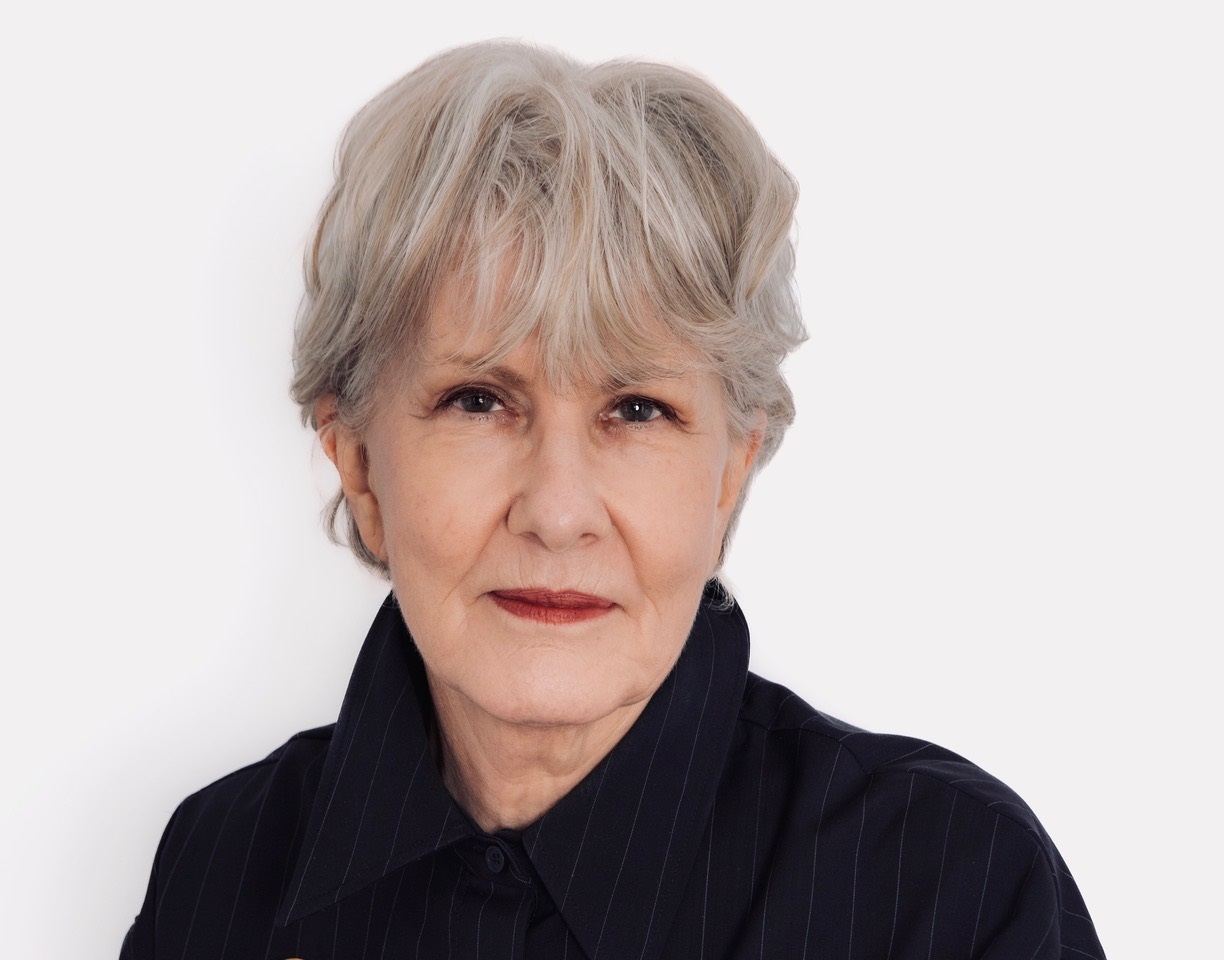
Vivian Blaxell is an Australian writer whose first literary book, Worthy of the Event: An Essay, appeared in 2025 after a working life that included mental-health nursing, trans organising, university teaching and historical research. Based in Melbourne/Naarm, she writes across personal narrative, fiction, philosophy and criticism. The book made a new readership possible for a writer already published in scholarly journals and literary magazines; its designation as a debut can obscure how much work preceded it.1, 2
Blaxell grew up in Wagga Wagga, became involved in Sydney’s trans communities and helped establish the refuge Tiresias House. Her teaching career crossed Australia, the United States, Japan, Turkey and China. A substantial body of research concerns Japanese empire, the built environment, medicine and the persistence of colonial institutions. The later literary writing carries some of those questions into a different register: unruly spoken rhythms, short interlocking passages, landscapes, animals, lovers, work and disappointment. Her historical and literary work developed alongside one another, with the move into book publishing coming comparatively late.3, 4
Childhood, reading and early trans life
Her 2021 Melbourne Prize biography identifies Blaxell as a former street kid, teenage sex worker and mental-health nurse. An earlier author biography, accompanying her fiction “Wheat,” says that her father, an airline pilot, died when she was three and that her mother subsequently converted to Seventh-day Adventism. Blaxell’s own later writing returns to that Adventist childhood in Wagga Wagga.5, 6, 7

Image unavailable. View the source and rights record.

Books offered another education. Blaxell remembers unrestricted access to her mother’s library and wanting to fly like the pilots in the Biggles stories. Her 2025 reading-interview biography dates her transition to 1968.8
Sydney’s street economy enters Worthy of the Event in a publicly available excerpt centred on Miss Sybil Fontaine, an older sex worker. Blaxell gives Fontaine style, territorial aggression, practical knowledge and an assessment of the younger narrator’s chances of surviving. The scene resists a sentimental picture of uncomplicated solidarity: a working corner is also a scarce economic resource. Elsewhere in the excerpt, access to hormones involves pharmacy markups and access to institutional treatment involves prolonged assessment. Money, professional gatekeeping and other women’s knowledge all matter.9
These literary scenes show the work of navigating a world in which recognition, healthcare and a livelihood cannot be taken for granted. Fontaine is allowed to be abrasive as well as perceptive, and the narrator does not retrospectively make every encounter exemplary.10

Image unavailable. View the source and rights record.

Sydney: collective organizing and the work of making a refuge
Public author biographies credit Blaxell as a cofounder of Tiresias House, working in the early-1980s Sydney milieu associated with Roberta Perkins and other trans organisers. The association’s history extends beyond this circle; the different founding accounts are disentangled in recent archival research.11, 12
The Gender Centre’s institutional history describes the practical coalition behind the refuge. Perkins’s research into trans women’s lives informed negotiations with the New South Wales government; the Wayside Chapel provided a meeting place and sympathetic contacts. Ordinary shelters often excluded the people who needed this one. Government funding and Department of Main Roads premises made a residential service possible. Tiresias House opened in Petersham in October 1983, and its twelve beds filled immediately. Additional capacity and further houses followed. The organisation became the Gender Centre in 1993.13
Rosa Campbell’s archival study makes the work after the opening more visible. Daybooks and rosters record meals, referrals, budgets and the negotiations of crowded shared life. Meat was rationed to alternate nights; housework needed doing even when residents preferred television. There were also trips, films and quiet evenings. Conflict arose from limited space, trauma and differences of class and race. Campbell’s evidence describes an institution’s daily operation, not a list of tasks personally performed by Blaxell.14
Accommodation also required information. The University of Sydney Library’s periodical history places a Tiresias House newsletter soon after the refuge’s 1983 foundation, followed by Polare in 1993. These publications carried community discussions alongside practical knowledge. There is no established Blaxell editorial credit for them, but they belong to the professional world around the refuge she helped create.15
Blaxell’s cofounder credit belongs within this collective achievement. The surviving public record does not isolate her daily responsibilities or assign her Perkins’s documented government negotiations.16, 17
Nursing, universities and work across countries
Blaxell’s academic biographies establish international teaching in Japanese and Asian history and politics, and in political theory. More specific contemporary author notes provide a few firm points: an associate professorship at Fatih University in Istanbul in January 2008; independent scholarship and an Australian global-literacy consultancy in 2009–10; teaching at RMIT University in Melbourne by May 2014. These are dated observations, not proof of uninterrupted appointments. Reliable public evidence for her degrees, dissertation and the full sequence of earlier jobs remains incomplete.18, 19, 20, 21
The 2025 biography also names Hawai‘i, Vermont, Washington, DC, Maryland, Kyoto, Beijing and Sydney as places where she lived and worked, without dating or ordering the moves.22
There was also educational production outside the conventional scholarly article. Pacific Worlds, a community-based Pacific cultural-geography project, credits Blaxell as an editorial consultant. Its individual site credits identify code editing for Nu‘uanu on O‘ahu and Airai in Palau, and code editing with additional graphics for Yap–Ulithi. R. D. K. Herman appears as a principal researcher and producer, alongside local contributors and other editors. These credits establish work on the delivery of knowledge through websites; they do not disclose a salary, contract or precise working period.23

Image unavailable. View the source and rights record.

What she did as a historian
Singapore and Istanbul, 2008
“New Syonan and Asianism in Japanese-era Singapore” studies a settlement established near Endau in the Malay Peninsula during the Japanese occupation. Published in 2008, it follows the promises and unequal arrangements of a supposed Asian community: Japanese officials, Chinese and Eurasian participants, and the displacement of Malay interests. Blaxell examines Shinozaki Mamoru’s reputation through sources that do not tell the same story—his Japanese memoir, its English version, wartime newspapers, letters and oral histories held in Singapore. The question is how benevolent intentions, self-justification, coercion and imperial ideology coexisted, rather than whether a single retrospective label can settle everyone’s conduct.24
The same year, she coauthored “Worldliness in Orhan Pamuk’s Istanbul: Memories of a City” with Verena Laschinger, an American-culture-and-literature scholar. The Urbana paper draws on Edward Said to ask how an autobiographical text belongs to its historical circumstances. Photographs and walking, the younger remembered self and the adult interpreter, become ways of examining Istanbul’s relation to European representations. The authors reject an account that leaves a passive East simply receiving a dominant Western image. The paper also identifies earlier publication of some material by Laschinger. Literary autobiography was already an object of Blaxell’s scholarly work, developed in collaboration.25
Hokkaido and Okinawa, 2009–2010
The 2009 article “Designs of Power” moves to Hokkaidō. Its evidence includes Sapporo’s street plan, architecture and the work required to establish wet-rice cultivation on colonised Ainu lands. Drawing on theories of produced space, Blaxell asks how apparently ordinary landscapes came to make Japanese possession seem natural. Cold-resistant rice, irrigation and agricultural expertise belong to the account alongside officials and ideological declarations. The transformation was not accomplished by naming territory alone. The article acknowledges research assistance from David Tucker, Philip Seaton and Verena Laschinger—one visible part of the scholarly network behind the solitary byline.26
In “Preparing Okinawa for Reversion to Japan” (2010), the principal object is the 1975 Okinawa International Ocean Exposition at Motobu. Reversion in 1972 had not removed the American military presence. Blaxell reads the exposition, its floating Aquapolis structure, roads, tourism and construction activity as mechanisms reshaping Okinawa’s relationship to Japan. Here an exposition is more than a national image displayed to visitors: it directs investment, changes land use and helps produce an economy. The article’s theoretical vocabulary, including Deleuze and Guattari, supports an investigation of those material connections rather than replacing them.27
Across these articles, Blaxell treats landscape as evidence of work and governance. The perspective connects her objects of study without making Singapore’s occupation, Hokkaidō’s colonisation and Okinawa’s postwar reconstruction the same history.28, 29, 30

Image unavailable. View the source and rights record.

Medicine, empire and the limits of a claim
“Yellow Blood” (2014) extends that attention to systems into the history of hepatitis C in Japan. Blaxell connects medical technologies and interventions to rural society, segregated leprosy communities, the postwar population and the national blood supply. Her question concerns the unintended transmission opportunities created by modernising interventions. The research draws on medical literature and historical inquiry, and acknowledges assistance from Nagashima Aiseien curator Tamura Tomohisa and Muta Orie.31
The author note says that Blaxell had completed a book-length study of the global hepatitis C endemic. It does not establish that the study became a published monograph. The completed manuscript belongs to her research record even though its subsequent circulation remains unclear.32
At the Association for Asian Studies annual meeting in 2015, Blaxell, identified with RMIT, chaired a panel on the continuing effects of Japanese imperial remains. She presented “Looking for Mariam Johari,” a paper about displacement and people who never returned home. Fellow panellists included Yoshihisa Amae, R. D. K. Herman and Tze M. Loo; Mark Selden was discussant. Their papers brought Taiwan, Micronesia and Singapore into the discussion.33
Her review of Emily Anderson’s Christianity and Imperialism in Modern Japan, in Japan Review 29, illustrates a less conspicuous scholarly task: judging another historian’s claims. Blaxell welcomes the work on a neglected subject but asks whether the evidence demonstrates Christianity’s importance to imperial policy, rather than imperialism’s importance to Japanese Christians. The distinction is causal, not cosmetic. Evidence of engagement is not automatically evidence of decisive influence.34
Her 2020 “Seized Hearts” revisits an imperial technique often presented as benevolent: counterinsurgency that seeks consent or allegiance while maintaining the capacity for coercion. It traces Japanese precedents across colonial settings and investigates their possible persistence in postwar Malaya and South Vietnam. New Syonan returns within this longer investigation. Crucially, a possible route of transmission is not identical to a proven, continuous institutional lineage; the essay’s genealogy should not be simplified into a claim that Japan invented every subsequent “hearts and minds” campaign.35
This research strand also attracted use beyond her own writing. Pia M. Jolliffe’s 2020 study of forced labour in Hokkaidō cites “Designs of Power.” 36
Fiction and personal writing before the debut
Literary experimentation did not begin when Worthy found a publisher. In June 2011, Blaxell contributed “Wheat” to the Red Dirt Chronicles’ Imaginary Family Project. The assignment was explicit: writers invented stories for found photographs. Her contribution gives an old image a family history involving a brother, departure and an absence that explanation cannot repair. The documentary-looking photograph is therefore a prompt for invention, not corroboration. A later prize bibliography dates the piece to 2012, but its original publication page dates it to 2011.37
That September, “Sorrow, History and Catastrophe in Japan After the 3.11 Earthquake, Tsunami and Nuclear Meltdown” appeared in the Asia-Pacific Journal and was subsequently republished by Truthout. Subtitled “A Personal Encounter,” it recounts a journey in Japan after the end of a marriage. Reading, movement and individual grief share the page with the earthquake disaster, nuclear danger and older histories of violence, including Ōkunoshima’s chemical-weapons production. The essay does not keep the travelling observer outside the frame.38
It is a useful predecessor to the later book because the change of scale is already there. Personal distress supplies a point of entry, but it cannot account for a public catastrophe. The journey brings the writer up against histories larger than her own circumstances. Her eventual attention to impermanence does not erase those histories or make the trip a reliable cure. By 2011, then, the scholar and the personal essayist were already writing in the same published work.39
The pandemic project: money, encouragement and a made voice
During COVID, Blaxell still needed teaching income, now earned on Zoom. A magazine rejected a piece; a poet friend suggested writing about disappointment. At home she began experimenting outside the conventions of her academic prose.40
“The disappointments,” published in Overland in February 2021, opens “My vagina disappoints me,” then travels through religious expectation, official recognition, travel and dissatisfaction with a writing career. Its older speaker has not outgrown ambition: desired invitations, literary success and property remain available measures of what has not happened. The comedy depends partly on refusing to make the narrator exempt from the habits she notices in others. Disappointment becomes a method for arranging material. Spinoza’s identification of God with nature offers the essay another way to understand embodiment: the body belongs to the world, rather than failing to approximate an ideal elsewhere.41
“Nuclear Cats,” published in Meanjin, was a finalist in the Writers Prize category of the 2021 Melbourne Prize for Literature. Blaxell’s accompanying statement describes a Japanese man returning to the Fukushima exclusion zone to care for abandoned animals. Human obligation to other creatures becomes a question that the essay can pursue across disaster, care and abandonment. The nomination brought literary recognition to work connecting the disaster history she had already written about with the question of care.42
“La Folía,” published in the Believer that December, makes its connections through turning. Childhood spinning, music, Sufi practice, theories of other dimensions and interrupted human lives appear in seventeen numbered sections. The recurrent motion gives the apparent digression a structure: the prose revisits its possibilities rather than proceeding through a single explanatory argument. Mariam Johari, the subject named in the 2015 conference paper, reappears in this literary setting. Scholarship has supplied material, but the new arrangement changes how a reader meets it.43
Its author note calls the developing book The Long After. The acknowledgments thank Lucca Fraser and Jackie Ess without specifying a division of editorial labour. 44
Other people, translation and the limits of wandering
Two publications in 2023 show the range of scale within that practice. “The Mommy Sutra,” in Cordite, compresses a mother into her garden: particular vegetables, trees, weeds and tending become the language of a person’s being and becoming. The short work can be read as a made portrait without being treated as a factual report of the author’s relationship with her mother.45
The opening of “The Disappearance of a.k.a. Victor Mature,” in Overland’s spring issue, instead puts two people into a cramped sleeping compartment on a train leaving Nuevo Laredo. Physical proximity offers no guarantee of mutual knowledge. The magazine’s author note makes the genre problem explicit: what editors call essays, Blaxell thinks of as “fictions with documentary features.” The distinction was publicly present before the book appeared.46
The close of “Victor Mature” records another kind of literary work. Efmer E. Agustin introduced Blaxell to the Waráy poet Voltaire Q. Oyzon; Merlie M. Alunan supplied the English translation. Blaxell sought permission to include Oyzon’s poem, and its presentation follows his request: Waráy on the left, English on the right. That named chain of introduction, translation, permission and layout prevents the borrowed poem from becoming an anonymous traveller’s discovery.47
Reading, rearranging and the speaking voice
Blaxell names specific working resources: Sei Shōnagon’s Pillow Book, read since adolescence, for accumulating short pieces; Gary Snyder for music in prose; Robert Glück’s Margery Kempe for formal experiment. Victorian fiction remains in this reading life, including Trollope and repeated returns to Jane Eyre.48
Short pieces could be moved until their relations became legible. Repetition and punctuation, learned partly from Gertrude Stein, produced the pressure of speech. She revised “the disappointments” to fit the book’s voice, explicitly distinguishing its speaker from herself. Intimacy is constructed, not a promise that every scene is documentary.49
She recalls an Arashiyama walk with a Rinzai monk who redirected her attention from litter to blossoms. She connects that encounter to placing lyrical passages beside disagreeable material.50

Image unavailable. View the source and rights record.

The final section of Worthy, “the practice,” makes apprenticeship part of the work’s subject. Kaya Wilson’s review identifies its treatment of aemulatio: trying and transforming other writers’ styles, including Bellamy, Myles and Stein. This account helps explain why the book’s verbal familiarity need not mean spontaneous transcription. A sentence can sound confidential while carrying the results of reading, imitation, rearrangement and revision.51
The image could not be loaded. View the original using the source link below.
The book and the press that could publish it
LittlePuss Press published Worthy of the Event: An Essay on 1 April 2025: 296 pages organised in seven parts, sold as a single essay while also readily described as a collection. Its subtitle preserves that productive inconvenience. Magazine circulation had supplied entry points; the book required readers to encounter the pieces in a larger arrangement.52
The publisher is part of the explanation of how such a book reaches readers. Cat Fitzpatrick and Casey Plett established LittlePuss after the collapse of Topside Press, initially to return the anthology Meanwhile, Elsewhere to circulation. In a 2026 interview they describe a small press committed to trans literary communities, sustained editorial attention and practical distribution work. Plett’s operational work and Fitzpatrick’s editing are part of that institutional account; the interview does not establish who performed each editorial task on Blaxell’s manuscript.53
A 2023 conversation with publisher Casey Plett gives examples of the press’s editorial approach through other authors. Cat Fitzpatrick helped Cecilia Gentili develop oral storytelling into the letter form of Faltas; work with Sybil Lamb helped turn zines into a novel. Those examples establish an institutional willingness to develop a form through sustained contact, without supplying the missing editing history of Blaxell’s own book.54
The business was vulnerable to distribution failures. In April 2024, LittlePuss told Publishers Weekly that it had no full-time employees, published two or three new titles annually, and had been left owed money when Small Press Distribution collapsed. Colleagues helped it find an alternative arrangement that kept its books available through Ingram. The book’s publication depended on that small operation finding a way through a distributor’s failure.55
In January 2025, LittlePuss was named a recipient of a $15,000 Small Press Future Fund grant. The programme supported former SPD clients with operational recovery, inventory, warehousing, systems and marketing. The grant went to the press; it is not a documented author advance.56
For Worthy, North American distribution is documented through Consortium, while NewSouth lists the Australian edition. That infrastructure places the work beyond the readership of the magazines that first published Blaxell. A Red Emma’s event listing scheduled an April 2025 Baltimore conversation with Rahne Alexander; Ohio University’s visiting-writer archive includes Blaxell in its 2024–25 nonfiction programme. These listings place the book within bookselling and teaching programmes as well as magazine publishing.57, 58, 59
Readers, criticism and an elder’s public presence
The reception was enthusiastic, but not uniform in what it thought the book was doing. Erin Vachon’s Rumpus review situated it alongside another LittlePuss release, foregrounding the press’s expanding literary possibilities. Shelbie Music in New Ohio Review read it through becoming, form and the confrontation with colonial inheritance. Wilson in Mascara counselled following the writer as a guide rather than treating her life as the destination. Together these responses show the difficulty of keeping author, narrator, philosophical argument and life story in stable compartments.60, 61, 62
One important complication is ethical rather than generic. Music draws attention to “indifferent to prayer,” where the narrator examines her implication in settler colonialism. The experience of being dispossessed in one relation does not confer innocence in every other. The speaker’s position shifts with the relationship being examined, making self-scrutiny part of the account of other people’s power.63
Elese Dowden’s Overland review is more explicitly questioning about the book’s philosophical repertoire. While responding warmly to its affirmation of change, she asks what the absence of Fanon and Beauvoir leaves insufficiently examined. Freedom to become cannot simply be assumed equally available across colonial and gendered relations. That objection does not cancel Blaxell’s historical knowledge; it asks whether the literary movement through other people’s suffering always gives its asymmetries enough weight.64
Wilson also describes a personal exchange: during correspondence about his own book, Blaxell advised him to think about the next thirty years. This is one documented instance of her place in another writer’s working life. It makes literary eldership concrete as advice about time, beyond an honorific attached to survival.65
Continuing work, institutions and an ordinary present
In 2026, Worthy of the Event appeared on the ALS Gold Medal longlist and was a finalist for the Publishing Triangle’s Judy Grahn Award for Lesbian Nonfiction.66, 67
Blaxell’s writing also continued beyond the promotion of her own book. In April, Cordite published her introduction to McKenzie Wark’s Dispositions 26. She reads Wark’s GPS-equipped walking at the beginning of the century against a later world of screen-mediated space, bringing political philosophy, migration, poetry and technological change into the same short piece. Its attention to how a place becomes available to experience recalls the historical essays, although its vocabulary and speaking rhythm belong to the later literary practice.68
The current Cordite biography still places Blaxell in Melbourne/Naarm. The Wark introduction is a recent critical commission: work on another writer’s text, its historical circumstances and what its poetry makes available to readers now.69
Selected chronology
Open the sourced life timeline · Open the geographic record. The map distinguishes residence, institutions and research subjects; its publication link is not a journey.
- 1968: Transition date given in the Shelf Awareness author biography.70
- October 1983: Tiresias House, which Blaxell helped cofound, opens in Petersham.71, 72
- 2008: Fatih University associate professor; publishes “New Syonan.”73
- 2009–10: Australian consultancy and independent scholarship; Hokkaidō and Okinawa studies.74, 75
- 2011: Publishes “Wheat” and “Sorrow, History and Catastrophe.”76, 77
- 2014–15: RMIT teaching documented; “Yellow Blood” and AAS panel participation.78, 79
- 2020: Publishes “Seized Hearts.”80
- 2021: “The disappointments,” “Nuclear Cats” recognition and “La Folía.”81, 82, 83
- 2023: “The Mommy Sutra” and “The Disappearance of a.k.a. Victor Mature.”84, 85
- 2025: Worthy of the Event published by LittlePuss; North American event and visiting-writer listings.86, 87
- 2026: ALS longlist, Judy Grahn finalist and introduction to Wark’s Dispositions 26.88, 89, 90
Sources, reading extent and remaining questions
For the historical practice, start with “New Syonan,” “Designs of Power” and “Yellow Blood.” “Sorrow, History and Catastrophe” makes an especially useful bridge to the literary writing. “La Folía” and “The Mommy Sutra” are openly available examples at very different lengths. Katie Lee Ellison’s interview provides the clearest account of composition and the constructed narrator; the Shelf Awareness Q&A supplies a compact reading apprenticeship.91, 92, 93, 94, 95, 96, 97, 98
This profile uses public essays, authorised excerpts, interviews, contemporary author notes, institutional records and reviews. The complete Worthy of the Event was not read for this profile; discussion of its final form is attributed to interviews and reviewers, while direct analysis concerns the public essays and excerpt. The principal gaps concern degrees, nursing employers, the full appointment sequence, consultancy clients and the book’s editorial and contractual history. No reliable author-advance, royalty or sales totals were established. Undated jobs and moves remain undated; narrated scenes remain identified as writing. Information and award status were checked on 25 October 2026. Cambridge’s recent online dates for older Asia-Pacific Journal material are not treated as original publication dates.
References and documentary notes
LittlePuss Press, Worthy of the Event: An Essay, publication 1 April 2025; NewSouth Books, edition listing. Publisher descriptions and bibliographic details, not independent biographical verification.↩︎
Melbourne Prize Trust, 2021 finalists, Vivian Blaxell biography. The profile retains the documented cofounder role while avoiding the disputed Australian Transsexual Association founding date.↩︎
Melbourne Prize Trust, 2021 finalists, Vivian Blaxell biography. The profile retains the documented cofounder role while avoiding the disputed Australian Transsexual Association founding date.↩︎
Asia-Pacific Journal: Japan Focus, Vivian Blaxell author archive. Lists six articles from 2008 to 2020 and the international teaching fields.↩︎
Melbourne Prize Trust, 2021 finalists, Vivian Blaxell biography. The profile retains the documented cofounder role while avoiding the disputed Australian Transsexual Association founding date.↩︎
Red Dirt Chronicles, Imaginary Family Project, week 26: “Wheat”, 29 June 2011. Includes the project’s fictional premise and author biography.↩︎
Vivian Blaxell, “The disappointments”, Overland, 5 February 2021. The Adventist identification is also supported by the earlier “Wheat” biography; a conflicting distributor blurb has not been followed.↩︎
“Reading with… Vivian Blaxell”, Shelf Awareness, 9 April 2025. Interview and accompanying biography.↩︎
Vivian Blaxell, authorised excerpt from Worthy of the Event, Defector, 31 March 2025. Used as literary evidence rather than a separately verified transcript of early life.↩︎
Vivian Blaxell, authorised excerpt from Worthy of the Event, Defector, 31 March 2025. Used as literary evidence rather than a separately verified transcript of early life.↩︎
Melbourne Prize Trust, 2021 finalists, Vivian Blaxell biography. The profile retains the documented cofounder role while avoiding the disputed Australian Transsexual Association founding date.↩︎
Samantha Baker, “Roberta Perkins: Sex Work, Feminism, and the Dawn of Transgender Activism in 1980s Australia”, Australian Feminist Studies, 8 October 2025, distinguishes Noelena Tame’s earlier association from Perkins’s later involvement. This differs from the simplified 1981 founding account in some biographies.↩︎
The Gender Centre, “Our History”. Institutional account of the coalition, premises, beds and service development. October 1983 is used because sources differ on the precise date of the later ceremonial opening.↩︎
Rosa Campbell, “Reconsidering Violence Against Women through the History of a Refuge for Trans Women”, History Workshop Journal 100, 2025, pp. 336–352; published online 22 December 2025. Archive-based institutional history does not identify Blaxell’s individual daily duties.↩︎
University of Sydney Library, “Queer Discourses & Discoursing Queers”, 2025 exhibition account, especially the section on intracommunity discourse.↩︎
Melbourne Prize Trust, 2021 finalists, Vivian Blaxell biography. The profile retains the documented cofounder role while avoiding the disputed Australian Transsexual Association founding date.↩︎
The Gender Centre, “Our History”. Institutional account of the coalition, premises, beds and service development. October 1983 is used because sources differ on the precise date of the later ceremonial opening.↩︎
Asia-Pacific Journal: Japan Focus, Vivian Blaxell author archive. Lists six articles from 2008 to 2020 and the international teaching fields.↩︎
Vivian Blaxell, “New Syonan and Asianism in Japanese-era Singapore”, Asia-Pacific Journal, vol. 6, issue 1, January 2008. Author note identifies Fatih University appointment. Original-issue PDF.↩︎
Vivian Blaxell, “Designs of Power: The ‘Japanization’ of Urban and Rural Space in Colonial Hokkaidō”, Asia-Pacific Journal, 31 August 2009. See also the course-reader PDF.↩︎
Vivian Blaxell, “Yellow Blood: Hepatitis C and the Modernist Settlement in Japan”, Asia-Pacific Journal, vol. 12, issue 18, May 2014. PDF. RMIT and the completed study appear in the author note.↩︎
“Reading with… Vivian Blaxell”, Shelf Awareness, 9 April 2025. Interview and accompanying biography.↩︎
Pacific Worlds, staff credits, Nu‘uanu credits, Airai credits, and Yap–Ulithi credits. The specific credit pages, not a date inferred from a copyright footer, establish the contributions.↩︎
Vivian Blaxell, “New Syonan and Asianism in Japanese-era Singapore”, Asia-Pacific Journal, vol. 6, issue 1, January 2008. Author note identifies Fatih University appointment. Original-issue PDF.↩︎
Verena Laschinger and Vivian Blaxell, “Worldliness in Orhan Pamuk’s Istanbul: Memories of a City”, Urbana 9, Spring–Fall 2008, eleven-page paper; issue record. The present platform’s 2025 date is not the paper’s original issue year.↩︎
Vivian Blaxell, “Designs of Power: The ‘Japanization’ of Urban and Rural Space in Colonial Hokkaidō”, Asia-Pacific Journal, 31 August 2009. See also the course-reader PDF.↩︎
Vivian Blaxell, “Preparing Okinawa for Reversion to Japan”, Asia-Pacific Journal, 19 July 2010. Full subtitle concerns the 1975 exposition, US military and construction state. PDF.↩︎
Vivian Blaxell, “New Syonan and Asianism in Japanese-era Singapore”, Asia-Pacific Journal, vol. 6, issue 1, January 2008. Author note identifies Fatih University appointment. Original-issue PDF.↩︎
Vivian Blaxell, “Designs of Power: The ‘Japanization’ of Urban and Rural Space in Colonial Hokkaidō”, Asia-Pacific Journal, 31 August 2009. See also the course-reader PDF.↩︎
Vivian Blaxell, “Preparing Okinawa for Reversion to Japan”, Asia-Pacific Journal, 19 July 2010. Full subtitle concerns the 1975 exposition, US military and construction state. PDF.↩︎
Vivian Blaxell, “Yellow Blood: Hepatitis C and the Modernist Settlement in Japan”, Asia-Pacific Journal, vol. 12, issue 18, May 2014. PDF. RMIT and the completed study appear in the author note.↩︎
Vivian Blaxell, “Yellow Blood: Hepatitis C and the Modernist Settlement in Japan”, Asia-Pacific Journal, vol. 12, issue 18, May 2014. PDF. RMIT and the completed study appear in the author note.↩︎
Association for Asian Studies, 2015 annual-conference programme, panel 5, “An Ulcerous Crime?” Programme evidence establishes the scheduled panel roles and RMIT affiliation.↩︎
Vivian Blaxell, review of Emily Anderson’s Christianity and Imperialism in Modern Japan: Empire for God, Japan Review 29 (nominal issue year 2016; released 2017), pp. 212–214. Text checked against a public mirror.↩︎
Vivian Blaxell, “Seized Hearts”, Asia-Pacific Journal, 15 March 2020. Full title: “ ‘Soft’ Japanese Counterinsurgency Before 1945 and Its Persistent Legacies in Postwar Malaya, South Vietnam and Beyond.”↩︎
Pia M. Jolliffe, “Forced Labour in Imperial Japan’s First Colony: Hokkaidō”, Asia-Pacific Journal, vol. 18, issue 20, October 2020. The bibliography cites Blaxell’s 2009 article.↩︎
Red Dirt Chronicles, Imaginary Family Project, week 26: “Wheat”, 29 June 2011. Includes the project’s fictional premise and author biography.↩︎
Vivian Blaxell, “Sorrow, History and Catastrophe in Japan After the 3.11 Earthquake, Tsunami and Nuclear Meltdown: A Personal Encounter”, Asia-Pacific Journal, 5 September 2011; Truthout republication, 12 September 2011.↩︎
Vivian Blaxell, “Sorrow, History and Catastrophe in Japan After the 3.11 Earthquake, Tsunami and Nuclear Meltdown: A Personal Encounter”, Asia-Pacific Journal, 5 September 2011; Truthout republication, 12 September 2011.↩︎
Katie Lee Ellison, “Vivian Blaxell Worries She’ll Disappoint You”, The Stranger, 1 April 2025, updated 29 April. Direct interview on income, genesis, revision, voice and the Arashiyama anecdote.↩︎
Vivian Blaxell, “The disappointments”, Overland, 5 February 2021. The Adventist identification is also supported by the earlier “Wheat” biography; a conflicting distributor blurb has not been followed.↩︎
Vivian Blaxell, “Nuclear Cats”, Meanjin, 2021; Melbourne Prize Trust, 2021 catalogue, Writers Prize finalist entry and author statement. The catalogue is used for the author’s account of the work beyond the publicly accessible Meanjin opening.↩︎
Vivian Blaxell, “La Folía”, Believer, 15 December 2021. Includes acknowledgments and the working title The Long After.↩︎
Vivian Blaxell, “La Folía”, Believer, 15 December 2021. Includes acknowledgments and the working title The Long After.↩︎
Vivian Blaxell, “The Mommy Sutra”, Cordite Poetry Review, 25 June 2023.↩︎
Vivian Blaxell, “The Disappearance of a.k.a. Victor Mature”, Overland, no. 252, spring 2023. Discussion uses the publicly accessible text, author note and final permission acknowledgment.↩︎
Vivian Blaxell, “The Disappearance of a.k.a. Victor Mature”, Overland, no. 252, spring 2023. Discussion uses the publicly accessible text, author note and final permission acknowledgment.↩︎
“Reading with… Vivian Blaxell”, Shelf Awareness, 9 April 2025. Interview and accompanying biography.↩︎
Katie Lee Ellison, “Vivian Blaxell Worries She’ll Disappoint You”, The Stranger, 1 April 2025, updated 29 April. Direct interview on income, genesis, revision, voice and the Arashiyama anecdote.↩︎
Katie Lee Ellison, “Vivian Blaxell Worries She’ll Disappoint You”, The Stranger, 1 April 2025, updated 29 April. Direct interview on income, genesis, revision, voice and the Arashiyama anecdote.↩︎
Kaya Wilson, review of Worthy of the Event, Mascara Literary Review, 31 October 2025. Especially the discussion of section VII and stylistic emulation.↩︎
LittlePuss Press, Worthy of the Event: An Essay, publication 1 April 2025; NewSouth Books, edition listing. Publisher descriptions and bibliographic details, not independent biographical verification.↩︎
Elsie Carson-Holt, “LittlePuss Press Celebrates Trans Community & Indie Publishing Ethos”, The Indypendent, 23 April 2026. Interview with the press’s publishers.↩︎
Kay Gabriel with Casey Plett and Joss Barton, “Raw, Rude, and from the Future: DIY Trans Publishing Today”, Poetry Project Newsletter 271, winter 2023. Press practice illustrated through other writers, not evidence of particular edits to Blaxell’s manuscript.↩︎
John Maher and colleagues, “Want to Start an Indie Press? These Publishers Have Some Suggestions”, Publishers Weekly, 19 April 2024, LittlePuss interview section.↩︎
Publishers Weekly, “CLMP Awards Grants to 35 Former SPD Clients”, 21 January 2025, grant totals and programme purposes.↩︎
Community of Literary Magazines and Presses, Women’s History Month recommendations for booksellers, Worthy of the Event entry; NewSouth Books, Australian listing.↩︎
Red Emma’s, Vivian Blaxell in conversation with Rahne Alexander, event listing for 3 April 2025. A programme listing is not treated as an attendance record.↩︎
Ohio University, Visiting Writers Series history, 2024–25 programme.↩︎
Erin Vachon, review of the LittlePuss double release, The Rumpus, 15 April 2025.↩︎
Shelbie Music, review of Worthy of the Event, New Ohio Review, 1 June 2025. Its quotations and discussion identify the book’s treatment of colonial implication; the profile does not adopt every biographical inference in the review.↩︎
Kaya Wilson, review of Worthy of the Event, Mascara Literary Review, 31 October 2025. Especially the discussion of section VII and stylistic emulation.↩︎
Shelbie Music, review of Worthy of the Event, New Ohio Review, 1 June 2025. Its quotations and discussion identify the book’s treatment of colonial implication; the profile does not adopt every biographical inference in the review.↩︎
Elese Dowden, “YES: Vivian Blaxell’s Worthy of the Event”, Overland, 27 May 2025. Philosophical reception and objections, not independent verification of narrated life.↩︎
Kaya Wilson, review of Worthy of the Event, Mascara Literary Review, 31 October 2025. Especially the discussion of section VII and stylistic emulation.↩︎
Association for the Study of Australian Literature, ALS Gold Medal, 2026 longlist under “Previous Long and Shortlists,” plus subsequent results.↩︎
Publishing Triangle, 38th annual award winners and finalists, April 2026. Worthy is a Judy Grahn Award finalist, not the winning book.↩︎
Vivian Blaxell, introduction to McKenzie Wark’s Dispositions 26, Cordite Poetry Review, 24 April 2026. Author biography identifies Melbourne/Naarm residence.↩︎
Vivian Blaxell, introduction to McKenzie Wark’s Dispositions 26, Cordite Poetry Review, 24 April 2026. Author biography identifies Melbourne/Naarm residence.↩︎
“Reading with… Vivian Blaxell”, Shelf Awareness, 9 April 2025. Interview and accompanying biography.↩︎
Melbourne Prize Trust, 2021 finalists, Vivian Blaxell biography. The profile retains the documented cofounder role while avoiding the disputed Australian Transsexual Association founding date.↩︎
The Gender Centre, “Our History”. Institutional account of the coalition, premises, beds and service development. October 1983 is used because sources differ on the precise date of the later ceremonial opening.↩︎
Vivian Blaxell, “New Syonan and Asianism in Japanese-era Singapore”, Asia-Pacific Journal, vol. 6, issue 1, January 2008. Author note identifies Fatih University appointment. Original-issue PDF.↩︎
Vivian Blaxell, “Designs of Power: The ‘Japanization’ of Urban and Rural Space in Colonial Hokkaidō”, Asia-Pacific Journal, 31 August 2009. See also the course-reader PDF.↩︎
Vivian Blaxell, “Preparing Okinawa for Reversion to Japan”, Asia-Pacific Journal, 19 July 2010. Full subtitle concerns the 1975 exposition, US military and construction state. PDF.↩︎
Red Dirt Chronicles, Imaginary Family Project, week 26: “Wheat”, 29 June 2011. Includes the project’s fictional premise and author biography.↩︎
Vivian Blaxell, “Sorrow, History and Catastrophe in Japan After the 3.11 Earthquake, Tsunami and Nuclear Meltdown: A Personal Encounter”, Asia-Pacific Journal, 5 September 2011; Truthout republication, 12 September 2011.↩︎
Vivian Blaxell, “Yellow Blood: Hepatitis C and the Modernist Settlement in Japan”, Asia-Pacific Journal, vol. 12, issue 18, May 2014. PDF. RMIT and the completed study appear in the author note.↩︎
Association for Asian Studies, 2015 annual-conference programme, panel 5, “An Ulcerous Crime?” Programme evidence establishes the scheduled panel roles and RMIT affiliation.↩︎
Vivian Blaxell, “Seized Hearts”, Asia-Pacific Journal, 15 March 2020. Full title: “ ‘Soft’ Japanese Counterinsurgency Before 1945 and Its Persistent Legacies in Postwar Malaya, South Vietnam and Beyond.”↩︎
Vivian Blaxell, “The disappointments”, Overland, 5 February 2021. The Adventist identification is also supported by the earlier “Wheat” biography; a conflicting distributor blurb has not been followed.↩︎
Vivian Blaxell, “Nuclear Cats”, Meanjin, 2021; Melbourne Prize Trust, 2021 catalogue, Writers Prize finalist entry and author statement. The catalogue is used for the author’s account of the work beyond the publicly accessible Meanjin opening.↩︎
Vivian Blaxell, “La Folía”, Believer, 15 December 2021. Includes acknowledgments and the working title The Long After.↩︎
Vivian Blaxell, “The Mommy Sutra”, Cordite Poetry Review, 25 June 2023.↩︎
Vivian Blaxell, “The Disappearance of a.k.a. Victor Mature”, Overland, no. 252, spring 2023. Discussion uses the publicly accessible text, author note and final permission acknowledgment.↩︎
LittlePuss Press, Worthy of the Event: An Essay, publication 1 April 2025; NewSouth Books, edition listing. Publisher descriptions and bibliographic details, not independent biographical verification.↩︎
Red Emma’s, Vivian Blaxell in conversation with Rahne Alexander, event listing for 3 April 2025. A programme listing is not treated as an attendance record.↩︎
Association for the Study of Australian Literature, ALS Gold Medal, 2026 longlist under “Previous Long and Shortlists,” plus subsequent results.↩︎
Publishing Triangle, 38th annual award winners and finalists, April 2026. Worthy is a Judy Grahn Award finalist, not the winning book.↩︎
Vivian Blaxell, introduction to McKenzie Wark’s Dispositions 26, Cordite Poetry Review, 24 April 2026. Author biography identifies Melbourne/Naarm residence.↩︎
Vivian Blaxell, “New Syonan and Asianism in Japanese-era Singapore”, Asia-Pacific Journal, vol. 6, issue 1, January 2008. Author note identifies Fatih University appointment. Original-issue PDF.↩︎
Vivian Blaxell, “Designs of Power: The ‘Japanization’ of Urban and Rural Space in Colonial Hokkaidō”, Asia-Pacific Journal, 31 August 2009. See also the course-reader PDF.↩︎
Vivian Blaxell, “Yellow Blood: Hepatitis C and the Modernist Settlement in Japan”, Asia-Pacific Journal, vol. 12, issue 18, May 2014. PDF. RMIT and the completed study appear in the author note.↩︎
Vivian Blaxell, “Sorrow, History and Catastrophe in Japan After the 3.11 Earthquake, Tsunami and Nuclear Meltdown: A Personal Encounter”, Asia-Pacific Journal, 5 September 2011; Truthout republication, 12 September 2011.↩︎
Vivian Blaxell, “La Folía”, Believer, 15 December 2021. Includes acknowledgments and the working title The Long After.↩︎
Vivian Blaxell, “The Mommy Sutra”, Cordite Poetry Review, 25 June 2023.↩︎
Katie Lee Ellison, “Vivian Blaxell Worries She’ll Disappoint You”, The Stranger, 1 April 2025, updated 29 April. Direct interview on income, genesis, revision, voice and the Arashiyama anecdote.↩︎
“Reading with… Vivian Blaxell”, Shelf Awareness, 9 April 2025. Interview and accompanying biography.↩︎