A journalist, sociologist and former central-bank adviser who studies Russian economic policy and the people who administer it.
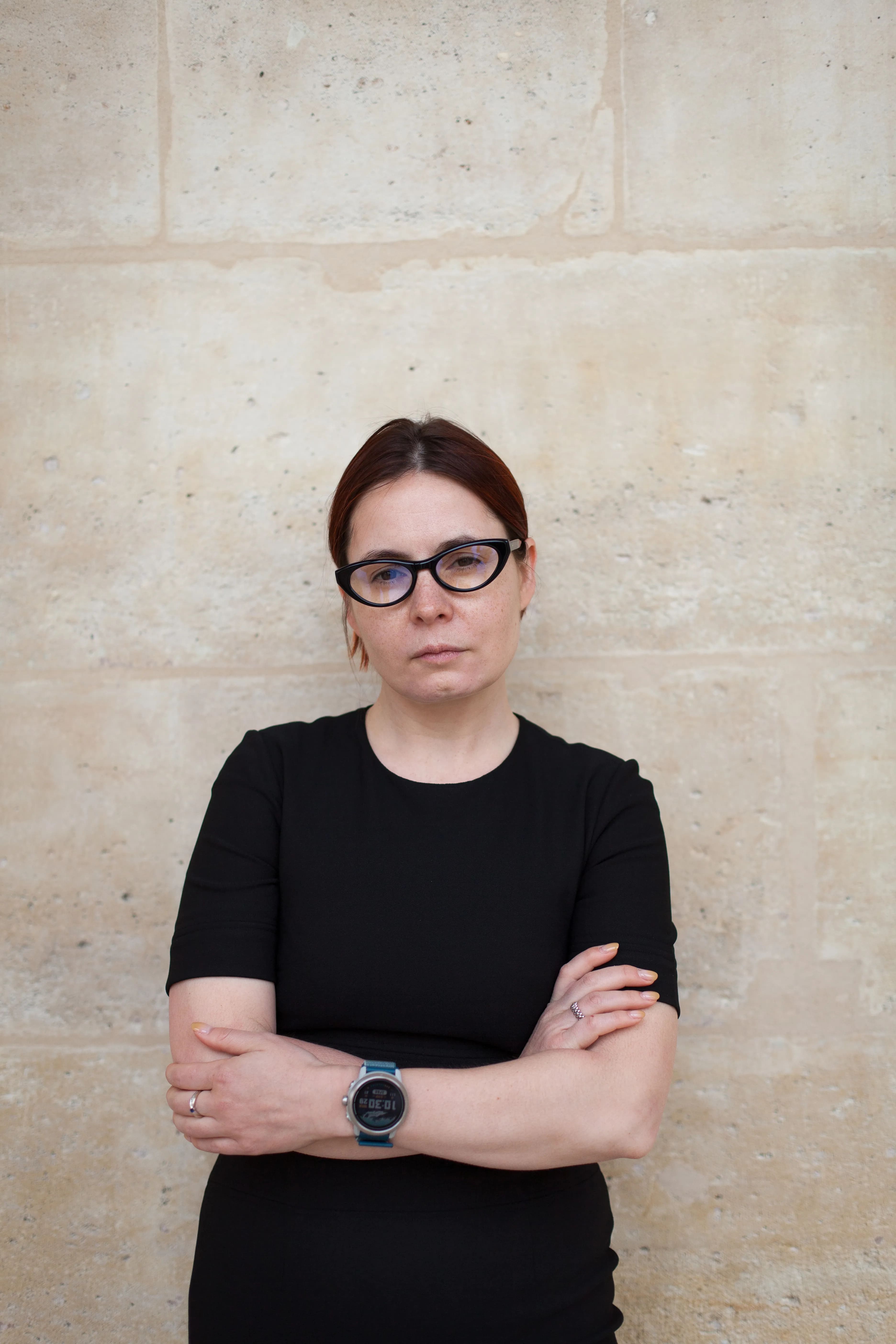
Alexandra Prokopenko is a Russian researcher living in Berlin and a senior fellow at the Carnegie Russia Eurasia Center. Her subjects are public finance, economic policymaking and the civilian officials and managers who keep Russian institutions operating. Before becoming a familiar interpreter of the wartime economy, she worked in newsrooms, covered the president and prime minister, returned to university for a sociology degree, and became an adviser at the Bank of Russia. She resigned and left Russia after the full-scale invasion of Ukraine. Her work abroad combines research, economic journalism, books and public testimony.1, 2
She came to economics through journalism and institutional work rather than a conventional academic career in economics. Reporting required her to turn official papers, forecasts and conversations into accounts that readers could understand. Graduate sociology let her examine bureaucratic behavior at greater length. At the bank and Moscow’s Higher School of Economics, she also worked on the communication of financial policy and an educational guide for future journalists. Since leaving, she has continued to write about the administration she once encountered as a reporter and colleague, while acquiring new collaborators and readers in Germany and beyond.3, 4, 5
Her Russian book, Соучастники. Почему российская элита выбрала войну—Accomplices: Why Russia’s Elite Chose War—entered sale in December 2025.6 An English volume, From Sovereigns to Servants: How the War Against Ukraine Reshaped Russia’s Elite, is part of Hurst’s 2026 publishing program.7 These studies grew from years of contact with officials, not just the interviews she gave after emigration. She describes economic research as her main occupation and the anthropology of bureaucracy as another lasting interest.8 Those interests overlap, but they produce different sorts of work: a budget analysis, a study of professional belonging, and a newsletter explaining the week’s developments are distinct undertakings.
The image could not be loaded. View the original using the source link below.
Before the Kremlin beat: journalism school and family inheritance
Prokopenko’s public professional CV dates her journalism studies at Moscow State University to 2001–2006; institutional biographies confirm graduation in 2006. The specialization matters because her eventual reputation as an economic researcher can otherwise obscure her original training. The same CV lists a job in media relations and policy editing at RIA Novosti, without dependable dates. Her documented route into economic research begins with journalism and experience of reporting on government.9, 10
In 2009, while already working as a journalist, she spent a period as a visiting scholar at Berkeley’s Graduate School of Journalism. It was a visiting affiliation, not a second degree. Berkeley gave her an encounter with an American journalism institution before she made an overseas research career. Her subsequent work and further education remained centered in Moscow for more than a decade. There is little public evidence about the people who first encouraged her to enter journalism, how she financed university, or how she secured that visiting opportunity.11
She has spoken more directly about family identity. In a May 2026 interview, she said that the nationality entry in her Soviet-era birth certificate was Ukrainian, but described her family and upbringing as Soviet. Visits to relatives had not made her feel part of a Ukrainian cultural or linguistic world. This is an account of inherited identity, not a statement of birthplace or present citizenship. She had built her adult professional life in Russia before the invasion made continuing it unacceptable to her.12
That distinction between family inheritance and lived attachment remains present after emigration. In a 2026 Finnish interview, she described homesickness and a career in Russia that had been progressing when the war interrupted it. Germany was where she had rebuilt a working life; it had not erased the place she missed. The interview’s account of attachment is one of the few public glimpses of circumstances beyond her professional roles.13
The vocabulary used to introduce her has consequently accumulated. She is a journalism graduate and a trained sociologist; “economist” is the professional label commonly applied to the field in which she now works. Each designation catches part of the person, and none supplies the missing childhood narrative. Her earliest education and employment records tell us how the working life began, while her volunteered family recollections tell us something of the home she later left.
2008–2017: the news agency, the presidential pool and the business newspaper
Carnegie’s Russian biography dates Prokopenko’s main newsroom career from 2008 to 2017, first at the TASS news agency and then at Vedomosti, the business newspaper. It records reporting on Vladimir Putin and Dmitry Medvedev and coverage of the presidential campaigns of 2008 and 2012. She was learning to report executive power during the period in which the presidency passed to Medvedev and then returned to Putin. The institutional sequence is secure even though the available biographies do not date every transfer or promotion.14
She acquired responsibility as well as a reporting beat. A collective appeal published by Colta in September 2015 lists her as an independent journalist and former head of TASS’s economics department. That is a contemporary check on the leadership role recorded in her professional CV, and places its end by the time of the appeal. The appeal asked Putin and Medvedev to protect the investigation into the violent attack on journalist Oleg Kashin and to have named officials questioned. Her listed signature puts her within a professional community defending a colleague; it does not establish that she drafted the text or that its allegations were adjudicated facts.15
TASS was also a workplace where pay and professional status were debated. Recalling it in a November 2025 conversation with Alexander Baunov, she described disputes about foreign correspondents’ pay after diplomats abroad had received increases. The agency’s journalists argued that their own work deserved comparable treatment. This was a memory of an employer’s internal discussions, not a disclosure of her salary or confirmation that she held a foreign posting. It adds an ordinary economic dimension to the more glamorous picture of a reporter traveling with political leaders.16
The presidential press pool gave accredited correspondents access to official events and travel, under conditions controlled by accreditation and security procedures. A 2019 Proekt investigation records Prokopenko’s approximately eight years in the pool. It describes news organizations paying for travel and journalists spending increasing amounts of time waiting, watching staged encounters or following an event on a screen. Prokopenko and her Vedomosti colleague Margarita Papchenkova lost accreditation in 2017; she confirmed the withdrawal. No detailed public explanation establishes why either journalist was excluded.17
For a correspondent, proximity and knowledge were different things. A trip could create an acquaintance or an opportunity to ask a question, but the reporting still required material beyond the formally offered performance. The bylines show that Prokopenko’s work included obtaining policy documents, following their administrative route, and asking other people whether the government’s plans would do what their language promised. Her later study of bureaucracy had a practical antecedent in these assignments: she had to learn enough about a procedure to explain what was happening through it.
Her collaboration with Papchenkova is particularly visible in a March 16, 2016 report about a proposed government-management reform. The two examined plans for project-based administration and the force of a favorable presidential resolution—the written instruction that could make a proposal move when ordinary procedures had not. Officials, documents and outside experts supplied different views of whether new project structures would improve coordination or add another supervisory layer. Elizaveta Bazanova and Philip Sterkin were credited with assistance. The published story shows a shared newsroom task, in which colleagues combined beats and tested administrative claims.18
This was a demanding kind of political journalism because the news lay partly in the workings of an organization. A change in a document’s status, the addition of a project office, or an instruction from the presidency could matter even when there was no dramatic public confrontation. The article made readers follow the route by which a declared reform might enter government work. Its critical distance came from comparing the proposed mechanism with the difficulty it was supposed to resolve.
A late-May 2017 article, coauthored with Olga Kuvshinova, examined a forecast extending to 2035. Its subject was the projected recovery of household incomes and the poorer long-term outlook for pensions. The reporters obtained and questioned the scenario, including its assumptions about investment and the income restraints that would help finance it. Their story did not establish what subsequently happened in 2022 or 2035; it exposed the choices and distributional costs built into a current forecast.19
Her solo opinion columns show a voice alongside the reporting. In January 2017, before her bank employment, she praised Elvira Nabiullina’s persistence in fighting inflation and resisting pressure from government and business. But admiration for the governor’s consistency did not remove questions about the banking system: she was concerned about expanding state-like banks, institutions too large to fail, and the room left for competition. The column assessed a professional achievement while asking what kind of institution it was creating.20
A March column about Nabiullina’s second term retained that combination. Prokopenko recognized the progress of inflation policy while discussing criticism of supervision and the increasingly paternal role of the regulator. It was also newspaper writing with a cultural register: a reference to The Master and Margarita, prompted by the governor’s own public reading, gave the column a literary turn. The reference demonstrates how she wrote that piece; it does not supply evidence of a lifelong literary influence or explain her later recruitment.21
By the end of this stage, she had experience of an agency, a business newspaper, collective reporting, opinion writing and a tightly managed access system. She had seen institutional competence from outside, including the competence of the bank she would later join. The loss of accreditation narrowed one part of her working world. Her next move kept government administration as a subject while changing the time, tools and institutional setting in which she could examine it.
2017–2018: returning to study, without entirely leaving journalism
In her later account, Prokopenko dated her move out of full-time journalism to 2017. She entered macroeconomic research at the Higher School of Economics, or HSE, and enrolled in sociology at the Moscow School of Social and Economic Sciences, commonly called Shaninka. She wanted another language for describing the bureaucracy she had covered. Her thesis examined handwritten resolutions on official papers: the small inscriptions through which a superior approved, instructed or responded. That choice of object brought the informal workings of administrative language into sustained study.22
The master’s degree was completed in 2018 through Shaninka and the University of Manchester. ZOiS describes the thesis as a study of narrative types in bureaucracy. The paired institutions identify the degree’s Russian and British educational setting; they do not establish a full year of residence in Britain.23 Her public CV also identifies HSE work as policy advice to the rector, without dating or detailing the assignments.24
The ordinary object of the thesis is revealing without requiring a dramatic intellectual conversion. A handwritten instruction could be brief, yet determine what others were expected to do. Her 2016 newspaper story had already reported the practical weight of presidential resolutions. Graduate work permitted a different pace: rather than make a piece of paper into news about a proposed reform, she could examine recurring forms and their place in bureaucratic behavior. The public record does not establish that the earlier story supplied the thesis’s data, but the subjects show that her further education stayed close to problems she knew from work.
Sociology broadened the questions she could ask about officials. An organization has rules, but it also has routines, conventions, hierarchies and explanations of what counts as competent conduct. Studying those features means attending to how people become members of a professional world and learn to describe their own actions. It is a different task from extracting one revealing quote for tomorrow’s story. She did not cease to be interested in news; she acquired a way to keep working on an institutional question after the news cycle had moved on.
Shaninka itself became news while she was finishing her degree. On June 21, 2018, The Bell published a report credited to Peter Mironenko, Prokopenko and Ilya Rozhdestvensky about the school’s loss of Russian state accreditation. Established by sociologist Theodor Shanin with a Manchester connection, the school retained its educational license and its ability to award the British qualification. The article distinguished the formal deficiencies cited by the regulator from competing accounts of political pressure. Rector Sergey Zuev resisted treating the episode as a proven political attack. Prokopenko was helping report a threat to the institution in which she was studying.25
That byline corrects a misleadingly clean career division. Leaving a newsroom in 2017 did not mean she never again practiced journalism. It also shows a collaboration with The Bell well before the economic newsletter she began in 2023. Research, education and editorial work could coexist, even as her main professional setting changed.
HSE was not insulated from the changes affecting Russian universities. In a 2026 interview with Olga Churakova for IStories, Prokopenko recalled what she had heard before the invasion about pressure on students to cooperate with security-linked recruitment. Her account described a shift from inducements toward threats to studies or careers. The wording matters: she was reporting what she heard, not claiming to have witnessed every recruitment. Alongside the published guide she later co-led, this recollection shows a university world containing opportunities for practical education and growing political constraints.26
2019: research and critical writing inside Russia
Before the full-scale war, Prokopenko was publishing critical analyses of economic administration through Carnegie. The four 2019 essays considered here concern government targets, internet policy, technology companies and the allocation of reserves. Their subjects make her policy interests visible before emigration. Publishing through Carnegie was an outlet for those arguments, not evidence that she already held her later Berlin fellowship.
Her February essay examined national projects—large government programs with assigned funding and targets. She argued that paternalistic promises about public welfare could conflict with corporate-style management techniques. Performance indicators might organize work around meeting a measure rather than achieving the public outcome the measure represented. Her criticism followed the behavior generated by a method of administration, not just whether a target was ambitious.27
The problem is concrete. A report can show that a program has satisfied its assigned numerical requirement while concealing whether people have obtained a better service. Prokopenko’s interest lay in that gap between purpose and procedure. It extended her earlier attention to project structures: the machinery by which government claimed to improve its work was itself an object of examination.
In April she considered Russia’s sovereign-internet law and its potential economic consequences. The essay followed the infrastructure required for control of traffic and the possible costs for services and innovation dependent on reliable connectivity. These were risks she identified at the time, not later outcomes retrospectively presented as established. The subject broadened her economic writing beyond prices and budgets into the conditions under which a modern service economy could function.28
An August piece returned to the internet economy through the relationship between security demands and powerful commercial actors, including financial and technology firms. She examined the role of state-linked companies in a sector whose development was often described in the language of modernization. In this account, a commercially sophisticated digital business could also become part of an expanding system of control. Technology’s economic uses and its institutional owners belonged in the same analysis.29
Her September essay turned to the National Welfare Fund, a reserve financed partly through energy revenues. She examined pressure to deploy its resources and the advantages available to well-connected applicants when allocation procedures were weakened or bypassed. The question was who could obtain access to public money and through what route. A reserve’s size alone did not explain the working arrangement by which it would be spent.30
The essays show that entering an institutional policy world did not stop her from identifying defects in administration. They do not disclose a private strategy to reform the regime, and no such strategy is needed to understand their place in the career. She was using economic argument and her familiarity with government to address specific problems, while her own employment was moving closer to the institutions that made policy.
2019–2022: working for the first deputy, teaching and producing a public guide
The more specific author biographies date Prokopenko’s Bank of Russia advisory work to 2019–2022. Le Grand Continent names her principal as Ksenia Yudaeva, the first deputy governor. ECONS’s author record identifies the first-deputy adviser role for 2020–2022. These records distinguish the bank job from the broader 2017–2022 period that some biographies use for HSE and the bank together. She was an adviser, not a governor or the official empowered to set interest rates.31, 32, 33
The distinction between the bank and the rest of government mattered to her. In her conversation with Baunov, she immediately corrected his introduction of her bank work as civil service. She described the bank’s separate employment status as part of the basis of its independence. This was her account of the institution and its professional identity, offered by someone who had worked there and subsequently left. It helps explain why her later departure did not erase the bank from her self-description.34
Public records disclose only part of the actual job. They do not enumerate confidential duties, and the advisory title alone cannot establish a portfolio of speeches or policy decisions. Communication is better documented. On October 28, 2021, HSE’s journalism club scheduled her master class on how central banks build a communication policy, listing her as adviser to the first deputy. That is a teaching record, even though the full lecture text is no longer available through the linked news page.35
Her January 2022 ECONS essay, “Communication Evolution,” addressed simpler language, social media and new forms of presentation for audiences with different preparation. The concern was communication as an element of policy: how an institution’s words could be understood and used. ECONS distinguishes contributors’ opinions from Bank of Russia positions, so the essay records her analysis rather than an official instruction. It is evidence of work on a subject, not evidence that she designed the institution’s entire communication strategy.36
For a former reporter, explaining a regulator to nonspecialists was also familiar professional terrain. An interest-rate decision, a forecast or a statement about inflation carries assumptions that can disappear when reduced to a headline. Public communication has to reach people who will use information to save, borrow, report or make business decisions. Her educational work pursued the preliminary question that news coverage often assumes has already been answered: what does the institution actually do?
In October 2021, HSE announced “Central Banks and Other Financial Regulators: How Do They Work?”, a media project co-led by Prokopenko and Mikhail Zelentsov. It connected the university’s media institute and the Bank of Russia chair. The planned six-month project carried eight academic credits and invited students across programs. Prokopenko said their chosen subjects could involve economic thought, the state and market, anthropology or communication, while the form had to work for an audience. The announcement promised consultation with HSE and bank experts and possible recommendation letters for successful work.37
Those promises made the project more than a set of lectures. Students were being offered the task of making an explanatory product, access to people with specialist knowledge, and a qualification or recommendation that could matter in future work. Their own interests would enter the choice of subject; the co-leaders would still have to make the result intelligible and usable. Her stated openness about topics sits alongside the practical demand for communication with actual readers and viewers.
Zelentsov’s later production interview describes that labor in unusually useful detail. More than thirty people worked on the project over six months. He and Prokopenko held editorial meetings first fortnightly and then weekly, with calls between them. The students wanted longer videos; the co-leaders negotiated shorter formats. Text approval by bank specialists required repeated revisions. The work had to reconcile students’ ambitions, audience attention and an institution’s scrutiny of accuracy.38
The project was financed by a university grant, according to the same collaborator. Funds went to multimedia consultation and hired production specialists; some students received bonuses. No amount or payment to Prokopenko is given. Zelentsov dates the start to November 2021 and the presentation to April 28, 2022. These are the economics and schedule of a collective production, not an invented account of her personal income. They show people, meetings, review and contracted skills behind the finished educational site.39
An October 2022 HSE account credits professor Ilya Kiria with proposing the institutional partnership and identifies both co-leaders. Zelentsov explained that applicants for financial-reporting jobs sometimes confused the central bank with Sberbank, a commercial bank. The guide aimed at older school pupils, students and young adults entering journalism. Recruiting required economic knowledge, website construction and media production. The completed project was nominated for the Runet prize; the source does not establish a win.40
The resulting website uses video, text and an interactive map to explain monetary policy, financial stability, market regulation, cash, payments and financial technology. These are six distinct responsibilities that a novice reader can explore before trying to interpret financial news. Her contribution belongs to a practical educational world of students, economists, producers and university administration, a wider setting than the confidential official conversations for which she later became known.41
The April presentation came after the invasion had forced a break in her institutional life. A production can appear after a co-author has decided to leave, and the record does not establish her physical presence at that presentation. The sequence nevertheless matters: the guide began while she was an adviser, and its team presented it in spring 2022 as her institutional life was changing. Her pre-departure practice included teaching and making public knowledge, alongside the internal advisory position whose full duties remain private.
February–spring 2022: resignation and departure
Prokopenko dates her decision to leave the system to February 24, 2022, the first day of Russia’s full-scale invasion of Ukraine. She has said she had planned neither lifelong bank employment nor emigration, and that no one tried to prevent her own departure. The recollection identifies a decisive choice, rather than a final contractual date. A December 2023 RFE/RL report places her bank departure in April 2022; another contemporary press account gives March. The exact sequence of notice, last working day and relocation remains unsettled.42, 43, 44
She had been progressing through Russian institutions: a substantial newsroom career, further training, university work and an advisory position. Departure interrupted that life. In her later Finnish interview she described the change in personal as well as professional terms, including homesickness and the new work she had found in Germany. The evidence does not furnish a detailed relocation balance sheet or journey, but it establishes a person having to continue a career after abandoning the setting in which much of it had been made.45
The bank’s response to the invasion remained one of her subjects after she left. In a December 2023 discussion with Alexander Gabuev, she explained how professional crisis management helped prevent the immediate collapse that many had expected. Interest rates and capital controls, energy revenues and later budget spending operated through different channels. She recognized technical skill among people who remained at work, while opposing the aggression their institution was helping the state withstand.46
The distinction is uncomfortable but necessary to her work. A decision can be effective at preserving a financial system and still have consequences that make the war more sustainable. Her departure did not require her to deny the first proposition; her criticism did not excuse the second. She was now explaining that conjunction from outside, rather than helping communicate policy from within. The audience and the purpose of her accumulated knowledge had changed.
Her own exit also became a question that interviewers put beside her account of those who stayed. An adviser below the top leadership had a different position from the governor or a cabinet minister. She does not describe an attempt to hold her in place. That concrete recollection should stay visible beside the restrictions she later reported affecting others, without turning either into a universal account of every official’s choices.
Late 2022–2023: former colleagues become a subject of research
Her October 2022 essay “Moral Career: Why Are Russia’s Technocrats Silent on the War?” began a sustained public inquiry into people who had remained at work. Drawing on conversations with officials and Howard Becker’s sociology, she examined a gradual process of adaptation. A newcomer might justify an exception, participate in more exceptions, and eventually accept the professional group’s norms as ordinary. “Moral career” refers to changes in self-understanding through participation; it is not a declaration that the career is morally good.47
The subject was close to her own history without being identical to it. She knew people in the policy world and had herself chosen to leave. Now their explanations were material to examine and publish. The relationship gave her access, but it also created a difficulty that would follow the later book: an informant can know how an institution works while giving a self-serving account of why they continue to work in it. Familiarity supplies questions and opportunities; it cannot by itself resolve that problem.
In March 2023, she developed the account of constraint in an essay about “anchorless and atomized” elites. She reported delayed resignations, pressure from supervisors and security personnel, travel restrictions, and the effects of sanctions without a clear route to removal. It was her account of people whose options were narrowing, based on the contacts she could reach. Broad statements about their lack of enthusiasm for war remained an interpretation of that material, not a representative survey.48
The intervention addressed foreign policymakers as well as Russian readers. A sanction could impose costs while changing a person’s alternatives; an attempt to detach someone from the regime might also make departure harder. Prokopenko was asking about actual effects on conduct. Understanding an effect does not decide whether a sanction is justified, but it makes intention alone an inadequate description of what the measure does.
In December 2023, RFE/RL placed her comments beside those of political researcher Mikhail Komin in a report about personnel changes in economic institutions. Prokopenko cautioned against assigning moral superiority to central-bank employees as a group. It was a significant qualification from a former member of that institution: affiliation was not enough to tell a reader how to judge an individual. The article discussed turnover, constraints and movement into other organizations, rather than treating everyone who stayed as one kind of person.49
Her public role was changing as she continued this inquiry. She had once sought quotes from officials for a news story. After departure, reporters sought her account of those officials, and researchers used her work to examine their behavior. Former colleagues became interlocutors or subjects; her own resignation became part of the context in which the account would be assessed.
2023–2024: finding institutions and colleagues abroad
There are public traces of an intermediate stage before the established Berlin appointments. The Belgrade Security Conference listed Prokopenko for its October 2022 panel on Russia and the war, alongside Maksim Samorukov and Andrei Illarionov, with Natasha Yefimova Trilling moderating. A European Commission press digest of a January 2023 Danish interview places her in Belgrade then. Those dated records make a post-bank period visible, without establishing the route she traveled or a permanent Serbian residence.50, 51
The institutional home in Germany took shape during 2023. DGAP, the German Council on Foreign Relations, dates her visiting fellowship from February 2023 to March 2024 in its center concerned with Eastern Europe, Russia and Central Asia. ZOiS—the Centre for East European and International Studies—dates her research-associate appointment from May 2023 to March 2024 and subsequently describes her as an affiliated researcher. These overlapping records establish actual positions, rather than a generic label of “exile.” They do not disclose the division of working hours or personal pay.52, 53
ZOiS’s “Crisis Habit” project asked why Russia’s economy had proved adaptable under sanctions. Its description combined statistics, surveys and secondary data with attention to accumulated crisis-management experience. It distinguished surviving an immediate shock from developing successfully in the longer run. For Prokopenko, this created a research setting in which practical familiarity with financial administration could be examined alongside evidence concerning firms, households and the broader economy.54
Her November 2023 report, Permanent Crisis Mode, followed four shocks: the global financial crisis, the 2014–2015 crisis, the pandemic and the invasion. The published apparatus combines official data, contemporary reporting, research literature and anonymous interviews with officials from earlier years. It even cites her own 2016 Vedomosti reporting with Ekaterina Mereminskaya and Philip Sterkin. Material once gathered for daily journalism now entered a longer historical account.55
She argued that repeated crisis management had helped financial authorities withstand sanctions but also reinforced dependence on ad hoc intervention. Her distinction was between preserving stability and building predictable institutions that could sustain growth. The report’s source trail makes that argument inspectable beyond recollected insider conversations. It also shows her handling an experience she knew from several positions: first as a reporter, then inside the bank, and now as a researcher comparing successive responses.56
DGAP’s May 2023 policy brief on technology sanctions investigated a more bounded part of the financial system. She separated the continuation of transactions from banks’ ability to obtain equipment, software, maintenance and innovation. The examples included payment stickers used when customers could no longer pay through their phones as before. Keeping a payment working could conceal a loss of technological options. Her warning was about changing dependency and vulnerability, not a claim that every predicted failure had already happened.57
The brief makes her specialization tangible. A bank is not just its balance sheet; it also requires systems, vendors and skills. Sanctions can work through those dependencies over time even when the institution continues to serve customers. She followed the practical means of substitution and the costs hidden by continuity. This was independent research for a foreign-policy organization, using knowledge relevant to her former workplace without claiming to speak for it.
She was also entering a methodological community beyond former Russian officials. ZOiS’s November 2023 conference scheduled her for a session on data challenges in Russia, chaired by Julia Langbein, with economist Michael Rochlitz and geographer Kevin Limonier. The session concerned censored statistics, restricted fieldwork, surveys and digital evidence. It placed her work beside researchers with other tools for dealing with an increasingly inaccessible country. The program is evidence of the professional setting and announced contribution, not a record of every exchange in the room.58
These appointments gave her colleagues, publication channels and a basis for continuing a career after resignation. The change was material: the regulator’s employee became a researcher at institutions whose task was to study and explain it. She retained contact with Russia, while working among people for whom the country was a field of research and a foreign-policy problem. That double position would become central to both the value and the contested limits of her later accounts.
From January 2023: returning to recurring journalism through The Bell
The Bell supplied another working rhythm. In January 2023 it launched Prokopenko’s English-language guide to the Russian economy as an experiment in explaining developments under war and sanctions. The first issue distinguished missing information from proof that every published statistic was false. It used official price and financial data alongside retail indicators, trading partners’ records and other available evidence. Its links let a reader see different sorts of source rather than receive an undifferentiated claim about what was “really” happening.59
The format required selection as well as research. Every week brought another set of figures, policy statements and questions about consequences. Prokopenko had to decide which developments deserved a reader’s attention and how much certainty they allowed. A regular issue also supplied dates to watch, making the publication useful to people who wanted to follow the next decision rather than only understand the previous one. It returned her to news work, now addressed to readers outside the immediate Russian news cycle.
A March 10, 2023 issue credited her as writer and Andy Potts as translator. The credit matters because English circulation involved another person’s linguistic and editorial labor. Further reading and a calendar accompanied the argument. The issue shows a produced publication, with roles and supporting material, rather than an expert opinion appearing without a workflow. It does not establish that every subsequent issue used the same translator.60
The outlet’s finances were part of the conditions of that work. In a February 2023 appeal, The Bell said its foreign-agent designation had damaged its advertising-based business model and requested donations to keep newsletters free. The appeal was an institutional account of the loss of a revenue source; it did not disclose her fee. It nevertheless explains why reader support and distribution were consequential to maintaining a place for her recurring analysis.61
The program changed within months. On July 28, an issue introduced Alexander Kolyandr alongside Prokopenko, thanked her for the first half-year, and announced a short pause followed by a broader pool of writers. She would remain a contributor. This is a dated alteration in the labor arrangement: the newsletter became less dependent on one author’s weekly output while retaining her expertise.62
The later platform description identifies both writers with the economic newsletter. It presents The Bell as a 2017 project founded by Elizaveta Osetinskaya, Irina Malkova and Peter Mironenko and announced a paywall in 2026. The return of Mironenko’s name also connects this strand to the 2018 Shaninka report. There were earlier editorial relationships behind the new product, even though no source establishes who negotiated every commission or how the proceeds were divided.63, 64
Writing for the newsletter and working at research institutes served different purposes. The paper could compare crises or investigate one sector; the issue had to orient a reader amid new developments. Both depended on evidence, but they imposed different schedules and levels of compression. Her post-departure practice retained this ordinary journalistic obligation alongside the longer inquiry that would become a book.
2024: Carnegie and collaboration across specialties
ZOiS dates her Carnegie fellowship from April 2024. Carnegie’s current biography identifies her as a senior fellow concerned with economic policymaking and the state’s financial system; that present rank should not be projected onto automatically updated footers on her 2019 articles. The appointment consolidated a relationship with a publishing and research organization through which she had already been writing for years.65, 66
Her April 29, 2024 essay about the U.S. aid package for Ukraine asked whether Russia could increase military expenditure again. She examined revenues and resources alongside labor constraints and inflation, arguing that available money could delay difficult choices without eliminating them. Maintaining war expenditure, public benefits and macroeconomic stability together presented a continuing problem. Her recommendation favored sustained support for Ukraine and stronger efforts to restrict sanctions bypass.67
This kind of work addressed an audience with decisions to make about the war. The argument concerned Russia’s capacity at a particular moment, rather than a promised date of collapse. By keeping the financing arrangement and its deferred costs in view, she could explain why an economy that had adapted to a shock still imposed choices on its government. The analysis gave readers a way to examine those choices as the evidence changed.
In May she joined Alexander Gabuev and military specialist Dara Massicot to discuss Andrei Belousov’s appointment as defense minister. Prokopenko contributed an assessment of his economic ideas and administrative record, distinguishing intellectual ability from managerial capacity and recalling resistance to an earlier windfall-tax initiative. Massicot brought another specialization to the military implications. The conversation shows how colleagues used their differences in knowledge to address an appointment that crossed institutional boundaries.68
Gabuev became a recurring collaborator in these economic conversations. His questions and framing gave her a public setting for explaining developments; an additional specialist could expose a dimension that did not belong to her own field. The record supports a working relationship without needing to invent a private mentorship. It also keeps named people and institutions within an account that can otherwise sound as though “the technocrats” were a single anonymous body.
2025: a state designation, a budget and a longer book
On January 17, 2025, Russia’s Ministry of Justice designated Prokopenko a foreign agent. Contemporary reporting documents the addition. The label is a state action, not a criminal conviction or proof of the state’s characterization of her work. It became part of the public conditions under which Russian-language media named her and presented material connected to her.69
Her economic work continued. In October she examined the draft budget for the following years and argued that a nominal decline in the defense category did not establish a retreat from war expenditure. Adjacent categories and other financing channels also mattered. Tax increases and pressure on private demand raised the question of who would pay for maintaining the allocation. The draft’s assumptions were material to analyze, not outcomes already achieved.70
The task retained something of the business-newspaper reporter’s discipline: read the figures, examine what a category includes, identify an assumption, and ask who carries its cost. The emphasis had shifted with the economy she was studying. The initial problem of absorbing sanctions had become the continuing problem of maintaining war spending after several years. Her earlier work had already distinguished survival from development; now financing and distribution occupied more of the immediate public argument.
Her Russian book entered sale on December 1, 2025. Echo Books published Соучастники. Почему российская элита выбрала войну, listed as 480 pages by the bookseller Prosto Knigi. The publisher’s account describes people who retained the outward attributes of position while losing autonomy. The title, Accomplices, keeps their participation in view, even when the explanation concentrates on the conditions under which they stayed.71, 72
The book was a use of relationships accumulated through several occupations. Reporting had introduced her to officials; university and bank work had placed her among policy professionals; departure made it possible to ask about choices from outside. Continuity of contact could supply detail that a new researcher could not easily obtain. It could also create uneven access and a tendency to credit a familiar person’s account. Those tensions belong to the work, rather than being solved by the title “former insider.”
The production and circulation involved other institutions. A Novaya Gazeta review records support from FDLV and the StraightForward Foundation. The foundation’s own public page lists the Russian edition and Hurst’s English publishing route. This is evidence of support for publication, not a disclosed advance, royalty schedule or total research budget. Publisher, supporters, booksellers and reviewers helped a Russian-language nonfiction work reach readers outside Russia.73, 74
Hurst lists the English volume with 280 pages and an October 2026 publication date. Its contents move from prewar illusions and hierarchy through adaptation, moral career and relations within the ruling stratum. Carnegie advertised a September 29 launch with Max Seddon, the Financial Times Moscow bureau chief, as moderator. The program establishes another audience and publishing setting, although catalogue and launch dates do not supply one unambiguous release day.75, 76
Neither complete book was read for this profile. This stage is reconstructed through edition records, her explanations, substantive reviews and the related research paper. The shorter English page count alone does not establish the extent of translation, redesign or abridgment.
2025–2026: readers challenge the explanation
Her account found receptive readers and a consequential critic. Vladislav Gorin’s December 2025 Carnegie commentary emphasized the transformation from people able to help govern into people implementing a ruler’s decisions. His discussion of “social death” concerned loss of a professional world: contacts, membership, recognition and the routines through which a career had meaning. He distinguished the civilian group she studied from military and security figures. The review appeared within her institution’s publication, a proximity worth keeping visible.77
The idea is more specific than a claim that an official fears poverty. A person can retain money while losing the role that makes others answer a call or treat them as relevant. Prokopenko’s subjects describe belonging as a resource and a constraint. That is something sociology can investigate; it does not by itself make leaving impossible. The degree of constraint, the person’s alternatives, and the justification offered afterward remain different questions.
Karl Ramal’s January 2026 Novaya Gazeta review welcomed the account of a ruling stratum deprived of autonomous agency. It placed the book within the Russian-language nonfiction produced abroad to examine the route to war, treating the author’s proximity as a strength. The response shows a readership beyond fiscal specialists engaging with the study’s explanation of people and institutions.78
Ekaterina Barabash’s May 2026 SOTA review took a sharper position. She challenged the treatment of structural dependence and professional loss as an adequate explanation for remaining. Apparent helplessness, she argued, could also conceal advantage, cowardice or support for the war. Anonymity could be necessary while making claims difficult to examine independently. Her criticism therefore addressed the method as well as the moral conclusion: access to insiders might turn into sympathy for their preferred account of themselves.79
This disagreement gives the work a more precise place than unqualified praise would. Prokopenko’s access can reveal routines and restrictions; it cannot automatically establish the sincerity of a reported motive. Explanation and justification remain distinct. Her book can describe how people became implicated while readers dispute whether it gives sufficient weight to conviction, advantage and the choices available at different stages.
Albert Hirschman’s categories of exit, voice and loyalty provide part of her vocabulary: leaving, speaking to change an institution, or remaining committed to it.80 Her own resignation remains one documented exit beside her subjects’ arguments about the costs of theirs. The categories help pose questions about alternatives; they do not establish that everyone possessed the same ones.
Public discussion extended the inquiry. Carnegie’s March 20, 2026 event paired her with political researcher Ekaterina Schulmann and moderator Gorin around the question of why elite dissatisfaction had not produced an attempt to remove Putin. The announced participants brought research and political analysis together around a subject that also concerned Russian-language readers personally. The event record establishes that collaboration; no unwatched exchange is attributed to the speakers here.81
The reception left a tension in her practice rather than a neat verdict. She could explain a constricted institutional world in detail while leaving readers dissatisfied about the way its members were judged. That disagreement is consequential to someone whose work depends on making people within an opaque administration understandable. The better the access, the more important it becomes to specify what the evidence can show about them.
2026: research scope and international audiences
Her June paper “Loyal but Powerless: The Downgrading of Russia’s Elite” sets out the source base more explicitly. It draws on several dozen interviews from 2019–2022 and later conversations, centered on civilian administration and state-linked business. The 200–300-person estimate concerns the ruling stratum, not the interview sample. Military and security figures, regional politicians and parliament are not automatically covered by that access. She uses “nobiles” to describe people retaining status and resources while losing a collective capacity to determine political direction.82
The scope matters to the person as well as the reader of the paper. She had entered this field through particular jobs and relationships, not through representative access to every part of the state. Her specialization lay in how civilian policy and management worked. The paper turns that position into a more explicit research boundary. It is possible to value the knowledge it yields without extending it to people she did not interview or powers she did not observe.
Economic analysis remained another part of her day-to-day public work. In a February conversation with Gabuev, she discussed indicators she would watch: export revenues, civilian industry, regional finances and demands for state rescue. The question of who would receive support when money grew tighter connected fiscal pressures to institutional relationships. It was a dated assessment of what to examine, rather than a model promising a certain future result.83
Her public appearances now crossed languages and kinds of audience. Benjamin Quénelle’s June Le Monde interview discussed the mismatch between the state’s growing control and its ability to protect privileged people. She continued to explain how interlocutors inside Russia perceived their circumstances, while speaking from Germany. The interview presented her interpretation, not an independent survey of the whole ruling population.84
In May, Jon Bateman introduced her on Carnegie’s English-language The World Unpacked. The official episode information links her public account, @amenka, directly verifying the identity connection. The recorded format offered another route to nonspecialist listeners. This profile uses its published description and metadata, not an unlistened account of the full conversation.85
Each medium required a different compression of the underlying work. A research paper could state method and limits; an interviewer could press for an explanation in a few sentences; a newsletter had recurring deadlines. These demands coexisted with the longer study, rather than marking a transition from serious work to publicity. Her public occupation had become the production of several kinds of explanation for readers who used them in different ways.
June 2026: a professional disagreement at a British hearing
On June 22, Prokopenko gave evidence to the UK Parliament’s Joint Committee on the National Security Strategy alongside Tom Keatinge of RUSI. She introduced herself as a Carnegie fellow based in Berlin. The hearing concerned deterrence and Russian aggression. Keatinge favored using frozen Russian assets; she described herself as a former central banker and argued that use of central-bank assets should be a last resort, questioning its immediate effect on Russia’s financial position.86
The disagreement gives her professional judgment definition. Leaving Russia and opposing the invasion did not make her endorse every financial measure proposed against the state. Her former occupation remained present in her assessment of a particular instrument. She was now supplying advice that foreign legislators could question, rather than participating in the institution whose assets were at issue. These were her judgments at a hearing, not the committee’s adopted conclusions or statements on the bank’s behalf.87
A working life in Berlin, with attachments elsewhere
The current career depends on a combination of institutions and occupations. Carnegie is the continuing research home; the earlier DGAP and ZOiS positions gave the transition abroad identifiable settings. The Bell offers an editorial destination for recurring economic work, and publishers bring the longer inquiry to another readership. Teaching and production were demonstrable parts of the earlier Russian practice. The finances that can be documented concern those institutions and projects; reliable public evidence does not disclose her personal salary, fees, royalties or relocation resources.
Her collaborators have concrete functions within this arrangement. Papchenkova and Kuvshinova shared newspaper reporting; Zelentsov co-led the educational production; Potts translated a dated newsletter; Kolyandr joined its writer pool. Gabuev’s conversations offered a recurring setting for economic argument. Langbein, Rochlitz and Limonier appear in a methodological conference setting, while Gorin, Schulmann, Baunov and Seddon helped bring the longer study into discussion. These are working relationships visible in bylines and programs, not a reconstructed private social circle.
Some of her life beyond work appears in a September 2025 One Decision interview with Christina Ruffini and former MI6 chief Richard Dearlove. She spoke of missing friends, family and Russia’s North, and said she would consider returning to a different Russia. She distinguished, from her own experience, different migration waves within Berlin’s Russian diaspora. Humor entered the conversation too: she mentioned comedians and joked about aliens removing Putin. The same interviewee who assessed sanctions could be homesick, amused and aware of differences among people who had left.88
Her professional CV lists ultramarathon running among her skills. It is a small self-reported detail beside a life largely documented through institutions, with no verified race results or daily training routine attached to it here.89
As of October 2026, her professional home is Berlin. She continues to analyze the economy while the longer study reaches Russian and English readers. Reporting, sociology and the bank remain present in that work in different ways: habits of checking documents, questions about professional membership, and attention to what keeps a financial institution functioning. Her life now contains a new institutional setting and continuing attachments to people and places in Russia. Her publicly expressed possibility of returning is conditional on a different country, with no timetable attached.
Chronological cross-check
| Period | Documented stage | Qualification |
|---|---|---|
| 2001–2006 | Journalism studies at Moscow State University; graduation in 2006. | Study dates and subject in public professional CV; graduation corroborated institutionally. |
| 2008–2017 | TASS, then Vedomosti; political and economic reporting. | Employer sequence and reporting subjects established; every newsroom start date is not. |
| 2009 | Visiting scholar at Berkeley’s Graduate School of Journalism. | Visiting affiliation, not a degree. |
| By September 2015 | Former head of TASS’s economics department. | Dated Colta signature record; precise promotion and transfer dates unavailable. |
| 2016–2017 | Management and forecast reporting; solo bank-policy columns. | Contemporary bylines; proposals and forecasts remain contemporary scenarios. |
| 2017 | Move out of full-time reporting; loss of pool accreditation; HSE and Shaninka transition. | Events established separately; one definitive cause is not imposed. |
| 2018 | Sociology master’s; Bell report on Shaninka. | Degree and continuing editorial contribution, not a doctorate or complete cessation of journalism. |
| 2019–2022 | Bank adviser to Ksenia Yudaeva. | Specific bios distinguished from combined HSE/bank 2017–2022 dates. |
| 2021–April 2022 | Communication teaching and co-led HSE guide. | Contemporary announcement and collaborator’s production account. |
| February–spring 2022 | Decision to leave on February 24; departure from bank and Russia in 2022. | Own recollection of decision; RFE/RL reports April bank departure; exact relocation itinerary not established. |
| October 2022 | “Moral Career” essay. | Dated analytical argument, not a survey of every official. |
| October 2022–January 2023 | Belgrade public-event and interview records. | Not a verified itinerary or proof of permanent residence. |
| January–July 2023 | The Bell newsletter launch, then expanded writer pool. | Initial solo program develops into shared production. |
| February 2023–March 2024 | DGAP visiting fellow. | Dated institutional record takes precedence over stale biographies. |
| May 2023–March 2024 | ZOiS research associate; later affiliate. | Institutional record. |
| April 2024 onward | Carnegie fellow; current biography identifies senior fellow. | Current rank not projected onto old article footers. |
| January 17, 2025 | Russian foreign-agent designation. | State designation, not a criminal conviction. |
| December 1, 2025 | Russian book enters sale. | Dated contemporary commentary and publisher/retailer metadata. |
| March–June 2026 | Public elite discussion, related research paper, UK parliamentary evidence. | Event record, actual paper, hearing transcript; recordings not all watched. |
| September–October 2026 | English book launch and Hurst publication listing. | Launch and catalogue dates differ; one exact day of release is not imposed. |
Sources, bibliography and evidence limits
Research was checked through October 3, 2026. Russian and English primary sources carry most of the reconstruction; Finnish reporting, French institutional material and Russian criticism add perspectives. Sources actually read include the contemporary Vedomosti reports and solo columns, Colta’s appeal and relevant signature, selected Proekt reporting, the accessible Republic interview, Bell’s Shaninka article and newsletter issues, prewar policy essays, HSE’s announcement and guide, the Sdelano.media production interview, the DGAP brief, ZOiS’s full substantive 2023 report and conference abstracts, later research papers, three book reviews, substantive interview and podcast transcripts or specified excerpts, and the UK hearing transcript.
No full book was read for this profile. Publisher descriptions, contents and edition metadata are identified as such. The Republic interview was available only in its opening portion. ECONS direct retrieval failed; only substantive indexed material was used. Podcast transcripts are distinguishable from listening to recordings, and event announcements from confirmation of every exchange at an event. The notes preserve those limits.
Her precise birth date and place, complete family narrative, detailed bank job description, individual academic mentors, relocation itinerary, income and every research informant remain unavailable or insufficiently verified. Journalism specialization is self-reported in the public CV; its dynamically displayed employment durations were not used. An early London byline and an unrelated nuclear-energy blogger sharing her name were excluded without an identity match. Neither beliefs nor relationships were inferred from social-media follows. “Several dozen interviews” is not replaced by the 200–300-person estimate of a ruling group.
Carnegie Endowment, “Alexandra Prokopenko”. Current English institutional biography; consulted October 2026. The broad combined HSE/bank dates require comparison with more specific records.↩︎
Hurst, author biography. Full short biography read; bank employment specifically dated 2019–2022.↩︎
Carnegie, Russian biography. Reporting, educational and professional chronology; substantive biography read. Current rank is distinguished from earlier roles.↩︎
Anna Polyakova, HSE account of the multimedia regulator guide’s Runet nomination, October 27, 2022. Full relevant interview with Mikhail Zelentsov read. Later foreign-agent notice is not contemporary evidence of a 2022 designation.↩︎
ZOiS, “Alexandra Prokopenko”. Full biographical section and research interests read; supplies educational and appointment dates.↩︎
Vladislav Gorin, “Почему технократы сплотились вокруг Путина…”, Carnegie Politika, December 1, 2025. Full substantive review read; same-institution publishing context retained.↩︎
Hurst, From Sovereigns to Servants, 2026, ISBN 9781805265771, 280 pages. Description, contents and metadata read; complete book not read. Listing gives October/forthcoming despite September launch/catalogue records.↩︎
Olga Serebrianaya, “Выход из этой системы немыслим…”, Republic, December 15, 2025. Accessible opening, approximately 38 percent, read; remainder paywalled. Formation, thesis and conceptual self-description are retrospective testimony.↩︎
Prokopenko, public Perforum professional CV. Substantive indexed CV read October 3, 2026; direct retrieval failed. Self-reported education, role descriptions and running; undated/dynamically counted employment durations excluded.↩︎
DGAP, “Alexandra Prokopenko”, updated August 2024. Dated former visiting-fellow record and biography read.↩︎
ZOiS, “Alexandra Prokopenko”. Full biographical section and research interests read; supplies educational and appointment dates.↩︎
Alexey Alexandrov, “Раньше говорили ‘ВВП’, теперь его называют ‘Дед’”, Current Time, May 20, 2026. Substantive interview read. Nationality in a Soviet birth certificate is not converted into birthplace or citizenship.↩︎
Antti Parviala and Eetu Pietarinen, interview/profile of Prokopenko and the Russian economy, Yle, April 11, 2026. Full substantive article read in Finnish; personal recollections distinguished from economic predictions.↩︎
Carnegie, Russian biography. Reporting, educational and professional chronology; substantive biography read. Current rank is distinguished from earlier roles.↩︎
Colta, journalists’ appeal to Putin and Medvedev, September 18, 2015. Appeal and relevant signature read; former TASS role recorded, allegations not treated as adjudicated findings.↩︎
Alexander Baunov and Prokopenko, “От управления к соучастию…”, Carnegie, November 28, 2025. Opening and substantial relevant transcript excerpts read; automatically transcribed, not full recording.↩︎
Mikhail Rubin, with Roman Badanin and Elizaveta Surnacheva, “Игра в пул: как Путина оградили от журналистов”, Proekt, December 4, 2019. Pool definition and substantial relevant reporting, including accreditation withdrawal, read; not every historical episode.↩︎
Margarita Papchenkova and Prokopenko, “Правительство готовится к масштабной реформе системы управления”, Vedomosti, March 16, 2016. Full article body and credits read.↩︎
Olga Kuvshinova and Prokopenko, report on the long-term income and pension forecast, Vedomosti, displayed May 30, 2017, 23:12; May 31 URL/print date. Full article body read; projections remain projections.↩︎
Prokopenko, “Железная воля банкира”, Vedomosti, January 8, 2017. Complete substantive column read.↩︎
Prokopenko, “Второй срок Эльвиры Набиуллиной”, Vedomosti, displayed March 26, 2017, 23:08; March 27 URL date. Complete substantive column read.↩︎
Olga Serebrianaya, “Выход из этой системы немыслим…”, Republic, December 15, 2025. Accessible opening, approximately 38 percent, read; remainder paywalled. Formation, thesis and conceptual self-description are retrospective testimony.↩︎
ZOiS, “Alexandra Prokopenko”. Full biographical section and research interests read; supplies educational and appointment dates.↩︎
Prokopenko, public Perforum professional CV. Substantive indexed CV read October 3, 2026; direct retrieval failed. Self-reported education, role descriptions and running; undated/dynamically counted employment durations excluded.↩︎
Peter Mironenko, Prokopenko and Ilya Rozhdestvensky, report on Shaninka’s accreditation loss, The Bell, June 21, 2018. Complete substantive report and credits read.↩︎
Olga Churakova, “Вон из профессии…”, IStories, April 1, 2026. HSE section and surrounding context read; not whole article. Prokopenko’s hearsay wording retained.↩︎
Prokopenko, “Неолиберальный патернализм…”, Carnegie, February 20, 2019. Substantive text read; author’s contemporary analysis.↩︎
Prokopenko, “Russia’s Sovereign Internet Law Will Kill Innovation”, Carnegie, April 19, 2019. Full substantive text read; forecasts not presented as completed outcomes.↩︎
Prokopenko, “What’s Behind Russia’s New Offensive Against the Internet Economy?”, Carnegie, August 12, 2019. Substantive text read. URL location does not establish employment in a China program.↩︎
Prokopenko, “Last Chance Saloon: The Race to Grab Russia’s Reserves”, Carnegie, September 27, 2019. Substantive text read.↩︎
Hurst, author biography. Full short biography read; bank employment specifically dated 2019–2022.↩︎
Le Grand Continent, author biography. Full short substantive biography read October 3, 2026; names Yudaeva and dates the bank advisory role.↩︎
ECONS, author record. Indexed substantive biography identifies first-deputy adviser role in 2020–2022; direct access failed.↩︎
Alexander Baunov and Prokopenko, “От управления к соучастию…”, Carnegie, November 28, 2025. Opening and substantial relevant transcript excerpts read; automatically transcribed, not full recording.↩︎
HSE journalism club, speaker roster, October 28, 2021 entry. Relevant event record read; linked lecture news unavailable, no full lecture claimed.↩︎
Prokopenko, “Коммуникационная эволюция”, ECONS, January 12, 2022. Substantial indexed extracts read; direct retrieval failed. Contributor views are expressly distinguished from Bank of Russia positions.↩︎
HSE, regulator media-project announcement, October 12, 2021. Full substantive announcement read; planned opportunities distinguished from outcomes.↩︎
Dmitry Artyukh, “«Центральные банки: как они работают?». Мультимедийный путеводитель”, Sdelano.media. Full substantive collaborator interview read October 3, 2026; production, schedule and finances attributed to Zelentsov.↩︎
Dmitry Artyukh, “«Центральные банки: как они работают?». Мультимедийный путеводитель”, Sdelano.media. Full substantive collaborator interview read October 3, 2026; production, schedule and finances attributed to Zelentsov.↩︎
Anna Polyakova, HSE account of the multimedia regulator guide’s Runet nomination, October 27, 2022. Full relevant interview with Mikhail Zelentsov read. Later foreign-agent notice is not contemporary evidence of a 2022 designation.↩︎
HSE Media Institute and Bank of Russia chair, “Центральные банки и другие финансовые регуляторы: как они работают?”. Public guide structure and content read; linked videos not all watched.↩︎
Alexey Alexandrov, “Раньше говорили ‘ВВП’, теперь его называют ‘Дед’”, Current Time, May 20, 2026. Substantive interview read. Nationality in a Soviet birth certificate is not converted into birthplace or citizenship.↩︎
RFE/RL, report on wartime personnel changes in economic institutions, December 11, 2023, Krym.Realii republication. Substantive article read; April departure date is the reporter’s account.↩︎
European Commission Representation in Denmark, press digest, January 23, 2023, summarizing Jyllands-Posten’s January 22 interview. Relevant paragraph read; original interview unavailable. March exit date differs from RFE/RL’s April account.↩︎
Antti Parviala and Eetu Pietarinen, interview/profile of Prokopenko and the Russian economy, Yle, April 11, 2026. Full substantive article read in Finnish; personal recollections distinguished from economic predictions.↩︎
Alexander Gabuev and Prokopenko, “What’s the Secret of the Russian Economy’s Resilience?”, Carnegie, December 14, 2023. Full substantive transcript read; automated wording treated cautiously.↩︎
Prokopenko, “Moral Career: Why Are Russia’s Technocrats Silent on the War?”, Carnegie, October 12, 2022. Full substantive text read.↩︎
Prokopenko, “A Year of War Has Left Russia’s Elites Anchorless and Atomized”, Carnegie, March 15, 2023. Full substantive text read; broad claims remain the author’s interpretation.↩︎
RFE/RL, report on wartime personnel changes in economic institutions, December 11, 2023, Krym.Realii republication. Substantive article read; April departure date is the reporter’s account.↩︎
Belgrade Security Conference, Prokopenko speaker record, 2022; 2022 agenda. Speaker page read and relevant agenda indexed; scheduled October panel, no recording watched.↩︎
European Commission Representation in Denmark, press digest, January 23, 2023, summarizing Jyllands-Posten’s January 22 interview. Relevant paragraph read; original interview unavailable. March exit date differs from RFE/RL’s April account.↩︎
DGAP, “Alexandra Prokopenko”, updated August 2024. Dated former visiting-fellow record and biography read.↩︎
ZOiS, “Alexandra Prokopenko”. Full biographical section and research interests read; supplies educational and appointment dates.↩︎
ZOiS, “Crisis Habit: Why Russia’s Economy Has Been So Resilient to Sanctions”. Full project description and stated method read; undated page not used to invent a start date.↩︎
Prokopenko, Permanent Crisis Mode: Why Russia’s Economy Has Been So Resilient Against Sanctions, ZOiS Report 4/2023, November 2023. Entire substantive twenty-page report read, including source apparatus; linked references not all independently followed.↩︎
Prokopenko, Permanent Crisis Mode: Why Russia’s Economy Has Been So Resilient Against Sanctions, ZOiS Report 4/2023, November 2023. Entire substantive twenty-page report read, including source apparatus; linked references not all independently followed.↩︎
Prokopenko, “Coping with Technology Sanctions in the Russian Financial Sector”, DGAP, May 30, 2023; PDF bibliographic date May 31, Policy Brief 12, seven pages. Full online text read; online version omits footnotes.↩︎
ZOiS, 2023 conference abstracts, November 16–17, 2023. Substantive abstracts read; her session scheduled November 17. No full event recording claimed.↩︎
Prokopenko/The Bell, “Your Guide to the Russian Economy”, January 20, 2023. Opening and substantial methods/source discussion read; not every late item.↩︎
Prokopenko, translated by Andy Potts, “Growing Optimism for Russia’s Economic Prospects”, The Bell, March 10, 2023. Substantial late sections, source links, reading list, event dates and production credits read.↩︎
The Bell/Prokopenko, February 10, 2023 newsletter. Substantial issue and full fundraising statement read; institutional claims about its finances.↩︎
The Bell, “Russia Is Preparing for a Long War”, July 28, 2023. Opening authorship and team-change statement read; site byline Peter Mironenko does not assign the whole newsletter solely to Prokopenko.↩︎
The Bell, newsletter “About” page, consulted October 2026. Full short platform description read; founders, audience and paywall statements are the publisher’s account.↩︎
Peter Mironenko, Prokopenko and Ilya Rozhdestvensky, report on Shaninka’s accreditation loss, The Bell, June 21, 2018. Complete substantive report and credits read.↩︎
ZOiS, “Alexandra Prokopenko”. Full biographical section and research interests read; supplies educational and appointment dates.↩︎
Carnegie Endowment, “Alexandra Prokopenko”. Current English institutional biography; consulted October 2026. The broad combined HSE/bank dates require comparison with more specific records.↩︎
Prokopenko, “How Might the Kremlin Respond to Aid Package for Ukraine?”, Carnegie, April 29, 2024. Full substantive text read.↩︎
Gabuev, Dara Massicot and Prokopenko, discussion of Russia’s new defense minister, Carnegie, May 20, 2024. Substantial opening and Prokopenko’s specific assessment read; not every later exchange.↩︎
Meduza, January 17, 2025 report on foreign-agent designations. Full short news text read; the designation is attributed to Russian authorities.↩︎
Prokopenko, “New Budget Confirms the Russian Public Is Paying for the War”, Carnegie, October 1, 2025. Full substantive text read; draft assumptions and author’s interpretations distinguished.↩︎
Vladislav Gorin, “Почему технократы сплотились вокруг Путина…”, Carnegie Politika, December 1, 2025. Full substantive review read; same-institution publishing context retained.↩︎
Prosto Knigi, Соучастники. Почему российская элита выбрала войну, Echo Books, 2025, ISBN 9786250010068, 480 pages. Full retailer/publisher description and edition metadata read; complete book not read.↩︎
Karl Ramal, “Плюс деэлитизация всей страны”, Novaya Gazeta, January 14, 2026. Full substantive review read; reviewer’s assessments and reported production support identified.↩︎
StraightForward Foundation, book page. Full short substantive page read October 3, 2026. Promised sample link failed; no book excerpt read through it.↩︎
Hurst, From Sovereigns to Servants, 2026, ISBN 9781805265771, 280 pages. Description, contents and metadata read; complete book not read. Listing gives October/forthcoming despite September launch/catalogue records.↩︎
Carnegie, “Inside the World of Russia’s Elites”, September 29, 2026. Full event description and credits read; no claim to have watched a complete recording.↩︎
Vladislav Gorin, “Почему технократы сплотились вокруг Путина…”, Carnegie Politika, December 1, 2025. Full substantive review read; same-institution publishing context retained.↩︎
Karl Ramal, “Плюс деэлитизация всей страны”, Novaya Gazeta, January 14, 2026. Full substantive review read; reviewer’s assessments and reported production support identified.↩︎
Ekaterina Barabash, “Похороните их за плинтусом”, SOTA, May 13, 2026. Full substantive critical review read.↩︎
Olga Serebrianaya, “Выход из этой системы немыслим…”, Republic, December 15, 2025. Accessible opening, approximately 38 percent, read; remainder paywalled. Formation, thesis and conceptual self-description are retrospective testimony.↩︎
Carnegie, “Почему российская элита не свергает Путина?”, March 20, 2026. Full event description and participant credits read; complete recording not watched.↩︎
Prokopenko, “Loyal but Powerless: The Downgrading of Russia’s Elite”, Carnegie, June 17, 2026. Full substantive paper read, including methodological scope; bibliographical references not all followed individually.↩︎
Gabuev and Prokopenko, discussion of the Russian economy in 2026, February 12, 2026. Substantial early transcript, indicators and fiscal discussion read; not every later exchange.↩︎
Benjamin Quénelle, interview with Prokopenko on state protection and elite uncertainty, Le Monde, June 10, 2026. Substantive English interview text read; English translation is identified by the publisher.↩︎
Carnegie/Jon Bateman, “Putin Is Losing His Grip on Russia”, The World Unpacked, May 15, 2026. Official episode description and metadata read, including @amenka identity link; recording not listened to in full.↩︎
UK Parliament, Joint Committee on the National Security Strategy, oral evidence, HC 338, Q29–40, June 22, 2026. Entire published transcript read; statements attributed to the appropriate witness. Figures are not independently verified here.↩︎
UK Parliament, Joint Committee on the National Security Strategy, oral evidence, HC 338, Q29–40, June 22, 2026. Entire published transcript read; statements attributed to the appropriate witness. Figures are not independently verified here.↩︎
Christina Ruffini, Richard Dearlove and Prokopenko, “Why Putin’s War Economy Is Soon to Crack”, One Decision, September 4, 2025. Full substantive transcript read; personal recollections and diaspora assessments attributed to her, not treated as survey findings.↩︎
Prokopenko, public Perforum professional CV. Substantive indexed CV read October 3, 2026; direct retrieval failed. Self-reported education, role descriptions and running; undated/dynamically counted employment durations excluded.↩︎