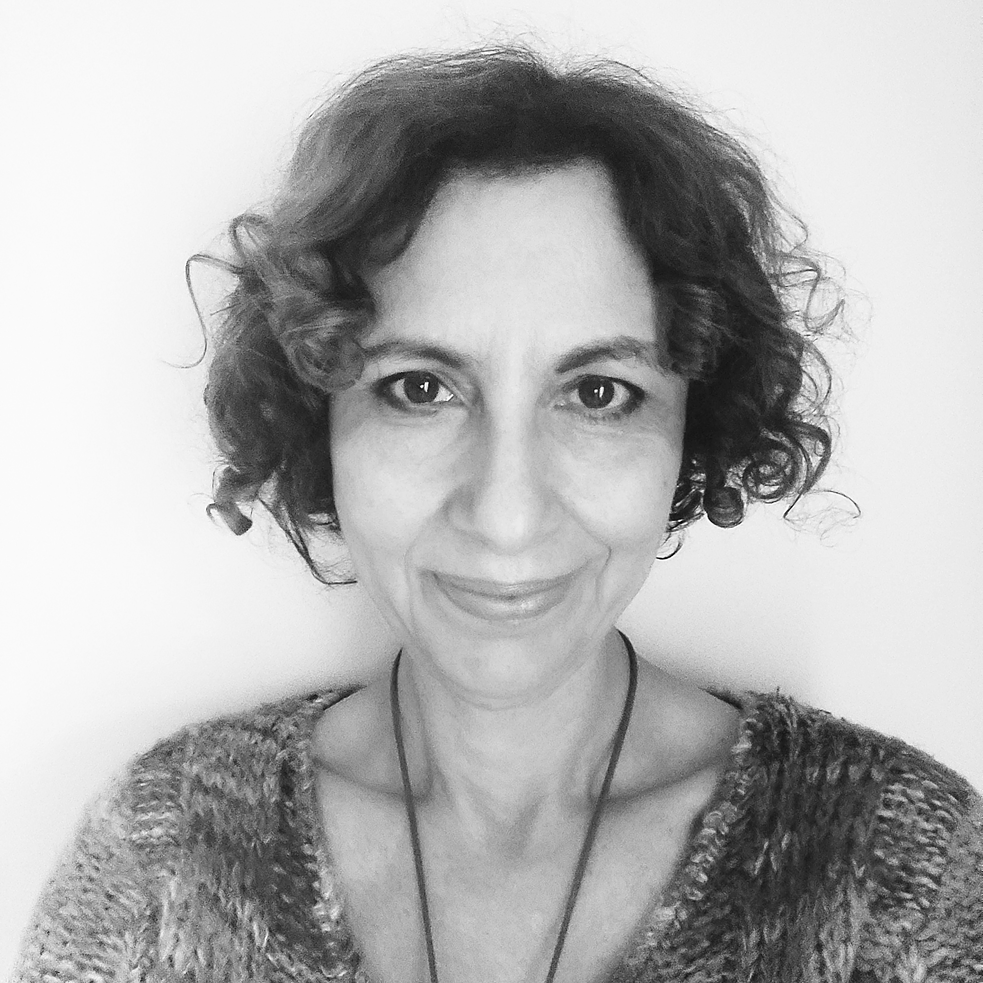
Tiziana Terranova is a professor at the University of Naples L’Orientale and a theorist of digital media, labor and social cooperation. She directs the inter-university Centre for Research on Transnational Technocultures, CRiTT, and works in the university’s postcolonial and gender studies community. Her books include Network Culture and After the Internet. Her working life also includes teaching, political self-education, translation projects, public conversations and speculative fiction.1
One of her most influential arguments begins with a difficulty she has continued to encounter: people can take pleasure in making something together while someone else captures the value. Websites and conversations made that problem visible, but they did not create it. Terranova’s own formation passed through literary study, scholarships, British university employment and a precarious return to Naples before a permanent position helped sustain another arrangement: an academic who could also make time for collectively maintained spaces of inquiry.
The relation between those positions is part of her work’s interest. She studies cooperation’s extraction while relying on cooperation to think, teach and publish. Over time, that has required more than celebrating networks. It has meant asking how a group obtains a room, how a teacher distributes attention, how people can study across unequal forms of expertise, and whose histories disappear when an explanation becomes too encompassing. Her later interlocutors have changed those questions, as well as helping her pursue them.
Literary worlds and the means of leaving
Born in Trapani, Sicily, in 1967, Terranova studied foreign languages and literatures at L’Orientale, graduating in 1991. A master’s in communications and technology at Brunel followed in 1992, then a doctorate in media and communications at Goldsmiths in 1996.2, 3 The sequence gave her a literary route into technology. Reading imagined worlds was already a practiced activity when networked computers became a subject of professional inquiry.
Science fiction supplied distinct stages of that education. Her undergraduate, master’s and doctoral theses addressed Joanna Russ, Philip K. Dick and cyberpunk; she also wrote fiction herself. In Britain she traveled to Warwick for Sadie Plant’s events, encountering a milieu where computers, gender and cultural experimentation met. Her later recollection preserves the excitement of that encounter without making it a settled doctrine. Different stories made different technological lives imaginable.4
Leaving Italy depended on institutions and money. An undergraduate supervisor encouraged experience abroad; after a London master’s, L’Orientale helped her obtain an overseas postgraduate scholarship of twenty-four million lire a year, renewed for a second year.5 Movement between countries was a funded opportunity to enter another working environment, not just an intellectual preference for cosmopolitan life.
An Erasmus year at Middlesex Polytechnic in 1990–91 and a Fulbright year at NYU in 1994–95 added further settings to that formation.6
Political learning followed other routes. Terranova recalls student resistance to neoliberal university reforms, cyberpunk and bulletin-board culture circulating through Italian social centers, and squatter and anarchopunk networks communicating through mailing lists.7 Such exchanges were made by people who had things to translate, circulate and organize. The network entered her life as a cultural and political practice alongside its promise as a new object of theory.
Her Goldsmiths thesis followed cyberpunk through fiction, pamphlets, journalism and electronic discussions, including Extropian and Mondo 2000 subcultures. It asked how these materials imagined technological autonomy and gender, and what political work the stories performed.8 That method allowed enthusiasm to become an object of inquiry: the capacity to imagine another life could be enabling, while the imagined future could still privilege particular bodies or desires.
Her first Italian book, Corpi nella rete, appeared with Costa & Nolan in 1996. Its interfaces, cyberfeminism and electronic agora placed embodiment and public encounter inside her account of Internet culture from the beginning.9 Those questions would change as the commercial network changed. They were not late additions to an originally disembodied interest in computation.
Making digital culture into a profession
She taught at Goldsmiths during her doctorate, became a lecturer at East London in 1997 and moved to Essex in 2000. At East London she convened an interdisciplinary multimedia master’s; at Essex she directed the culture and media master’s in 2002–03.10
British appointments gave Terranova a sustained place to develop the inquiry. The multimedia curriculum connected cultural studies, innovation studies, production, art and design. Questions that crossed disciplines had to become a program through which other people could learn.11
Funded research brought her into another kind of collaboration. Graham Thomas and Sally Wyatt acknowledged her as a colleague on the ESRC Virtual Society? inquiry into the Internet’s construction. Their 1999 article examined competing actors and interests shaping cyberspace.12 This placed the literary researcher alongside people investigating a technology’s actual social formation. The network had a history of choices, institutions and disputed purposes, as well as a history of stories about itself.
“Free Labor,” published in Social Text in 2000, made the economic problem sharper. Burned-out Internet workers and AOL volunteers demanding payment exposed activity that was productive without fitting an ordinary paid job. Terranova argued that online cooperation could be voluntary, pleasurable and exploited at once. Website-making, cultural knowledge and sustaining discussion entered a larger account of production extending across social life.13 Pleasure did not establish that an arrangement was fair; exploitation did not establish that participants had no reasons of their own to continue.
That conjunction is more useful than a simple opposition between paid employment and authentic activity outside it. It leaves the collective activity intact as something people value, while asking who can appropriate its effects. The problem would subsequently become practical in Terranova’s involvement with self-education and commons: people still need means of subsistence, places to meet and time to work together.
Network Culture, published in 2004, widened the analysis to information, noise, nonlinear connections and distributed control. Shannon’s information theory helped her reconsider signal and noise; the Internet’s protocols offered a diagram of openness and expansion. Biological computation and cellular automata supplied further ways to think about emergent coordination. These borrowings enlarged the scales on which culture might be understood.14 The book also had an unusually varied production setting. Berkeley’s engineering library helped with technical questions; ESRC support and two Essex study leaves supplied time. Andrew Ross and Patricia Clough were American interlocutors, while Lidia Curti, Iain Chambers, Silvana Carotenuto and Anna Maria Morelli linked the work to Naples. Nettime, rekombinant and Signs of the Times joined university exchanges. She finished during a Sicilian summer in 2003, with family and friends nearby.15
Bringing these resources together produced real possibilities and real difficulties. Andrea Zeffiro’s 2006 review valued the reach from information theory through free labor to biological computation, but found the chapters insufficiently integrated and demanding of prior knowledge. McKenzie Wark later questioned the stretching of labor and immateriality, as well as the selection of scientific concepts that might fit an existing philosophical orientation.16, 17 The objections concern a working method, not simply whether difficult theory should be made easier. Moving between explanatory scales requires showing why the move holds.
The book’s readers also took it into other kinds of work. Benedetto Vecchi’s Italian review engaged its relationship to media activism while questioning a screen-centered account of cooperation; an Esc presentation brought Terranova together with Franco Berardi and Marco d’Eramo. In San Francisco, Chris Carlsson used the book to reconsider freely shared activity in bicycle projects, gardening, free software and biodiesel.18, 19 A theory of cooperation could travel through a political venue or someone else’s fieldwork, where it encountered questions its author had not supplied.
Returning to Naples without losing the wider conversation
Terranova physically returned to Naples in 2004 through the Italian return-researcher scheme. Two-year contracts, a rejected stabilization application and difficulty matching British ranks to Italian posts made the move uncertain. Returned researchers organized pressure to clarify the rules; she received news of stabilization in July 2007. She also disliked the mechanized work, bureaucracy and competitive evaluation of Anglo-American universities, and missed the warmth and intellectual liveliness of Neapolitan students.20
The Naples associate professorship followed in 2008, after research appointments, while British collaborations continued. In 2012–16 she coordinated the anglophone cultural and postcolonial studies doctorate.21
The return was therefore not the straightforward transfer of a secure position. Homecoming had institutional costs as well as intellectual attractions. The scholar concerned with how cooperation is organized had to participate in a struggle over the conditions of her own employment.
Permanent work later made a consequential difference. In 2019 she acknowledged that citations and publications brought invitations and easier access, and that her Southern Italian public-university position shielded her from some of the anxiety borne by younger researchers. Security did not mean ample funding: publication-based allocations could amount to considerable effort for very little money.22 Her account makes a distinction that matters to the rest of the profile. Protected time can make another kind of intellectual life possible, but the established professor’s freedom cannot stand for the working conditions of everyone around her.
Naples changed the material she thought with, too. Mourning the musician Pino Daniele, she began considering smartphones and collective memory, a question that led through Deleuze back to Leibniz.23 A local emotional event could initiate philosophical reading. The city supplied more than a stable address to which an internationally circulating theory returned.
Co-editing the 2012 Theory, Culture & Society issue on topologies with Celia Lury and Luciana Parisi developed another connection between technical systems and social life. Computer networks and protocols had made topology a question for Terranova; working with the other editors changed its direction. Prigogine and Stengers offered resources for a non-reductive conversation between science and philosophy, while Spinoza’s common notions helped her ask what different bodies could compose together.24
This was a demanding extension of her earlier method. A relationship among bodies, a mathematical account and a political proposition could illuminate one another, while remaining different kinds of claim. Later conversations would expose how much such a synthesis could explain, and what it still needed to learn from other histories.
Giving collective study places and resources
Uninomade and Euronomade offered a political setting for continuing work beyond degree programs. The Eurocrisis brought finance and social provision into collective self-education. With Adalgiso Amendola and Sandro Mezzadra, Terranova co-edited a 2015 Theory, Culture & Society section. Her introduction traced that work to Uninomade’s 2010–13 seminars on neoliberalism, debt and commonfare.25 The journal was one outcome of an inquiry already happening among people trying to understand a shared crisis.
“Red Stack Attack!” in 2014 assembled discussion from Uninomade, Effimera, Commonware and San Precario, followed by a London workshop at Goldsmiths’ Digital Culture Unit. Terranova reworked Benjamin Bratton’s stack to connect virtual money, social networks and the technological organization of embodied life.26 The proposed redirection of computation toward the common remained an experiment to be made. Its authorship also involved mediation: collecting a distributed discussion into a text that could travel between political groups and academic rooms.
At Macao in Milan that June, she chaired a workshop on alternative money and financial institutions for the commons. Robin Hood’s proposed financial algorithms and Macao’s commoncoin entered a discussion of how technical and economic arrangements might sustain social and cultural activity.27 These were proposals made by particular institution-builders. A meeting could compare them and make their assumptions discussable without establishing that the promised redistribution had occurred.
Her interview with Trebor Scholz in July 2014 performed a different kind of translation. Italian social unionism and precarity met American digital labor organizing, crowdsourcing and the sharing economy through questions about their different histories and strategies.28 The work was to elicit another person’s knowledge, not to assimilate his answers into her own theory. That distinction matters in a career so often described through the circulation of named essays.
Naples gave the inquiry rooms of its own. At l’asilo in 2016, she joined Giorgio Griziotti, Chiara Rainaldi, Anna D’Ascenzio and Stamatia Portanova to discuss Neurocapitalismo. The program identified her with L’Orientale’s Technocultures Research Unit, TRU, and Euronomade. Admission was free, with voluntary contributions supporting the venue’s means of production.29 A commons here consisted of people maintaining an actual place and occasion, while university employment, technical knowledge and political affiliations brought different resources into it.
TRU’s work also reached readers through the Italian Undercommons. Harney and Moten’s book was translated by Emanuela Maltese, with a TRU introduction and Tamu–Archive Books co-publication.30 Collective study needed shared texts, a translator and independent publishers. It also brought Black radical arguments about the university into a milieu partly sustained by that university.
This conjunction complicates any easy distinction between institution and outside. Terranova’s security helped make time available for work whose purposes exceeded an individual academic career. Meanwhile, the collectively maintained venue or publisher contributed forms of access and discussion that a permanent post did not itself provide. The dependence runs in both directions.
There is a historical challenge to keep in view. Kylie Jarrett’s feminist critique of the social factory warns that unpaid reproductive and affective work long sustained capitalist life; a narrative centered on the male industrial worker can miss that history when it describes digital cooperation as newly extending production outside the factory. Her Magdalene-laundries example makes the objection institutional.31 Terranova’s early feminism does not automatically resolve it. The question is whether gendered and racialized histories continue to alter the later explanation, rather than merely appearing among its influences.
Teaching requires another organization of attention
In November 2016, Terranova invited Casa Surace to a lesson at Palazzo Giusso after supervising Riccardo Betteghella’s social-media thesis. The video-makers discussed YouTube and Facebook, automatic playback, page maintenance, brands and the movement from hobby to employment. Southern stereotypes became part of the conversation about audience and production.32 Students could ask about digital labor while talking with people doing it. A former student helped connect an academic question to a working cultural milieu.
Teaching brought the attention problem home. With more than 250 students, Terranova’s March 2020 course notice asked that general questions go into searchable blog comments, so an answer would remain available to others; personal matters belonged in office hours.33 The arrangement preserved a difference between a shared resource and an individual need. It also limited a workload in which the same question could otherwise consume a teacher’s time repeatedly in private email.
A coronavirus notice directed the class toward James Procter’s book on Stuart Hall and suggested supporting Tamu near Santa Chiara. Audio materials and forum participation organized the course alongside the reading.34 British cultural studies depended, in this setting, on a local bookshop and a set of ordinary ways to listen, obtain a book and respond.
Emergency online teaching required more learning. Terranova had long used audio alongside classroom lectures; in March 2020 she was learning Microsoft Teams and adjusting recordings, forum exercises and feedback. Her public replies explained that exercises were formative and that citing sources recognized shared knowledge as well as protecting against plagiarism.35 Digital-media expertise did not remove the practical work of becoming familiar with an interface or making it usable for a large class.
She also turned an international event into a course. The 2020 master’s laboratory on recursive colonialisms, AI and speculative computation connected a December symposium across Duke, Pennsylvania and Naples to formal credit. Four credits required a 1,500–2,000-word reflective report; a smaller route required less attendance and a shorter text. Music and screenings joined the talks and panels.36 The event became study through an assignment, participation requirements and a deadline, rather than simply through availability online.
Her attention research helps clarify what is at stake in these choices. “Attention, Economy and the Brain,” published in 2012, put scarcity accounts beside imitation, neuroplasticity and cooperation through Tarde, Lazzarato and Stiegler. Attention could produce relations and value as well as be captured or depleted.37 The classroom is not proof of every philosophical claim, but it makes the question concrete: under what arrangements can people attend together, and what falls outside a platform’s engagement count?
The work also entered art institutions. At Madre in February 2023 she co-moderated a roundtable on agency and reproduction with Florencia Cherñajovsky, alongside Angela Balzano and Nina Ferrante, within Think Tank: Reproductive Agents and its doctoral collaboration.38 The museum offered another audience and another distribution of work. Artists, curators, scholars and students met around care and reproduction; Terranova’s role was to help conduct the conversation.
Fiction returns to a changed Internet
After the Internet, published by Semiotext(e) in December 2022, gathered essays developed across the preceding years, often in activist settings. Beatrice Ferrara translated the 2024 Italian edition, Dopo Internet, for NERO.39
Terranova and Chambers had co-supervised Ferrara’s 2011 doctorate on Afrofuturism.40
Their intellectual relationship continued across different roles, from supervision to the translation that brought a later book to Italian readers. A dispersed practice of writing and speaking acquired another public form, while its arguments retained the different historical moments in which they had been made.
Terranova described the Internet as undead in her 2022 interview with Nick Dyer-Witheford and Alessandra Mularoni. The network continued, but the promise and social relations associated with it had changed. Relocation, activist intellectual work and public speaking had helped produce the essays later collected together.41 The title marked a problem of historical transformation, not the physical disappearance of networking protocols.
Fiction had already returned during the 2020 lockdown. Her Project 2501, named through Ghost in the Shell, was an imagined fugitive AI addressing the country. It acquired affects through human relations and spoke for redistribution, care, repair and resistance to machines’ planned disposability.42 The writing changed who could speak about a technological future. A system associated with surveillance became a speaker about dependence and provision, making a political argument through the position of an invented consciousness.
This return does not close the distance between fiction and institutional design. Its force lies in allowing a relationship with machines to be imagined otherwise, where an analytical description can tell us what an existing arrangement does. The early study of speculative worlds had become available again as a way of forming a question, after years spent diagnosing the commercial capture of collective activity.
Critical friendships change the scale of explanation
The Critical Computation Bureau joined Terranova with Luciana Parisi, Ezekiel Dixon-Román, Oana Pârvan and Brian D’Aquino. Its critical and creative methods included virtual symposiums, video and music across national settings.43 The group expanded the available forms of inquiry, as well as the knowledge that could question its starting assumptions.
That questioning is especially visible in Terranova’s 2021 conversation with Iain Chambers. The Mediterranean challenged a geography in which technological modernity belongs to the North or West and elsewhere merely receives it. Chambers questioned whether recursion and systems thinking could become explanations of too much; she acknowledged that she did not speak or read mathematics, while defending the artistic and poetic possibilities of computation.44 A longstanding intellectual relationship supplied disagreement, rather than an endorsement attached to a familiar colleague’s name.
The exchange makes a limit productive without making it disappear. Terranova’s practice can bring scientific concepts into a cultural and philosophical question, but poetic possibility does not settle a mathematical claim. Her strength lies in asking what a conceptual encounter opens; its adequacy still depends on how the different resources hold together.
Ravi Sundaram’s situated history demanded another revision. Colonial identification and media infrastructures in India complicated explanations beginning surveillance with Silicon Valley platforms. Terranova took that challenge into her account of the technological organization of the social; Octavia Butler’s fiction also entered their dialogue.45 Earlier histories changed what the present required explaining. Postcolonial critique here does more than enlarge a list of places: it alters the adequacy of a general account.
The bureau’s 2025 “Recursive Apocalypse,” co-authored by Dixon-Román, Parisi, Pârvan and Terranova, continued that inquiry through colonial expropriation, racial capitalism and Black radical traditions.46 These intellectual resources remain different in kind. Literary speculation, mathematical concepts, feminist labor histories and colonial infrastructures do not all name the same insight; they can also correct one another.
In 2024, speaking with Daniël de Zeeuw, Terranova rejected an innocent early-Internet nostalgia while treating AI as an appropriation of collective knowledge. Her own codified European grant applications offered an example of academic labor susceptible to automation. Fred Moten’s jazz thinking and Salvatore Iaconesi and Oriana Persico’s neighborhood experiments suggested different ways to imagine cooperation with machines.47 The discussion returned the professor to the world she studied: her own work contains standardized routines, while the purposes of a social relation exceed those routines.
The image could not be loaded. View the original using the source link below.
A sustained position and concepts still being revised
Terranova also carried that attention to informal activity into European research institutions. Andrea Miconi’s 2024 EUMEPLAT white book names her as a scientific consultant and records her Rome intervention urging attention to social energies outside established organizations.48 The contribution fits an academic life conducted inside funded research but also in places its administrative descriptions cannot entirely contain.
Her terminology has continued to change. The 2024 article “Technoliberalism and the Network Social” developed the relation between digital systems and social organization; its author notice then described Network Social as forthcoming.49 In the March 2026 response “After After the Internet,” she reconsidered the earlier book against technological capital’s neo-reactionary turn, the fragility of screen-based relations and questions about their neurological dynamics. She retained a place for organized opposition while taking critical discussion as a reason to revise the account.50
The 2026 transnational-technocultures collaboration supplies another occasion for doing so. Northwestern’s Domietta Torlasco is principal investigator, with Terranova at CRiTT and Premesh Lalu at the University of the Western Cape as partners. The announced program of three virtual workshops and an in-person conference connects Naples, the United States and South Africa around attention and social life.51, 52 They provide a means for sustained conversation, without determining its conclusions in advance.
Terranova’s trajectory is therefore held together by more than a recurring theory of networks. A literary education gave her a way to follow technological stories; scholarships and teaching made the inquiry a profession; unstable return and later security changed the time available to pursue it. Self-education, classrooms, translators, venues and critical interlocutors gave cooperation different working forms. Her concepts have had to change as those encounters brought histories or limits into view.
The enduring question concerns what makes collective capacities livable for the people producing them. A free discussion needs support; an open event needs pedagogy; a professor’s freedom depends on an employment structure others may not possess. At its most specific, Terranova’s work keeps those conditions inside the thought itself, while allowing literature and other people’s knowledge to disturb what the thought has become accustomed to seeing.
Notes and sources
Sources cover the public record through October 2026. Interviews retain the dates and perspective of recollection. Appointment details follow the formal CV where shorter biographies differ. Some publication descriptions and abstracts support bounded accounts rather than full-text interpretation; these limits are noted individually.
L’Orientale, current faculty profile, including departmental affiliation, CRiTT directorship, research centres, and current teaching. Institutional status checked October 2026.↩︎
IULM, recruitment committee minutes, 28 February 2025, p. 6: Terranova’s signed declaration establishes Trapani and 1967.↩︎
Laura Borràs Castanyer, ed., Textualidades electrónicas, contributor biographies, first edition 2005. Degree institutions and years agree with Terranova’s CV.↩︎
Fiona Duncan, conversation with Terranova and Mindy Seu, Gagosian Quarterly, 14 February 2023. Autobiographical recollections and cyberfeminist context.↩︎
Valentina Orellana, “Tiziana Terranova, un ‘cervello’ rientrato”, Ateneapoli, no. 20, 11 December 2009, p. 28. Reported return and stabilization dates differ from formal CV appointments.↩︎
Terranova, English curriculum vitae, pp. 1–5. Appointment dates follow this CV; shorter biographies differ.↩︎
Mariano Fernández and Aline Dalmolin, interview with Terranova, InMediaciones de la Comunicación 20(1), 2025, 55–64; public reproduction. Recalled activism is not precisely dated.↩︎
Goldsmiths, doctoral thesis record and abstract, 1996. The account here concerns the documented research questions and materials, not an unavailable full-text reading.↩︎
L’Orientale, Corpi nella rete publication record, 1996; NERO’s author biography corroborates Costa & Nolan as publisher. Book description only; full text unavailable.↩︎
Terranova, English curriculum vitae, pp. 1–5. Appointment dates follow this CV; shorter biographies differ.↩︎
Terranova, English curriculum vitae, pp. 1–5. Appointment dates follow this CV; shorter biographies differ.↩︎
Graham Thomas and Sally Wyatt, “Shaping Cyberspace”, Research Policy 28(7), 1999, 681–98. Acknowledgments identify Terranova as a project colleague, not article coauthor.↩︎
Terranova, “Free Labor: Producing Culture for the Digital Economy”, Social Text 18(2), 2000, 33–58. Current publisher and MIT-copy access failed; the account retains the prior researched reading. Book reprints share the essay’s source identity.↩︎
Terranova, Network Culture, Pluto Press, 2004, accessible acknowledgments and introduction. These establish the book’s material and intellectual supports.↩︎
Terranova, Network Culture, Pluto Press, 2004, accessible acknowledgments and introduction. These establish the book’s material and intellectual supports.↩︎
Andrea Zeffiro, review of Network Culture, Canadian Journal of Communication 31(3), 2006, 779–81; earlier review reproduction, empty on recheck. Publisher indexing corroborates the record; the account retains the prior researched reading.↩︎
McKenzie Wark, “CRIT: Critical and Radical Information Theory”, Public Seminar, February 2017. Criticisms are Wark’s interpretation, not established refutations.↩︎
Benedetto Vecchi, “La grande Rete oltre i limiti dello schermo”, il manifesto, February 2006. Contemporary review and announcement of the Esc presentation; later archive metadata requires care.↩︎
Chris Carlsson, Network Culture reader response, Nowtopian, 4 January 2005. This account uses Carlsson’s own reception, without reproducing Terranova’s passages quoted there.↩︎
Valentina Orellana, “Tiziana Terranova, un ‘cervello’ rientrato”, Ateneapoli, no. 20, 11 December 2009, p. 28. Reported return and stabilization dates differ from formal CV appointments.↩︎
Terranova, English curriculum vitae, pp. 1–5. Appointment dates follow this CV; shorter biographies differ.↩︎
Vivien Hard and Christopher Olk, interview on research metrics, Alexander von Humboldt Institute for Internet and Society, 25 August 2019. Terranova distinguishes her security from younger scholars’ precarity.↩︎
Mariano Fernández and Aline Dalmolin, interview with Terranova, InMediaciones de la Comunicación 20(1), 2025, 55–64; public reproduction. Recalled activism is not precisely dated.↩︎
Simon Dawes, interview with Lury, Parisi, and Terranova on topologies, concerning Theory, Culture & Society 29(4–5), 2012. Only Terranova’s answers are attributed to her.↩︎
Terranova, “Introduction to Eurocrisis, Neoliberalism and the Common”, Theory, Culture & Society 32(7–8), 2015, 5–23. Abstract and publication record. Terranova authored this introduction; she co-edited the section with Adalgiso Amendola and Sandro Mezzadra.↩︎
Terranova, “Red Stack Attack!”, Euronomade, 8 March 2014. Original standalone essay; translations and anthology reprints share its source identity.↩︎
Effimera, alternative money workshop report, Macao, Milan, 21–22 June 2014. Participant report; financial claims were not independently audited here.↩︎
Terranova and Trebor Scholz, “Trade Unionism, Digital Labor and the Sharing Economy”, Euronomade, 18 July 2014. Terranova interviews Scholz; answers retain his authorship.↩︎
l’asilo, Neurocapitalismo event, 29 June 2016. Program, participant biographies, and admission arrangements establish the local organizational setting.↩︎
Archive Books, Italian Undercommons edition. Publisher credits Harney and Moten, translator Emanuela Maltese, the TRU introduction, and Tamu–Archive co-publication.↩︎
Kylie Jarrett, “Laundering women’s history: A feminist critique of the social factory”, First Monday 23(3), 5 March 2018, DOI 10.5210/fm.v23i3.8280.↩︎
Sabrina Sabatino, Casa Surace classroom report, Ateneapoli, no. 20, 9 December 2016, p. 28. The original issue anchors the lesson in 2016.↩︎
Terranova, “No email sì blog”, course blog, 7 March 2020. A public record of communication rules for a large class.↩︎
Terranova, coronavirus teaching notice, 6 March 2020. Reading, bookshop, audio, and forum arrangements are specific to this notice.↩︎
Terranova, online teaching update and public replies, 16 March 2020, including her 24 March response. Post and conversation treated as one source.↩︎
Terranova, recursive colonialisms master’s laboratory announcement, 28 October 2020. Assignment requirements link the December symposium to formal university credit.↩︎
Terranova, “Attention, Economy and the Brain”, Culture Machine 13, 2012. Full essay; later collections do not constitute independent sources for the same text.↩︎
Madre museum, Think Tank: Reproductive Agents program, February–May 2023. The program specifies the 25 February roundtable and collaboration with doctoral studies.↩︎
Semiotext(e)/Penguin Random House, After the Internet, 13 December 2022; NERO, Dopo Internet, 2024, translation by Beatrice Ferrara. Reproduced publisher descriptions form one source group.↩︎
Terranova, English curriculum vitae, pp. 1–5. Appointment dates follow this CV; shorter biographies differ.↩︎
Nick Dyer-Witheford and Alessandra Mularoni, 2022 Terranova interview, accessible excerpt. The original Project PPPR page was unavailable; the scope here is the reproduced excerpt.↩︎
Terranova, Project 2501 speech, Ecologie Politiche del Presente, 20 March 2021. Context identifies a 2020 lockdown text; reproductions of the fiction share one source group.↩︎
Critical Computation Bureau, collective description and members. The group’s public statement identifies its collaborative methods and symposium settings.↩︎
Terranova and Iain Chambers, “Technology, Postcoloniality, and the Mediterranean,” e-flux 123, December 2021; full institutional reproduction.↩︎
Terranova and Ravi Sundaram, “Colonial Infrastructures and Techno-social Networks,” e-flux 123, December 2021; full institutional reproduction.↩︎
Dixon-Román, Parisi, Pârvan, and Terranova, “Recursive Apocalypse”, Communication, Culture & Critique 18(3), 2025, 218–23, DOI 10.1093/ccc/tcaf027. Abstract and bibliography only.↩︎
Terranova and Daniël de Zeeuw, conversation on AI, Institute of Network Cultures, 23 April 2024. First-person academic work examples and alternative social relations.↩︎
Andrea Miconi, EUMEPLAT white book, final version 6 March 2024, especially the consultation discussion. Terranova’s intervention is distinguished from the report’s authorship.↩︎
Terranova, “Technoliberalism and the Network Social”, Theory, Culture & Society 41(7–8), 2024, 89–104. Abstract, bibliography, and author biography; forthcoming status is not publication confirmation.↩︎
Terranova, “After After the Internet”, Dialogues on Digital Society 2(1), 2026, 104–08, online 25 March. Full response to critical discussions of the book.↩︎
L’Orientale, transnational technocultures grant announcement, 26 January 2026. Torlasco is principal investigator; Terranova and Lalu are partners.↩︎
Northwestern Buffett Institute, Global Collaboration Grant awardees, 2025–26 cohort, Torlasco project. The announced program describes three virtual workshops and one in-person conference.↩︎