A consolidated study of his intellectual formation, Adelphi, publishing practice, writings, networks, economics, and historical conditions
Contents
- A composite vocation
- Florence: family, books, and historical memory
- Rome: classics, cinema, Proust, and Germany
- Browne, hieroglyphs, and the Warburg formation
- Bobi Bazlen: judgment as a vocation
- Adelphi before Calasso: the collective prehistory
- Why 1962 mattered: postwar Italy and the opening in the field
- Patient capital and the long years of loss
- From the libro unico to the Adelphi book
- Series, covers, and the material form of the catalogue
- The risvolto: one thousand miniature acts of mediation
- Translation as infrastructure
- Backlist economics: the hidden machine
- Simenon: discovery by re-description
- The networked publisher: authors, agents, translators, and private sociability
- Calasso the writer emerges inside Calasso the editor
- L’impuro folle: law, madness, and invisible order
- The Ruin of Kasch: the system appears
- The unnamed work
- The Marriage of Cadmus and Harmony: myth without decoding
- Ka and India: comparative imagination and its risks
- K.: modern mythology without named gods
- Tiepolo and Baudelaire: images become protagonists
- Ardor: ritual exactitude and the theory of form
- Absolute literature and the sovereign reader
- The publisher as author
- Management: institutionalizing taste
- Ownership and the concentration of responsibility
- The problem of “apolitical” publishing
- 1994 and the consolidation of Calasso
- The self-mythology of Adelphi
- The common grammar of publishing and writing
- Calasso’s modernity: neither simple nostalgia nor simple conservatism
- Where the method becomes vulnerable
- What made a Calasso possible
- Why “Renaissance man” is the wrong model
- Adelphi as an anti-algorithm
- Succession, durability, and the problem of the house after Calasso
- The late books and the closing recursion
- Network map
- A reading architecture for the career
- Conclusion: selection as a generative act
- Sources and further reading
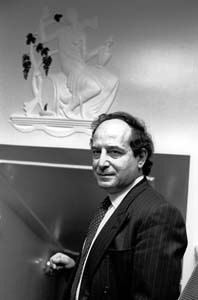
The image could not be loaded. View the original using the source link below.

1. A composite vocation
Roberto Calasso is easiest to misunderstand if one begins with the finished image: the immensely learned European publisher in the Milan office, moving between Sanskrit ritual, Kafka, Tiepolo, Baudelaire, Simenon, Nietzsche, and the typography of an Adelphi cover as though these naturally belonged to a single life. They did not. The significant thing is how they were made into one.
Calasso occupied several positions that modern cultural institutions usually separate. He was a controlling publisher, an acquiring editor, a close reader of translations, a writer of jacket copy, a selector of images, an interpreter of authors, an author whose own books belonged to the catalogue he directed, and eventually a majority owner whose financial exposure was tied to his editorial judgment. He entered Adelphi in 1962 at twenty-one, became editorial director in 1971, managing director in 1990, president in 1999, and majority owner in 2015.1
The chronology matters. His first book did not appear until 1974, more than a decade after he had entered publishing. La rovina di Kasch, the first major volume of the long sequence for which he became internationally famous, appeared in 1983. The mature writer therefore developed inside editorial work rather than alongside it.
By the time his own characteristic prose emerged, Calasso had already spent years doing the things that editors do: evaluating manuscripts, thinking across complete oeuvres, comparing editions, discussing rights, working with translators, composing paratext, choosing images, deciding print runs, and seeing how the position of a book within a list changes what readers think it is. In his long Paris Review interview, he described attempting to preserve mornings for his writing and afternoons for Adelphi, though the two activities constantly contaminated each other. His own books were composed non-linearly from thousands of handwritten notes and fragments that were later arranged into mosaics.2
That last fact is more than a biographical curiosity. Selection and arrangement were Calasso’s fundamental intellectual operations. They governed his prose, his library, his cover choices, the shape of Adelphi’s catalogue, and his conception of history. His career is therefore best understood not as two careers - publisher and writer - but as one immense experiment in editorial montage.
A publishing house, in his mature conception, was not primarily a company that manufactured discrete products. It could become a work whose units happened to be books by many different people. A forgotten Mitteleuropean novelist beside a Vedic text beside a work of ethology beside Simenon could create an intellectual landscape that none of the books contained by itself. Calasso’s own writings operate similarly. The Ruin of Kasch, Ka, K., La Folie Baudelaire, and Ardor create knowledge by placing myths, quotations, images, ritual systems, political forms, and literary works into relations whose force is often greater than any explicit argument connecting them.
The medium changes. The operation does not.
2. Florence: family, books, and historical memory
Calasso was born in Florence in 1941 into a family in which scholarship, publishing, political history, and old books were ordinary domestic facts rather than remote aspirations. His father, Francesco Calasso, was a distinguished historian of medieval law. His mother, Melisenda Codignola, had studied Greek literature and worked on Hölderlin’s translations of Pindar. His maternal grandfather Ernesto Codignola was a philosopher, educational reformer, founder of the experimental Scuola-Città Pestalozzi, and founder of the publishing house La Nuova Italia. His uncle Tristano Codignola participated in the Resistance and later entered educational and parliamentary politics.3
This was not merely a family that valued reading. Publishing was already one imaginable form of adult intellectual life.
The material environment mattered. Calasso later remembered his father’s library as filled with sixteenth-, seventeenth-, and eighteenth-century legal folios, many in Latin. His grandfather’s library constituted another world; Florence’s Gabinetto Vieusseux constituted a third. He grew up with books before he learned to think of them as cultural products. They had weight, paper, bindings, provenance, typography, and physical adjacency. That early material familiarity helps explain why the later publisher never considered design a cosmetic layer added after editorial work.4
The political and historical environment was equally significant. Francesco Calasso was an anti-Fascist. In 1944, after Giovanni Gentile’s assassination, he was among professors arrested and threatened with execution in reprisal; the family subsequently had to hide. Calasso’s earliest memories included wartime Florence, concealed spaces, and gunfire.5
It would be reductive to derive his later obsession with sacrifice, sovereignty, and violence psychologically from childhood. But it is important that the European catastrophe was not initially an intellectual topic for him. It belonged to the biographies of the adults who formed him. Fascism and anti-Fascism, German culture and German catastrophe, Jewish and Central European intellectual displacement, the postwar struggle over Nietzsche, and the political passions of the Italian Republic entered his later work through living networks as much as through books.
This gives Calasso’s later distance from conventional political alignments a more precise genealogy. It was not the distance of someone innocent of politics. It emerged within a family intensely embedded in political and intellectual history.
3. Rome: classics, cinema, Proust, and Germany
The family moved to Rome in 1954 when Francesco Calasso took up a university position there. The adolescent Roberto then acquired another formation altogether.
One part of it was surprisingly cinematic. He later remembered going to the cinema once or twice a day, becoming fascinated by Hollywood genres and Marlon Brando, and even writing a screenplay based on Lord Jim. At school, meanwhile, Maria Di Porto gave him a serious education in Greek and Latin.6
This double formation - classical philology and moving images - is worth retaining. The later Calasso was never simply a textual scholar. Images possessed autonomous cognitive force for him. His dissertation would concern hieroglyphs; his books on Tiepolo and Baudelaire would be organized around visual constellations; Adelphi covers would become one of the most recognizable image archives in European publishing.
At twelve he also met Enzo Turolla, ten years his senior, whom Calasso later described as perhaps the finest reader he had known. Their friendship began through a disagreement about Croce’s treatment of Baudelaire. Turolla led him deeply into Proust; Calasso read À la recherche du temps perdu in French while still very young and continued returning to it throughout his life.7
This reveals a characteristic feature of his formation: his decisive teachers were often readers rather than professors. What mattered was not merely possession of knowledge but a nearly tactile ability to discriminate among books, passages, editions, and styles.
Calasso also opened what Andrea Lee called his German channel: Romanticism, Nietzsche, Adorno, the Frankfurt School, and related worlds. His curiosity often preceded Italian availability. He learned enough German to read works that had not yet entered convenient Italian circulation. His first published essay concerned Adorno and Surrealism.8
By early adulthood, the constellation already contained much of the later Adelphi world: Greek and Latin antiquity, Proustian modernity, German philosophy, Central Europe, Symbolism, psychoanalysis, cinema, image culture, and traditions that did not fit comfortably into a single academic department.
Calasso’s future institution would provide such a department.
4. Browne, hieroglyphs, and the Warburg formation
Calasso studied English literature at the University of Rome under Mario Praz. His thesis concerned Sir Thomas Browne’s theory of hieroglyphs and was eventually published much later as I geroglifici di Sir Thomas Browne.9
The choice was extraordinarily diagnostic. Browne stands at a hinge between empirical knowledge and inherited cosmology, classification and marvel, philology and image, modern scientific curiosity and older symbolic systems. For Calasso, the hieroglyph meant more than Egyptology. It represented the possibility of a language of images whose relation to meaning precedes or exceeds ordinary discursive explanation.
While researching in London, he divided his time between the British Museum Library and the Warburg Institute.10 One should be careful about calling Calasso a Warburgian in a strict disciplinary sense. He was not a scholar formed within Warburg studies. But the resemblance of intellectual morphology is profound.
Warburg’s Mnemosyne Atlas generates historical knowledge through juxtaposition, recurrence, migration, and interruption. An image carries an afterlife across time; meaning appears through adjacency rather than linear exposition. Calasso’s mature books similarly allow Talleyrand, Vedic sacrifice, Kafka, Baudelaire, Léon Bloy, Greek gods, hunters, painters, and anthropologists to illuminate one another across enormous distances.
Adelphi eventually operates in a comparable way at catalogue scale.
The Browne dissertation is therefore not youthful trivia. It contains an early version of the entire later project: images and texts as mobile signs; meaning created by relation; modernity inhabited by survivals it cannot completely recognize.
5. Bobi Bazlen: judgment as a vocation
Calasso met Roberto “Bobi” Bazlen around 1960. Bazlen, born in Trieste in 1902 into a German-Italian milieu, belonged to a nearly vanished type: a multilingual reader, scout, mediator, and adviser whose influence on publishing greatly exceeded his desire to become an author. He had played an important role in the reception of Italo Svevo and Central European modernism and spent much of his life recommending books, introducing people, and identifying neglected works.11
Calasso later described Bazlen as something like a Taoist master: someone who taught by refusing the recognizable posture of teaching. Bazlen distrusted the assumption that an intelligent person necessarily ought to produce books.12
This was decisive. Before Calasso became a professional author, he encountered a model of intellectual life in which judgment itself could constitute a vocation.
Bazlen’s most famous editorial category was the libro unico, the “unique book.” This did not simply mean a masterpiece. It meant something more like a work in which an experience, sensibility, or mode of knowledge had crystallized so completely that ordinary genre and market categories became secondary. Alfred Kubin’s The Other Side, Edmund Gosse’s Father and Son, and Jan Potocki’s Manuscript Found in Saragossa became emblematic cases in the early Adelphi imagination.13
The principle was not “publish difficult books.” It was publish books whose necessity can be perceived before their market category can.
Bazlen’s gift was singular recognition. Calasso’s later achievement would be to transform that private readerly capacity into an industrially viable institution.
6. Adelphi before Calasso: the collective prehistory
The mature Calasso’s recollections can make Adelphi’s foundation sound almost mythological: Bazlen tells the twenty-one-year-old Calasso that a publishing house will be created where they can publish only the books they truly like; the young man joins; the rest follows. Something like this happened, but archival research makes the history richer and less solitary.
Anna Ferrando’s Adelphi. Le origini di una casa editrice (1938-1994) traces the prehistory of the house back into relationships formed from the late 1930s onward. Lodovica Braida’s historiographical discussion of Ferrando makes the correction explicit: Adelphi emerged from exchanges among Bazlen, Luciano Foà, Alberto Zevi, Ernst Bernhard, Giorgio Colli, Erich Linder, and other figures whose networks included anti-Fascism, Central European literature, psychoanalysis, Jewish intellectual life, publishing, finance, and literary mediation.14, 15
This makes Calasso more interesting, not less. He did not create the ecology ex nihilo. He entered an ecology and eventually learned to synthesize its functions.
Luciano Foà: institution
Foà supplied something Bazlen largely did not: institutional intelligence. He had worked at Einaudi and understood contracts, rights, production, finance, organization, and the practical vulnerabilities of publishing. The celebrated story of Adelphi’s genesis partly turns on Einaudi’s reluctance to undertake Giorgio Colli and Mazzino Montinari’s monumental critical Nietzsche edition. Foà left; the Nietzsche project became foundational to Adelphi.16
Bazlen could imagine the impossible catalogue. Foà knew invoices had to be paid.
Calasso learned between them.
Colli and Montinari: philology
The Nietzsche edition established another foundational pole: exact scholarship. Colli and Montinari’s work on Nietzsche’s manuscripts in Weimar challenged inherited editorial distortions and required extraordinary philological discipline.
This is why the cliché of Adelphi as merely a house of esotericism is misleading. Its appetite for myth, mysticism, Jung, heterodox psychology, and religious traditions coexisted from the beginning with a severe concern for textual accuracy.
The combination - philology plus the supposedly irrational - is far closer to Calasso than either side alone.
Ernst Bernhard: psychoanalysis and symbolic worlds
Ernst Bernhard, the German-Jewish Jungian analyst who settled in Italy, supplied another channel: Jung, psychoanalysis, religious symbolism, and cosmopolitan Roman intellectual networks. It was at Bernhard’s villa at Bracciano, in Calasso’s recollection, that Bazlen first spoke to him about the projected publishing house.17
Bernhard is a reminder that Adelphi’s interest in material considered “irrational” by postwar rationalists had a concrete social infrastructure. It was not an abstract programme invented by Calasso.
Editors, translators, agents, and patrons
Piero Bertolucci, Renata Colorni, Claudio Rugafiori, Giuseppe Pontiggia, Roberto Olivetti, Elena Croce, Alberto Zevi, Erich Linder, and many others supplied parts of the apparatus. Ferrando emphasizes the early house’s striking lack of professional specialization: individuals often combined production, editorial, administrative, and publicity responsibilities. Women who worked as editors, translators, patrons, and mediators are particularly liable to disappear behind the later one-man story.18
The right image of early Adelphi is therefore not a court orbiting Calasso. It is a small, undercapitalized, unusually cultivated workshop whose competencies were distributed across a network.
The later Calasso became powerful partly because he spent three decades absorbing that network’s capacities.
7. Why 1962 mattered: postwar Italy and the opening in the field
Adelphi’s founding coincided with a transformation of Italian reading. The economic boom, mass secondary education, university expansion, urbanization, television, and rising cultural consumption widened the public for books. Publishers such as Einaudi, Feltrinelli, Il Saggiatore, Laterza, Mondadori, Bompiani, Garzanti, and il Mulino were developing sharply differentiated identities. Treccani describes the period as the high age of the Italian editore protagonista: publishers who articulated recognizable cultural programmes through their lists.19
Calasso therefore came of age in a peculiar historical interval. The old European publisher as cultural personality had not yet disappeared, while the potential audience for difficult translated literature was expanding.
The Italian field was also ideologically organized. Marxist and Communist intellectual culture was powerful; Catholic institutions formed another large sphere; secular liberal and socialist traditions another. Adelphi found negative space between them.
Whole territories sat awkwardly inside prevailing classifications: Nietzsche after Fascist appropriation; Jung and heterodox psychoanalysis; Central European writers; mystical texts; fantastic literature; anthropology; ethology; ancient religious traditions; difficult modernists; and books that did not accept the reigning division between rational seriousness and “irrational” experience.
Adelphi could initially specialize in things other institutions had trouble placing.
Its “apoliticism,” later claimed strongly by Calasso, was never literally outside politics. But there was a genuine editorial insight: an intellectual field organized by powerful ideologies necessarily leaves blind spots. Those blind spots can become a publisher’s territory.
8. Patient capital and the long years of loss
The romantic story of Adelphi risks obscuring an elementary fact: it lost money for a long time.
Ferrando’s archival research shows red accounts across much of the early history. The Nietzsche project was expensive; distribution was weak; the catalogue required investment before it could generate stable returns. The acquisition of the Frassinelli catalogue in 1965 broadened the commercial base, while later access to stronger national distribution and promotional infrastructure helped transform the company’s prospects.20
This changes how one should understand Calasso’s famous idea that a publisher should publish only books it deeply believes in. Such freedom was not immaterial. It depended on infrastructure.
Early shareholders and supporters included people connected to industrial and financial worlds. Roberto Olivetti, Alberto Zevi, members of the Falck milieu, Carlo Caracciolo, and later relations around the Agnelli sphere mattered at different moments. Capital allowed the house to survive while its identity accumulated.21
The freedom was therefore financed freedom.
That does not make it fraudulent. It makes it institutional.
One of the most revealing documents in Ferrando’s reconstruction, quoted in Bruno Simili’s review of her book, is a July 1968 letter from Foà to Elena Croce: prize-driven sales could reduce the money requested from shareholders and with it their leverage. Editorial independence grows when the house can finance itself.22, 23
This is a much more useful account of autonomy than romantic purity.
Calasso’s great institutional achievement was not simply selecting strange books. It was making strangeness economically cumulative.
By 1992, The New Yorker reported Adelphi turnover of roughly 32 billion lire, approximately US$21 million at contemporary exchange rates.24 The fragile workshop had become a substantial business without abandoning the logic that had made it distinctive.
9. From the libro unico to the Adelphi book
Bazlen’s libro unico implied that rarity resided in the individual work. Calasso gradually performed a subtle inversion.
By the 1980s and 1990s, readers increasingly trusted Adelphi itself. Ferrando describes the transformation precisely: the publisher’s mark came to confer a kind of uniqueness upon each volume. Graphic identity, paratext, translation, selection, and accumulated reader experience meant that an unfamiliar author no longer arrived alone. The whole preceding catalogue silently vouched for it.25
This is brand formation in an unusually intellectual sense.
Most brands reduce uncertainty by promising sameness. Adelphi reduced uncertainty while promising difference.
A reader did not know whether the next book would be Austrian fiction, a study of animal behavior, an Indian scripture, Simenon, Nabokov, a forgotten memoir, or an eccentric religious text. What was predictable was a certain quality of encounter.
Calasso repeatedly described the publisher’s list as something like a single book written through many books by other people. That metaphor has a business mechanism beneath it. If readers buy the next “chapter” partly because they trust the preceding chapters, the catalogue acquires compound value.
This is one of the key differences between Adelphi and a merely prestigious imprint. The list did not simply certify quality. It taught readers to move laterally.
10. Series, covers, and the material form of the catalogue
The catalogue became legible through series architecture. The Biblioteca Adelphi provided the most famous visual system, while Il ramo d’oro, Piccola Biblioteca Adelphi, and other series created distinct but related zones. Scholarship on Adelphi’s design history makes clear that these systems had collective origins, including important work by Michele Ranchetti, Nino Cappelletti, and others before Calasso’s later dominance.26, 27
A series does several things at once. It gives a book a recognizable home, creates family resemblance across radically different contents, communicates expectations of format and price, encourages collecting, and turns each new title into an addition to an existing intellectual world.
Calasso became increasingly involved in cover images. His preference was generally not for commissioned illustrations that explained a book. He wanted pre-existing images capable of entering into an oblique relation with the text. He often avoided excessively familiar masterpieces, because familiarity could kill the small shock of recognition he wanted. Artists repeatedly useful to the Adelphi image-world included William Blake, Léon Spilliaert, Félix Vallotton, Vilhelm Hammershøi, George Tooker, and Alex Colville.28
The cover therefore did not ordinarily say, “This is what happens in the book.” It said something closer to: this image seems to have been waiting for this book.
That is precisely Calassian. The cover is another montage operation.
Typography and paper mattered for the same reason. When Calasso bought control of Adelphi in 2015, he described his role not merely as deciding which titles to publish, but as deciding covers, paper, typefaces, language, and print runs.29
Notice the last item. The aesthete is simultaneously doing inventory economics.
11. The risvolto: one thousand miniature acts of mediation
An especially revealing part of Calasso’s work is easy to miss outside Italy: the risvolto, the jacket-flap text.
He wrote enormous numbers of them - eventually well over a thousand. For Calasso, this was not disposable marketing copy. The risvolto occupies an exact threshold between interpretation and sale. It must say something nontrivial about a book while making a stranger want to open it.
The collection Cento lettere a uno sconosciuto takes its title from this premise: each text is a letter to an unknown reader. Adelphi’s own description presents the catalogue itself as a “possible world” produced through a mixture of intention and chance.30
The risvolto may be the smallest unit of the Calasso vocation.
Scholarship has a known reader: another specialist. Advertising has a statistical reader: a target segment. Calasso’s jacket copy addresses a reader who does not yet know that a particular appetite exists.
That is also how he conceived publishing.
The publisher does not merely satisfy demand. The publisher can discover a demand by giving it an object.
12. Translation as infrastructure
A house built so heavily on foreign literatures stands or falls with translation.
Renata Colorni gives unusually concrete testimony about how this worked. Calasso and Foà recruited her in 1979 after noticing the literary quality of her translation work on Freud. She subsequently translated and revised authors including Canetti, Thomas Bernhard, Dürrenmatt, Joseph Roth, Schnitzler, Werfel, and others. She recalled Adelphi’s willingness to spend not only money but time on translation: the line-by-line revision of Karl Kraus’s vast The Last Days of Mankind could occupy months without management insisting that the book be rushed out.31
Her Joseph Roth example is particularly important. Major Roth works had already appeared in Italian. Adelphi nevertheless made him feel newly discovered through retranslation, redesigned editions, sequencing, and repositioning.
That reveals the true unit of the Adelphi product.
It was not merely a copyright. It was an edition.
An edition is a compound object: author + translation + editorial apparatus + material form + image + publisher + series + catalogue context + timing.
Adelphi’s durability came partly from unusually high control over all of those variables.
14. Simenon: discovery by re-description
Nothing explains Calasso’s commercial intelligence better than Georges Simenon.
Simenon was hardly an obscure author. He was one of the most prolific and widely read writers in Europe. The editorial opportunity was not discovery in the ordinary sense. It was reclassification.
Italian publishing had tended to concentrate on Maigret while allowing Simenon’s non-Maigret novels to recede. Calasso approached Simenon in the early 1980s and proposed beginning precisely with the material the incumbent framework had undervalued. Adelphi’s first Simenon appeared in 1985; the house eventually obtained the Maigret books as well.33
By the late 2000s, Adelphi had sold millions of Simenon volumes, with substantial sales both for Maigret and the so-called romans durs.34
The accomplishment was not “selling popular fiction in elegant covers.” Adelphi re-described Simenon.
Readers were invited to stop seeing two separate products - a detective-series manufacturer and a serious novelist - and encounter one oeuvre. Translation, sequencing, design, and the prestige accumulated elsewhere in the catalogue changed the literary object.
This is quintessential Calasso publishing.
Sometimes the unknown book is literally unknown.
Sometimes the unknown book has been sitting in front of everyone under the wrong description.
16. Calasso the writer emerges inside Calasso the editor
Chronology matters again.
Calasso entered Adelphi in 1962. He became editorial director in 1971. His first book appeared in 1974. La rovina di Kasch arrived in 1983.37
So the writer emerges after more than a decade of editorial labor.
That helps explain why his prose does not resemble normal academic scholarship or normal narrative nonfiction. His daily intellectual environment already consisted of introductions, afterwords, translations, reports, complete oeuvres, strange editions, rights catalogues, jacket copy, and conversations about books.
The natural unit of his writing was not the argument.
It was the fragment in a constellation.
He wrote by hand, often composing sections without knowing their eventual position. Thousands of cards accumulated under the deliberately unspecific name “the material.”38
The procedure is almost editorial before it is literary:
write the pieces; recognize hidden relations; determine the sequence.
17. L’impuro folle: law, madness, and invisible order
Calasso’s first book, L’impuro folle (1974), grew out of work connected to Daniel Paul Schreber, the German judge whose memoir of psychosis became canonical through Freud.
The subject is revealing. Schreber lies at the intersection of law, paranoia, divine command, interpretation, bureaucracy, sexuality, sovereignty, and private cosmology. For the son of a historian of law who would later write repeatedly about invisible orders and sacrificial systems, he is an uncannily appropriate beginning.
The book also demonstrates Calasso’s refusal of disciplinary boundaries before that refusal became his signature. It does not fit neatly into a single disciplinary category: Adelphi calls it a novel in the form of a delirium, while the critical description it reproduces follows its movement across psychology, history, myth, and images.39 It asks, implicitly, what happens when the invisible order governing a world becomes perceptible only in a distorted and unbearable form.
That question never really leaves him.
18. The Ruin of Kasch: the system appears
La rovina di Kasch (1983) is the real beginning of the mature project.
Italo Calvino’s famous joke that the book concerns Talleyrand and everything else is accurate because the book uses Talleyrand as one node in a vast inquiry into sacrifice, revolution, legitimacy, anthropology, political order, and the destruction of older symbolic systems.
The title derives from an African story transmitted through Leo Frobenius: Kasch is a kingdom sustained by ritual regicide, a system eventually interrupted and transformed. Calasso turns this narrative into a machine for thinking about modernity.
The transition that interests him is not simply “religion becomes secular.” It is the stranger possibility that modern institutions inherit structures from sacrifice while becoming increasingly unable to recognize them as such.
The French Revolution, Talleyrand, ritual kingship, mass political society, and anthropological speculation can therefore inhabit the same book without being forced into an ordinary causal history.
This is the point at which Calasso’s technique becomes fully visible. Quotation is not merely supporting evidence attached to an argument. Quotation is an actor.
Modernity becomes a field of surviving forms.
19. The unnamed work
Calasso eventually understood many of his major books as components of one immense work for which he never supplied an overall title. The posthumous Opera senza nome reflects explicitly on that structure: eleven independent books, each complete in itself but connected like islands subjected to the same currents.40
| Year | Book | Dominant world | Principal operation |
|---|---|---|---|
| 1983 | La rovina di Kasch | Talleyrand, sacrifice, revolution | Establishes sacrifice and modernity as intertwined problems |
| 1988 | Le nozze di Cadmo e Armonia | Greek myth | Retells myth as a network of recurring forms rather than a dead mythology |
| 1996 | Ka | Indian myth | Moves toward consciousness, creation, divine multiplicity, and Vedic-Brahmanical speculation |
| 2002 | K. | Kafka | Reads bureaucratic modernity as a world whose hidden law remains theological in structure |
| 2006 | Il rosa Tiepolo | Venetian painting | Treats images, sprezzatura, eroticism, and eighteenth-century pictorial imagination as thought |
| 2008 | La Folie Baudelaire | Paris, Baudelaire, Ingres, Delacroix | Reconstructs modern aesthetic consciousness through literature and images |
| 2010 | L’ardore | Vedic ritual | Places sacrificial action, order, mind, and ritual exactitude at the center of civilization |
| 2016 | Il Cacciatore Celeste | Prehistory, hunting | Pushes inquiry behind agriculture toward predation, imitation, guilt, and representation |
| 2017 | L’innominabile attuale | Contemporary secular society | Examines modernity after the disappearance of publicly acknowledged ritual categories |
| 2019 | Il libro di tutti i libri | Hebrew Bible | Reads election, law, sacrifice, and narrative through the biblical world |
| 2020 | La Tavoletta dei Destini | Mesopotamian myth | Returns to primordial sovereignty, divine order, and the possibility of possessing fate |
The sequence is not a universal history. It is more like an extended investigation of recurring operations: sacrifice, representation, divine presence and absence, sovereignty, consciousness, imitation, ritual exactitude, the origin of narrative, and the unstable border between visible and invisible orders.
The apparent encyclopedism is therefore deceptive. Calasso is in fact remarkably repetitive. He keeps returning to a relatively small group of problems through radically different archives.
20. The Marriage of Cadmus and Harmony: myth without decoding
Le nozze di Cadmo e Armonia transformed Calasso from an unusual Italian intellectual into an internationally translated writer. Ferrando records strong Italian sales in its first year and rapid translation into many languages.41
Its formal innovation is easy to miss because the surface is pleasurable. Calasso does not explain Greek mythology by translating it into something supposedly more intelligible.
The gods are not merely psychological symbols, social structures, primitive science, coded political institutions, or literary residues.
Instead, he reactivates myth’s internal cross-references. A figure returns in another story; one divine episode changes the meaning of another; genealogies generate contradictions rather than resolving them. Myth becomes a mode of cognition through recurrence.
This distinguishes Calasso from conventional mythography. He borrows from scholarship but refuses the assumption that modern explanatory prose stands outside myth in a position of epistemic superiority.
The wager is that another mode of thought becomes available if the myths are allowed to behave as a living network rather than as evidence for a theory.
That wager can be exhilarating.
It can also become one of the vulnerabilities of the later work.
21. Ka and India: comparative imagination and its risks
Ka extends the procedure into Indian material on a much larger scale.
The shift is significant. Greek myth belonged to the European classical tradition Calasso inherited. Indian textual worlds required a different kind of acquisition. He learned Sanskrit, read widely in Vedic and later materials, and eventually built both Ka and Ardor out of long engagement with them.
What attracted him was not generic “Indian spirituality.” It was an intricate world in which mind, sacrifice, speech, creation, ritual procedure, gods, correspondences, and cosmological order could not be divided neatly among the modern categories of religion, philosophy, literature, and technique.
For Calasso, such worlds reveal the contingency of our own conceptual partitions.
Here, however, the power and risk of his method become especially visible. He is extraordinarily sensitive to conceptual structures that ordinary retellings flatten: mind preceding object, creation as self-division, sacrifice as cognitive action, the unstable relation between gods and ritual operations.
But ancient India can become a radical other to secular modernity. David Shulman, reviewing Ardor, admired the scale and intelligence of Calasso’s reconstruction while registering the romantic tendency to make the Vedic world almost unimaginably remote from our own.42
That criticism reaches beyond Indology. Calasso repeatedly needs the ancient to be genuinely other so that it can expose what modernity has forgotten.
The technique produces some of his strongest insights and some of his most questionable civilizational contrasts.
22. K.: modern mythology without named gods
K. may be the most revealing hinge in the sequence.
Greek and Vedic material contain named gods and explicit rituals. Kafka appears to belong to the opposite world: rooms, offices, documents, messengers, legal proceedings, inaccessible authorities.
Calasso refuses the opposition.
He reads Kafka’s fictional systems almost as one might read a sacred textual corpus, not by decoding them into social allegory but by taking their internal laws with absolute seriousness. Adelphi’s own description emphasizes that the book does not seek to dissolve Kafka’s mystery through explanation, but to allow the works to be illuminated by their own internal light.43
That formulation could describe Calasso’s editorial ideal as well.
Do not explain the strange book until it becomes ordinary. Construct the conditions under which its strangeness becomes exact.
Kafka reveals something central to Calasso’s understanding of secularization: the gods can vanish while the structure of their demands remains.
The court remains. Nobody can tell you where its legitimacy comes from.
23. Tiepolo and Baudelaire: images become protagonists
Il rosa Tiepolo and La Folie Baudelaire make explicit something latent since Browne.
Images are not illustrations of Calasso’s thought. They think.
Tiepolo’s skies, pinks, figures, Punchinelli, and capricci become evidence of an eighteenth-century imagination poised before modernity. Critics have reasonably objected that Calasso sometimes moves from acute perception into belletristic certainty without the evidentiary discipline an art historian would require.44
But the book clarifies why visual choice mattered so deeply at Adelphi. Calasso approaches paintings almost as he approaches manuscripts: What kind of intelligence is this? What does it permit us to see that existing categories conceal?
La Folie Baudelaire broadens the operation. Baudelaire appears amid Ingres, Delacroix, Degas, and the emergence of modern aesthetic consciousness. Baudelaire is less an isolated biographical subject than a node inside a visual-literary field.45
Here writer Calasso and publisher Calasso come exceptionally close.
The book itself behaves like an Adelphi catalogue. Texts and pictures encounter one another across borders they were not designed to cross.
24. Ardor: ritual exactitude and the theory of form
If Kasch announces the project, L’ardore may contain its theoretical center.
Its subject is Vedic sacrifice. Yet sacrifice, in Calasso, is not primarily ritual slaughter. It is an operation through which connections are established among mind, action, cosmos, and order.
What fascinates him about the Vedic ritualists is their procedural exactitude. A gesture matters because the world is conceived as a web of correspondences in which action has consequences before those consequences can be redescribed as “belief.”
This resonates with his editorial temperament more than one might expect.
A letterspace, translation choice, cover image, paper stock, or sequence of publication does not merely ornament meaning.
The arrangement is meaning.
One way to understand Calasso’s attraction to ritual systems in which tiny formal decisions bear immense ontological weight is through the analogous - though entirely secular and commercial - faith in exact form that organized his own practice.
It would be reductive to call Adelphi a substitute religion. But his publishing practice and his writing share a deep commitment to the idea that form acts before explanation catches up with it.
25. Absolute literature and the sovereign reader
Outside the eleven-book sequence, La letteratura e gli dèi provides something like Calasso’s poetics.
His concept of “absolute literature” describes writing that cannot be justified through an external social usefulness and that treats literature itself as a form of knowledge. The works he values most escape secure genres and refuse the subordinate role of illustrating philosophical or historical theses.46
This is the theoretical counterpart to Bazlen’s libro unico.
Bazlen’s category is editorial. Calasso’s is literary. Both seek works whose justification lies internally in the intensity and necessity of their form.
And both produce an immediate problem: who recognizes this necessity?
Calasso’s answer is ultimately the reader with judgment.
His system depends heavily on cultivated discrimination and relatively little on criteria that can be made procedural or democratic.
That is its great attraction and its institutional vulnerability.
27. Management: institutionalizing taste
The rhetoric surrounding Calasso can make Adelphi sound like a temple in which exquisite intuitions materialized into books. Daily operations were more mundane.
Calasso calculated print runs. He monitored accounts. He attended sales meetings. He had to explain forthcoming books to sales representatives who would then explain them rapidly to booksellers. He handled agents, translators, authors, manuscripts, publicity, production, and schedules while running a company publishing dozens of titles annually.48
This matters because his achievement was not simply having taste.
Thousands of people have taste.
He learned to translate judgment through an organization.
A book he liked had to survive acquisition costs, translation, editing, production, inventory, distribution, sales representation, bookseller attention, reviews, reprints, and cash-flow timing.
Taste is private. Publishing requires the organizational transmission of taste.
That chain is the true medium of the publisher.
28. Ownership and the concentration of responsibility
Calasso’s 2015 purchase of the RCS stake in Adelphi is therefore more than corporate trivia.
When RCS prepared to sell its book businesses to Mondadori, its controlling interest in Adelphi was excluded from the deal. Calasso personally financed the reacquisition and emerged with a clear majority holding alongside minority partners.49
His interpretation was revealing. When the person deciding what to publish also owns the majority of the company, editorial judgment reaches a maximum level of exposure to financial risk. There is no distant owner to blame.
This completes the fusion of roles.
Calasso moved from young reader to editor, from editor to director, from director to president, and from president to controlling owner.
The publisher-as-author metaphor became legally embodied.
There is something admirable in this. There is also something structurally dangerous.
An institution so closely identified with one intelligence can become exceptionally coherent and exceptionally dependent on one intelligence at the same time.
29. The problem of “apolitical” publishing
The most difficult part of the Calasso inheritance concerns Adelphi’s claim to stand outside conventional ideological alignments.
There was a genuine intellectual insight here. The postwar field could be constricting, and Adelphi’s willingness to publish material that crossed Marxist, Catholic, liberal-rationalist, and disciplinary boundaries expanded what Italian readers could encounter.
But “apolitical” is historically unstable.
Adelphi emerged partly through anti-Fascist networks. Publishing Nietzsche after Fascist appropriation was culturally consequential. Decisions about psychoanalysis, religion, Jewish Central European literature, or supposedly irrational thought intervened in existing struggles over the shape of knowledge.
Selection is never neutral simply because it is not partisan.
The tension became acute in 1994 over Calasso’s decision to publish Léon Bloy’s Le Salut par les Juifs. Luciano Foà objected strongly to the publication in that historical moment and believed it violated the house’s older conception of political nonalignment. The conflict exposed a deeper divergence between Foà’s sense of editorial responsibility and Calasso’s increasingly centralized conception of editorial freedom. Foà withdrew; other historic collaborators had left or would leave around the same period.50
One need not reduce the episode to a retrospective verdict in order to see what it reveals.
The freedom to publish is itself an exercise of power.
Calasso emphasized freedom from externally prescribed ideological frameworks. Foà emphasized responsibility for the historical effects of editorial choice.
Adelphi’s mythology had long allowed those principles to coexist. In the 1990s their tension became explicit.
30. 1994 and the consolidation of Calasso
The rupture also marks an organizational change.
Bazlen had died in 1965. Giorgio Colli died in 1979, Sergio Solmi in 1981, Erich Linder in 1983, Alberto Zevi in 1993; Giuseppe Pontiggia had left in 1989. Foà then departed amid the 1994 dispute. Ferrando sees this period as the moment when Calasso effectively became the solitary leader with whom the house would thereafter be identified.51
This is the historical basis of the “Calasso = Adelphi” impression.
It was not entirely false.
It was late.
By the time international profiles presented Calasso as a one-man literary institution, he had spent more than thirty years metabolizing a collective institution whose founders and elder collaborators were gradually disappearing.
The result was a form of generational succession.
Bazlen supplied the anti-careerist reader.
Foà supplied the publisher-manager.
Colli supplied philosophical and philological severity.
Translators supplied linguistic exactness.
Designers supplied the visual grammar.
Financiers supplied patient capital.
Calasso gradually incorporated their functions into a singular public role.
His genius was partly synthetic.
31. The self-mythology of Adelphi
Calasso eventually became not only Adelphi’s dominant figure but one of its principal historians.
L’impronta dell’editore narrates and theorizes the publishing philosophy. Bobi narrates Bazlen. Late autobiographical works return to childhood. Opera senza nome interprets the internal architecture of his own books.
This produced a peculiar historiographical effect. The person who inherited the institution also became the person who explained its origins.
Braida’s discussion of Ferrando explicitly describes the resulting “myth of origins.” Calasso’s late accounts increasingly make the Adelphi enterprise coincide retrospectively with his own trajectory, whereas archival work restores Foà, Zevi, Bernhard, the earlier networks, and many less visible collaborators to the story.52
This should not be reduced simply to vanity.
It is almost the final Calassian gesture.
He edited the memory of his publishing house as he edited its catalogue.
The history acquired a form.
Historians then had to reopen the discarded material.
32. The common grammar of publishing and writing
The continuity between Calasso’s publishing and his writing can now be stated precisely.
They share at least five operations.
Retrieval
Find something that has fallen outside current visibility: Potocki, a neglected Simenon, a strange passage in the Śatapatha Brāhmaṇa, a painting that has escaped mass reproduction.
Recontextualization
Move it into a constellation that changes its meaning.
Adjacency
Let one object illuminate another without reducing either to a single explanatory scheme.
Formal exactitude
Sequence, typography, translation, quotation, paper, and image placement matter because relations are cognitive.
Delayed recognition
Trust that the significance of a connection may become evident to the reader only later.
This is why simply calling Calasso “erudite” misses the point.
Erudition is possession of material.
Calasso’s characteristic gift was topological: deciding what should be placed next to what.
33. Calasso’s modernity: neither simple nostalgia nor simple conservatism
Calasso often sounds hostile to modernity. Secularization, technical society, bureaucratic rationality, and the disappearance of ritual repeatedly appear as losses. Yet calling him merely nostalgic is inaccurate.
He did not propose returning to Vedic sacrifice, Greek civic religion, or eighteenth-century Europe.
What he suspected was that modernity misunderstands itself whenever it imagines that it has simply abolished the archaic.
Sacrifice migrates.
Ritual becomes procedure.
Divine command returns as impersonal authority.
Sovereignty changes vocabulary.
Representation persists.
Kafka’s bureaucracies begin to look strangely theological.
His target is therefore less modernity itself than modernity’s belief in its own transparency.
This places him near a heterogeneous twentieth-century family - Nietzsche, Warburg, Freud, Benjamin, Adorno, Lévi-Strauss, and others - whose work keeps discovering supposedly superseded structures inside modern reason.
Calasso is not reducible to any of them. But Adelphi becomes the physical place where the family resemblance can be staged.
34. Where the method becomes vulnerable
Calasso’s form of intelligence has predictable failure modes.
Analogy can become evidence
His prose can move so persuasively between remote materials that rhetorical fit begins to do work that historical demonstration ordinarily would. A ritual, painting, myth, and modern institution suddenly align; the reader feels the pattern before being able to establish whether the relation is historical, structural, metaphorical, phenomenological, or simply beautiful.
Calasso often leaves that distinction deliberately unresolved.
The ambiguity can be productive. It can also become evasive.
Civilizational romanticism
The archaic can become too pure an opposite to the present. Vedic exactitude appears integrated where contemporary life appears diffuse; ancient ritual consciousness seems coherent where secular consciousness seems fragmented. Shulman’s response to Ardor is valuable precisely because it admires Calasso while registering this tendency.53
The sovereign reader problem
Because Calasso distrusts externally imposed criteria, so much finally depends on taste that disagreement becomes difficult to adjudicate. “I recognize the unique book” works magnificently when the recognizer is right. It provides few safeguards when he is wrong.
Centralization
The remarkable coherence of mature Adelphi coincided with increasing concentration of authority. Ferrando’s reconstruction of the 1994 rupture makes explicit the tension between collective deliberation and Calasso’s directorial centralization.54
The institution’s aesthetic strength and governance vulnerability arise from the same source.
Historical compression
Calasso’s comparative imagination can sometimes make distance too easy to cross. The same ability that lets him illuminate Vedic ritual through modern problems can also underdescribe political, social, linguistic, and historical specificity.
He is strongest when juxtaposition produces a question. He is weakest when juxtaposition quietly becomes an answer.
35. What made a Calasso possible
If the question shifts from “what did Calasso accomplish?” to “what had to be true for a Calasso to become possible?”, the answer becomes more structural.
First was inherited cultural capital in an unusually literal form: multilingual books, scholarly family members, a publishing grandfather, classical languages, and early familiarity with intellectual life.
Second was a system of informal apprenticeship that still allowed figures such as Turolla and Bazlen to become more formative than a graduate programme. They transmitted tacit standards rather than curricula.
Third was the survival of dense European cultural networks in which an editor could move among translators, émigrés, analysts, writers, collectors, agents, and industrial families.
Fourth was the postwar Italian expansion of readership. A larger educated public could sustain books that an earlier market might have confined to tiny circles.55
Fifth was the existence of enormous gaps in the available canon: works untranslated, poorly translated, out of print, misclassified, or ideologically neglected.
Sixth was patient capital. Adelphi could remain unprofitable while building an identity.56
Seventh was eventual distribution. Taste without distribution remains a coterie.
Eighth was backlist economics. Books could accumulate instead of vanishing seasonally.
Ninth was Calasso’s longevity inside one institution. He entered at twenty-one and remained until his death at eighty. Nearly sixty years of accumulated relations between decisions is impossible to manufacture quickly.
Tenth was historical timing. Calasso matured during one of the last periods in which the European publisher-personality could plausibly combine cultural authority, business control, and personal editorial judgment. From the later twentieth century onward, consolidation increasingly separated ownership, management, sales, and editorial authority.57
Calasso survived that transition partly by moving in the opposite direction.
He eventually bought the company.
36. Why “Renaissance man” is the wrong model
The phrase is tempting because Calasso could move among Sanskrit, Greek myth, modern European literature, visual art, psychoanalysis, anthropology, philosophy, and publishing finance.
But it obscures more than it reveals.
A Renaissance polymath suggests a universal individual accumulating domains of knowledge.
Calasso was something more distinctly twentieth-century: a node in an enormous translation apparatus.
His knowledge came through editions, archives, translators, philologists, agents, libraries, foreign publishers, letters, conversations, and other writers. His own books depend incessantly on other books. His institutional achievement consisted in building machinery through which one intelligence could encounter thousands of other intelligences without pretending to supersede them.
He is therefore closer to a human cultural switchboard than to a universal sage.
This is what makes publishing such a revealing medium for his intelligence. Publishing is one of the few intellectual professions in which not being the primary expert can become an advantage if one is exceptionally good at recognizing experts, works, relations, and missing connections.
37. Adelphi as an anti-algorithm
There is a contemporary analogy for this structure, provided it remains an analogy rather than a claim about how recommendation systems generally work.
Imagine a recommendation rule based only on resemblance to a reader’s previous choices. Calasso’s catalogue suggests another editorial possibility: establishing enough trust for the reader to accept productive deviation from previous preference.
You liked Joseph Roth. The system does not necessarily give you another Central European novelist. It may give you an ethologist, an Upanishadic text, Simenon, a forgotten memoir, Nabokov, or an eccentric religious document.
The reader’s loyalty can attach not only to a content category but to an expectation of being convincingly surprised. This was not an exclusive rule: Adelphi also built loyalty by repeatedly publishing established authors, as Braida’s discussion of the catalogue makes clear.58
The question is how unfamiliar books become approachable, not whether human judgment invariably outperforms an algorithm.
It also explains why Adelphi’s visual identity mattered so much. The recognizable cover made extreme intellectual heterogeneity navigable.
The brand became a passport.
The useful term is trusted exploration—an interpretation of the catalogue’s appeal, not a measured optimization objective.
38. Succession, durability, and the problem of the house after Calasso
The greatest institutional question implicit in Calasso’s career is succession. After his death in July 2021, the offices did pass to named successors: Adelphi’s publisher profile for Testo 2026 records Teresa Cremisi as board president and Roberto Colajanni as managing director and editorial director from September 2021.59 Those appointments establish who held the offices, not how ownership or day-to-day editorial authority was distributed.
An institution built around a powerful individual intelligence can remain coherent for decades. But if its coherence has not been translated into distributed practices, the death of the individual creates a discontinuity.
Adelphi’s survival after Calasso therefore tests the degree to which his apparent personal taste was actually encoded in:
- editors;
- translators;
- contracts and rights relationships;
- series design;
- archives;
- backlist economics;
- production standards;
- author relationships;
- image-selection habits;
- and tacit criteria learned by collaborators.
This is where the earlier collective history matters again. Calasso himself was the product of a house whose competencies were distributed before they became concentrated. The durability of Adelphi after him depends on the reverse operation: whether a strongly Calassian institution can once again distribute what had come to look like one person’s judgment.
The existence of a deep backlist gives it an unusual advantage. The dead continue to generate cash flow and identity. The catalogue is not simply a legacy archive; it is active institutional capital.
39. The late books and the closing recursion
Calasso’s final years are striking because several works turn back toward the conditions that produced him.
Come ordinare una biblioteca examines the impossible task of ordering books.
Bobi returns explicitly to Bazlen and the beginning of Adelphi.
Memè Scianca returns to childhood.
Posthumous works continue to extend the archive, while Opera senza nome retrospectively discloses the architecture of the eleven-book sequence.60, 61
There is a circularity here that need not be sentimentalized.
The man who spent decades arranging other people’s books eventually arranged his own oeuvre.
The publisher who believed a catalogue could become one book presented his own books as one unnamed work.
The historian of survivals constructed a survival system for himself.
Publisher and author become nearly indistinguishable.
40. Network map
Calasso’s vocation becomes clearer if the surrounding worlds are mapped as distinct but overlapping infrastructures.
| World | Key figures / institutions | What it supplied |
|---|---|---|
| Family and Florence | Francesco Calasso, Melisenda Codignola, Ernesto Codignola, Tristano Codignola, La Nuova Italia, Gabinetto Vieusseux | Books as material environment; legal-historical scholarship; anti-Fascist memory; publishing as imaginable vocation |
| Rome and formative reading | Enzo Turolla, Maria Di Porto, Mario Praz | Proust; Greek and Latin; exact reading; comparative literary formation |
| Image and intellectual history | Sir Thomas Browne, Warburg Institute | Hieroglyph, survival, image-thinking, juxtaposition |
| Adelphi prehistory | Bobi Bazlen, Luciano Foà, Alberto Zevi, Ernst Bernhard | Unique-book principle; management; finance; psychoanalysis; Mitteleuropean networks |
| Philology and philosophy | Giorgio Colli, Mazzino Montinari | Nietzsche; manuscript scholarship; suspicion of received editions |
| Literary mediation | Erich Linder, agents, foreign publishers, translators | Rights; international circulation; discovery network |
| Editorial and production labor | Piero Bertolucci, Renata Colorni, Claudio Rugafiori, Giuseppe Pontiggia, designers and copy editors | Translation quality; production; series; textual and material exactness |
| Capital and distribution | Roberto Olivetti, Zevi and Falck networks, Carlo Caracciolo, later RCS-related structures | Patient capital; national reach; room for long-term editorial strategy |
| Author world | Canetti, Kundera, Brodsky, Chatwin, Sacks, Jaeggy, Simenon and many others | Manuscripts; recommendations; prestige; cross-border intellectual exchange |
| Calasso’s own intellectual archive | Greek myth, Vedic texts, Kafka, Baudelaire, Tiepolo, Bible, Mesopotamia | The “unnamed work”; comparative morphology of sacrifice, representation, sovereignty, and the sacred |
The important point is not that Calasso “knew important people.” It is that each network performed a different function. His career became possible where these functions overlapped.
41. A reading architecture for the career
If the goal is to understand Calasso as a vocation rather than merely to sample his most famous books, chronological reading is not the most illuminating route.
1. The Art of the Publisher (L’impronta dell’editore)
Begin with the explicit institutional grammar: the publisher’s mark, the unique book, the catalogue as form, the relation between economics and editorial judgment.
2. The Ruin of Kasch
Then read the book in which the intellectual machinery becomes visible in full. It is difficult, discontinuous, and foundational.
3. The Marriage of Cadmus and Harmony
Here the same relational method becomes narrative and sensuous. It shows why Calasso could reach beyond specialists.
4. La Folie Baudelaire
This is perhaps the cleanest demonstration of how literature, visual art, quotation, urban modernity, and curatorial juxtaposition belong together.
5. Ardor
Read it for the theory of ritual exactitude that lies beneath much of Calasso’s thinking about form.
6. Bobi
Only then read the late portrait of Bazlen. It is invaluable testimony, but it should be read as both memory and construction.
7. Anna Ferrando, Adelphi. Le origini di una casa editrice (1938-1994)
This is the archival counter-history. It restores the collective institution that Calasso’s late self-narration partly absorbs.62
8. Lodovica Braida on the “myth of origins”
Braida offers the most concise scholarly guide to what Ferrando’s archival work changes in the received story.63
9. Opera senza nome
Finish with Calasso interpreting the architecture of his own long sequence.64
Alongside these, the long Paris Review interview is indispensable for working habits, memory, and intellectual formation; Andrea Lee’s 1993 New Yorker profile remains unusually valuable for the texture of Adelphi at the height of Calasso’s international reputation.65, 66
42. Conclusion: selection as a generative act
The strongest way to understand Calasso is not as the survivor of some lost quantity of European culture that contemporary people no longer possess. That turns him into a monument.
His more consequential achievement was methodological and institutional.
He demonstrated that a publishing company could be commercially competent without allowing projected market segments to determine every acquisition; visually coherent without making its contents homogeneous; intellectually opinionated without limiting itself to a single doctrine; international without becoming placeless; scholarly without being an academic press; popular without accepting a fixed division between “serious” and “commercial” books; and cumulative, so that decades of decisions increased the value of later decisions.
There was no magic in this.
There was family privilege, intellectual inheritance, extraordinary talent, social networks, industrial capital, distribution infrastructure, translators and editors whose labor could disappear beneath the Calasso name, and unusually favorable historical timing.
There were also real limitations: romantic treatments of archaic worlds, a tendency to allow analogy to outrun demonstration, enormous faith in personal judgment, late institutional centralization, and an autobiographical narrative that partially obscured Adelphi’s collective origins.
Once these conditions and limitations are restored, however, the achievement becomes more rather than less interesting.
The central Calassian invention was not the pastel cover, the rediscovery of any individual writer, or even the eleven books of the unnamed work.
It was a way of making selection itself generative.
He inherited an unfinished constellation from Bazlen, Foà, Colli, Montinari, Bernhard, Zevi, translators, designers, agents, and financiers. He learned to make that constellation reproduce itself economically. He then made the process visible as an aesthetic theory. Finally, in his own writing, he extended the same procedure across millennia of symbolic life.
Adelphi is a work assembled from books.
The unnamed work is a work assembled from civilizations.
Both depend on retrieval, juxtaposition, recurrence, formal exactitude, and delayed recognition.
Calasso’s vocation was the attempt to discover what becomes thinkable when the right things are placed beside one another - and then to build an institution capable of sustaining that discovery over time.
43. Sources and further reading
The following sources are particularly useful for separating Calasso’s own self-narration from the archival and institutional history of Adelphi.
Scope of the literary evidence. The book discussions are interpretive introductions. The public sources checked for this revision—not a new reading of the complete books—include Adelphi’s descriptions of L’impuro folle, The Ruin of Kasch, The Marriage of Cadmus and Harmony, Ka, Ardor, K., and Opera senza nome, alongside the critical reviews identified below.67 Publisher descriptions and critics’ readings are not interchangeable with the full works. The connections drawn here between literary form and editorial practice remain this profile’s critical argument, rather than claims demonstrated passage by passage.
Roberto Calasso, “The Art of Fiction No. 217,” The Paris Review. Long interview on childhood, Bazlen, reading, writing method, publishing, and the organization of his working life.
https://www.theparisreview.org/interviews/6168/roberto-calasso-the-art-of-fiction-no-217-roberto-calassoAndrea Lee, “The Prince of Books,” The New Yorker, 1993. A detailed period portrait of Calasso, Jaeggy, Adelphi’s business, author networks, and the mature house before the later founder mythology fully solidified.
https://www.newyorker.com/magazine/1993/04/26/the-prince-of-booksTreccani, “Roberto Calasso.” Concise biographical chronology and institutional roles.
https://www.treccani.it/enciclopedia/roberto-calasso/Anna Ferrando, Adelphi. Le origini di una casa editrice (1938-1994). The major archival reconstruction of the house’s collective origins, networks, economics, and early institutional history. Author interview.
Interview with Anna Ferrando on Letture.org, summarizing the archival findings of the book and the roles of Foà, Bazlen, Zevi, editors, translators, finance, and the 1994 rupture.
https://www.letture.org/adelphi-le-origini-di-una-casa-editrice-anna-ferrandoLodovica Braida, “‘Memory plays strange tricks’: Adelphi publishing house and the myth of origins,” Bibliothecae.it. A historiographical discussion of Ferrando and Calasso’s retrospective self-narration.
https://bibliothecae.unibo.it/article/view/19975Treccani, “Editoria,” for the postwar Italian publishing field, the editore protagonista, market expansion, and later concentration.
https://www.treccani.it/enciclopedia/editoria_%28Enciclopedia-Italiana%29/Roberto Calasso interview on the 2015 Adelphi ownership restructuring, la Repubblica. Useful for his conception of ownership, editorial responsibility, paper, typography, print runs, and the scale of the backlist.
https://www.repubblica.it/cultura/2015/10/06/news/roberto_calasso_ma_quali_soci_occulti_l_adelphi_l_ho_ricomprata_io_-124452073/Renata Colorni interview, la Repubblica, on translation as a craft and on the time Adelphi devoted to literary revision.
https://www.repubblica.it/venerdi/2020/12/30/news/renata_colorni_intervista_mestiere_ombra_traduzione_meridiani-279422435/Calasso on acquiring and repositioning Georges Simenon, la Repubblica.
https://www.repubblica.it/venerdi/interviste/2016/01/08/news/calasso_svela_come_conquisto_georges_simenon-143198399/Adelphi’s Roberto Calasso author catalogue, for the continuing structure and publication history of the oeuvre.
https://www.adelphi.it/catalogo/autore/101Adelphi, Opera senza nome, for the retrospective account of the eleven-book architecture.
https://www.adelphi.it/libro/9788845938931Adelphi, K., for the publisher’s description of Calasso’s approach to Kafka.
https://www.adelphi.it/libro/9788845929052David Shulman, review of Ardor, The New York Review of Books. Particularly useful for admiring Calasso’s engagement with Vedic materials while identifying the romantic distance he sometimes constructs between ancient India and modernity.
https://www.nybooks.com/articles/2015/01/08/heart-hinduism/The Guardian review of Tiepolo Pink, useful as a contemporary example of admiration mixed with skepticism toward Calasso’s art-historical method.
https://www.theguardian.com/books/2010/may/15/tiepolo-pink-roberto-calasso-reviewThe Guardian review of La Folie Baudelaire, useful for the book’s treatment of Baudelaire as a node in a larger visual and literary modernity.
https://www.theguardian.com/books/2012/dec/28/folie-baudelaire-roberto-calasso-review
Treccani, “Roberto Calasso,” https://www.treccani.it/enciclopedia/roberto-calasso/.↩︎
Roberto Calasso, “The Art of Fiction No. 217,” The Paris Review, https://www.theparisreview.org/interviews/6168/roberto-calasso-the-art-of-fiction-no-217-roberto-calasso.↩︎
Andrea Lee, “The Prince of Books,” The New Yorker (1993), https://www.newyorker.com/magazine/1993/04/26/the-prince-of-books.↩︎
Roberto Calasso, “The Art of Fiction No. 217,” The Paris Review, https://www.theparisreview.org/interviews/6168/roberto-calasso-the-art-of-fiction-no-217-roberto-calasso.↩︎
Roberto Calasso, “The Art of Fiction No. 217,” The Paris Review, https://www.theparisreview.org/interviews/6168/roberto-calasso-the-art-of-fiction-no-217-roberto-calasso.↩︎
Roberto Calasso, “The Art of Fiction No. 217,” The Paris Review, https://www.theparisreview.org/interviews/6168/roberto-calasso-the-art-of-fiction-no-217-roberto-calasso.↩︎
Roberto Calasso, “The Art of Fiction No. 217,” The Paris Review, https://www.theparisreview.org/interviews/6168/roberto-calasso-the-art-of-fiction-no-217-roberto-calasso.↩︎
Andrea Lee, “The Prince of Books,” The New Yorker (1993), https://www.newyorker.com/magazine/1993/04/26/the-prince-of-books.↩︎
Treccani, “Roberto Calasso,” https://www.treccani.it/enciclopedia/roberto-calasso/.↩︎
Roberto Calasso, “The Art of Fiction No. 217,” The Paris Review, https://www.theparisreview.org/interviews/6168/roberto-calasso-the-art-of-fiction-no-217-roberto-calasso.↩︎
Andrea Lee, “The Prince of Books,” The New Yorker (1993), https://www.newyorker.com/magazine/1993/04/26/the-prince-of-books.↩︎
Roberto Calasso, “The Art of Fiction No. 217,” The Paris Review, https://www.theparisreview.org/interviews/6168/roberto-calasso-the-art-of-fiction-no-217-roberto-calasso.↩︎
Andrea Lee, “The Prince of Books,” The New Yorker (1993), https://www.newyorker.com/magazine/1993/04/26/the-prince-of-books.↩︎
Lodovica Braida, “‘Memory plays strange tricks’: Adelphi publishing house and the myth of origins,” Bibliothecae.it, https://bibliothecae.unibo.it/article/view/19975.↩︎
Anna Ferrando, Adelphi. Le origini di una casa editrice (1938-1994); see also the author’s interview at https://www.letture.org/adelphi-le-origini-di-una-casa-editrice-anna-ferrando. The interview, Braida’s article, and Simili’s review were consulted for this revision; the complete monograph and underlying archives were not.↩︎
Andrea Lee, “The Prince of Books,” The New Yorker (1993), https://www.newyorker.com/magazine/1993/04/26/the-prince-of-books.↩︎
Roberto Calasso, “The Art of Fiction No. 217,” The Paris Review, https://www.theparisreview.org/interviews/6168/roberto-calasso-the-art-of-fiction-no-217-roberto-calasso.↩︎
Anna Ferrando, Adelphi. Le origini di una casa editrice (1938-1994); see also the author’s interview at https://www.letture.org/adelphi-le-origini-di-una-casa-editrice-anna-ferrando. The interview, Braida’s article, and Simili’s review were consulted for this revision; the complete monograph and underlying archives were not.↩︎
Treccani, “Editoria,” https://www.treccani.it/enciclopedia/editoria_%28Enciclopedia-Italiana%29/.↩︎
Anna Ferrando, Adelphi. Le origini di una casa editrice (1938-1994); see also the author’s interview at https://www.letture.org/adelphi-le-origini-di-una-casa-editrice-anna-ferrando. The interview, Braida’s article, and Simili’s review were consulted for this revision; the complete monograph and underlying archives were not.↩︎
Andrea Lee, “The Prince of Books,” The New Yorker (1993), https://www.newyorker.com/magazine/1993/04/26/the-prince-of-books.↩︎
Anna Ferrando, Adelphi. Le origini di una casa editrice (1938-1994); see also the author’s interview at https://www.letture.org/adelphi-le-origini-di-una-casa-editrice-anna-ferrando. The interview, Braida’s article, and Simili’s review were consulted for this revision; the complete monograph and underlying archives were not.↩︎
Bruno Simili, “Adelphi. Le origini di una casa editrice,” il Mulino, 13 September 2023, quotes the letter from Ferrando, p. 161: https://www.rivistailmulino.it/a/adelphi-le-origini-di-una-casa-editrice.↩︎
Andrea Lee, “The Prince of Books,” The New Yorker (1993), https://www.newyorker.com/magazine/1993/04/26/the-prince-of-books.↩︎
Anna Ferrando, Adelphi. Le origini di una casa editrice (1938-1994); see also the author’s interview at https://www.letture.org/adelphi-le-origini-di-una-casa-editrice-anna-ferrando. The interview, Braida’s article, and Simili’s review were consulted for this revision; the complete monograph and underlying archives were not.↩︎
“Roberto Calasso editore,” Biblioteca di via Senato, March 2024, https://bibliotecadiviasenato.it/wp-content/uploads/BVS_N3_MARZO_2024_web.pdf.↩︎
Study of Adelphi series design in Repetita, Università per Stranieri di Siena, https://edizioni.unistrasi.it/public/articoli/1666/files/repetita_volume_completo.pdf.↩︎
Adelphi materials on Calasso and cover-image selection, https://www.adelphi.it/media/14003405.pdf.↩︎
“Roberto Calasso: ‘Ma quali soci occulti, l’Adelphi l’ho ricomprata io’,” la Repubblica, 2015, https://www.repubblica.it/cultura/2015/10/06/news/roberto_calasso_ma_quali_soci_occulti_l_adelphi_l_ho_ricomprata_io_-124452073/.↩︎
Adelphi, Roberto Calasso author catalogue, https://www.adelphi.it/catalogo/autore/101.↩︎
Renata Colorni interview, la Repubblica, 2020, https://www.repubblica.it/venerdi/2020/12/30/news/renata_colorni_intervista_mestiere_ombra_traduzione_meridiani-279422435/.↩︎
“Roberto Calasso: ‘Ma quali soci occulti, l’Adelphi l’ho ricomprata io’,” la Repubblica, 2015, https://www.repubblica.it/cultura/2015/10/06/news/roberto_calasso_ma_quali_soci_occulti_l_adelphi_l_ho_ricomprata_io_-124452073/.↩︎
Roberto Calasso on Georges Simenon, la Repubblica, https://www.repubblica.it/venerdi/interviste/2016/01/08/news/calasso_svela_come_conquisto_georges_simenon-143198399/.↩︎
Roberto Calasso on Georges Simenon, la Repubblica, https://www.repubblica.it/venerdi/interviste/2016/01/08/news/calasso_svela_come_conquisto_georges_simenon-143198399/.↩︎
Andrea Lee, “The Prince of Books,” The New Yorker (1993), https://www.newyorker.com/magazine/1993/04/26/the-prince-of-books.↩︎
Andrea Lee, “The Prince of Books,” The New Yorker (1993), https://www.newyorker.com/magazine/1993/04/26/the-prince-of-books.↩︎
Treccani, “Roberto Calasso,” https://www.treccani.it/enciclopedia/roberto-calasso/.↩︎
Roberto Calasso, “The Art of Fiction No. 217,” The Paris Review, https://www.theparisreview.org/interviews/6168/roberto-calasso-the-art-of-fiction-no-217-roberto-calasso.↩︎
Adelphi’s publication records and synopses: L’impuro folle, https://www.adelphi.it/libro/9788845931864; La rovina di Kasch, https://www.adelphi.it/libro/9788845905377; Le nozze di Cadmo e Armonia, https://www.adelphi.it/libro/9788845918926; Ka, https://www.adelphi.it/libro/9788845916496; L’ardore, https://www.adelphi.it/libro/9788845925214. The existing K. and Opera senza nome references likewise point to publisher descriptions, not complete book texts.↩︎
Adelphi, Opera senza nome, https://www.adelphi.it/libro/9788845938931.↩︎
Anna Ferrando, Adelphi. Le origini di una casa editrice (1938-1994); see also the author’s interview at https://www.letture.org/adelphi-le-origini-di-una-casa-editrice-anna-ferrando. The interview, Braida’s article, and Simili’s review were consulted for this revision; the complete monograph and underlying archives were not.↩︎
David Shulman, “The Heart of Hinduism,” The New York Review of Books, https://www.nybooks.com/articles/2015/01/08/heart-hinduism/.↩︎
Adelphi, K., https://www.adelphi.it/libro/9788845929052.↩︎
Review of Tiepolo Pink, The Guardian, https://www.theguardian.com/books/2010/may/15/tiepolo-pink-roberto-calasso-review.↩︎
Review of La Folie Baudelaire, The Guardian, https://www.theguardian.com/books/2012/dec/28/folie-baudelaire-roberto-calasso-review.↩︎
See Roberto Calasso, Literature and the Gods; overview at Kirkus Reviews, https://www.kirkusreviews.com/book-reviews/roberto-calasso/literature-and-the-gods/.↩︎
Adelphi, Roberto Calasso author catalogue, https://www.adelphi.it/catalogo/autore/101.↩︎
Roberto Calasso, “The Art of Fiction No. 217,” The Paris Review, https://www.theparisreview.org/interviews/6168/roberto-calasso-the-art-of-fiction-no-217-roberto-calasso.↩︎
“Roberto Calasso: ‘Ma quali soci occulti, l’Adelphi l’ho ricomprata io’,” la Repubblica, 2015, https://www.repubblica.it/cultura/2015/10/06/news/roberto_calasso_ma_quali_soci_occulti_l_adelphi_l_ho_ricomprata_io_-124452073/.↩︎
Anna Ferrando, Adelphi. Le origini di una casa editrice (1938-1994); see also the author’s interview at https://www.letture.org/adelphi-le-origini-di-una-casa-editrice-anna-ferrando. The interview, Braida’s article, and Simili’s review were consulted for this revision; the complete monograph and underlying archives were not.↩︎
Anna Ferrando, Adelphi. Le origini di una casa editrice (1938-1994); see also the author’s interview at https://www.letture.org/adelphi-le-origini-di-una-casa-editrice-anna-ferrando. The interview, Braida’s article, and Simili’s review were consulted for this revision; the complete monograph and underlying archives were not.↩︎
Lodovica Braida, “‘Memory plays strange tricks’: Adelphi publishing house and the myth of origins,” Bibliothecae.it, https://bibliothecae.unibo.it/article/view/19975.↩︎
David Shulman, “The Heart of Hinduism,” The New York Review of Books, https://www.nybooks.com/articles/2015/01/08/heart-hinduism/.↩︎
Anna Ferrando, Adelphi. Le origini di una casa editrice (1938-1994); see also the author’s interview at https://www.letture.org/adelphi-le-origini-di-una-casa-editrice-anna-ferrando. The interview, Braida’s article, and Simili’s review were consulted for this revision; the complete monograph and underlying archives were not.↩︎
Treccani, “Editoria,” https://www.treccani.it/enciclopedia/editoria_%28Enciclopedia-Italiana%29/.↩︎
Anna Ferrando, Adelphi. Le origini di una casa editrice (1938-1994); see also the author’s interview at https://www.letture.org/adelphi-le-origini-di-una-casa-editrice-anna-ferrando. The interview, Braida’s article, and Simili’s review were consulted for this revision; the complete monograph and underlying archives were not.↩︎
Treccani, “Editoria,” https://www.treccani.it/enciclopedia/editoria_%28Enciclopedia-Italiana%29/.↩︎
Lodovica Braida, “‘Memory plays strange tricks’: Adelphi publishing house and the myth of origins,” Bibliothecae.it, https://bibliothecae.unibo.it/article/view/19975.↩︎
Adelphi Edizioni, publisher profile for Testo 2026, naming the officeholders from September 2021: https://testo.pittimmagine.com/en/pittimmagine/archive/testo5/exhibitors/A/adelphi-edizioni. Publisher-supplied institutional information, not a corporate-filing or ownership audit.↩︎
Adelphi, Roberto Calasso author catalogue, https://www.adelphi.it/catalogo/autore/101.↩︎
Adelphi, Opera senza nome, https://www.adelphi.it/libro/9788845938931.↩︎
Anna Ferrando, Adelphi. Le origini di una casa editrice (1938-1994); see also the author’s interview at https://www.letture.org/adelphi-le-origini-di-una-casa-editrice-anna-ferrando. The interview, Braida’s article, and Simili’s review were consulted for this revision; the complete monograph and underlying archives were not.↩︎
Lodovica Braida, “‘Memory plays strange tricks’: Adelphi publishing house and the myth of origins,” Bibliothecae.it, https://bibliothecae.unibo.it/article/view/19975.↩︎
Adelphi, Opera senza nome, https://www.adelphi.it/libro/9788845938931.↩︎
Roberto Calasso, “The Art of Fiction No. 217,” The Paris Review, https://www.theparisreview.org/interviews/6168/roberto-calasso-the-art-of-fiction-no-217-roberto-calasso.↩︎
Andrea Lee, “The Prince of Books,” The New Yorker (1993), https://www.newyorker.com/magazine/1993/04/26/the-prince-of-books.↩︎
Adelphi’s publication records and synopses: L’impuro folle, https://www.adelphi.it/libro/9788845931864; La rovina di Kasch, https://www.adelphi.it/libro/9788845905377; Le nozze di Cadmo e Armonia, https://www.adelphi.it/libro/9788845918926; Ka, https://www.adelphi.it/libro/9788845916496; L’ardore, https://www.adelphi.it/libro/9788845925214. The existing K. and Opera senza nome references likewise point to publisher descriptions, not complete book texts.↩︎