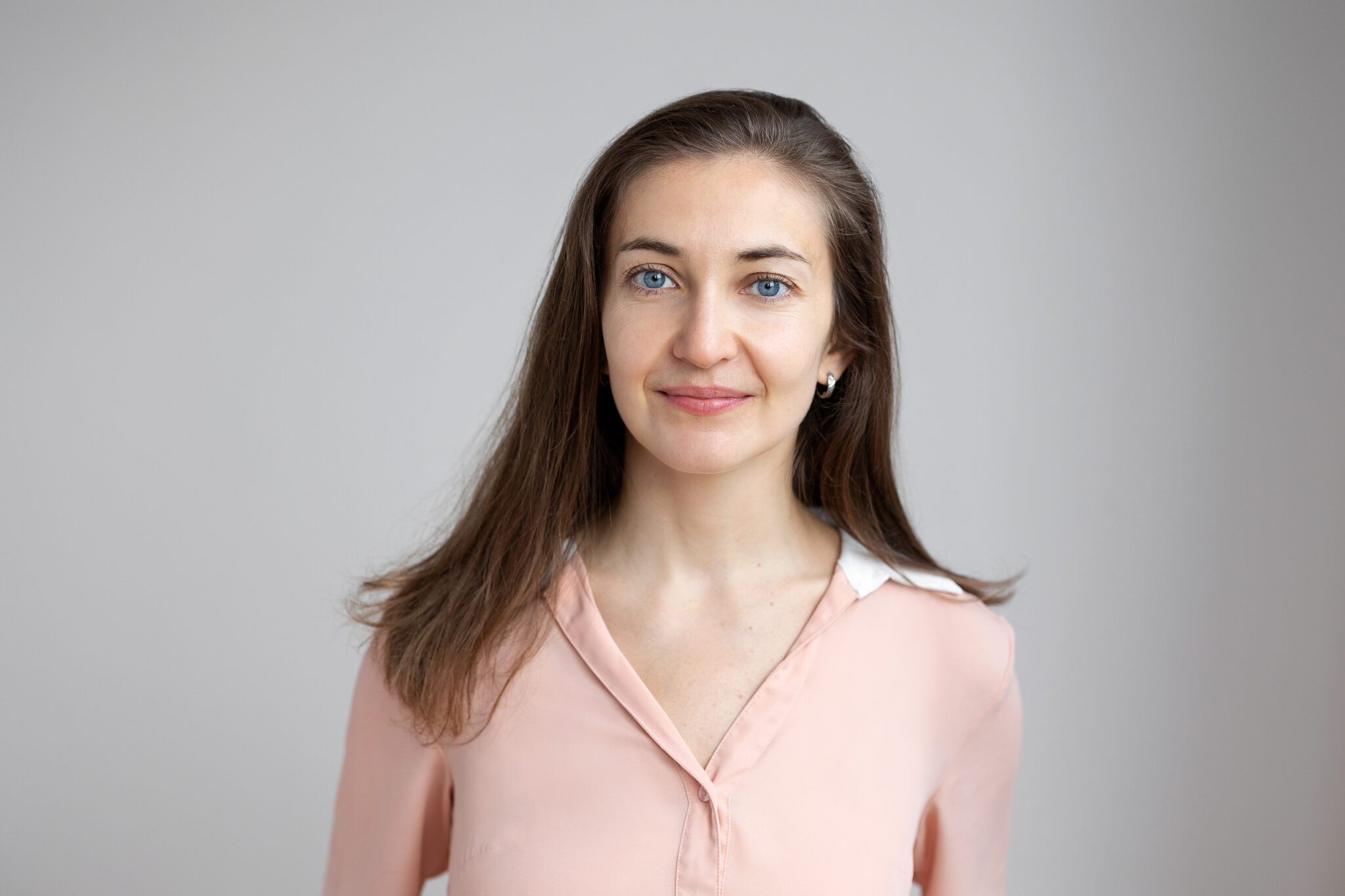
Anya Yermakova is a historian and philosopher of logic, a composer, and a sound and movement artist. Their work asks how people reason when knowing involves bodies, changing relationships and forms of attention that cannot be reduced to a true-or-false statement.1
A musician rehearsing Yermakova’s work might ask whether a performance matches what the composer had imagined. Yermakova’s preferred response is that hearing the players has changed their mind. By 2023, composition meant making room for that encounter: the score should enable trained performers to discover something together.2
That attitude took years to develop. The path ran from childhood music and migration to scientific laboratories and Oxford, then through an artistic leave and a long period of historical research at Harvard. Sound and movement became means of inquiry within that work, and later supplied ways to teach others.3, 4
The image could not be loaded. View the original using the source link below.
1. Elektrostal and Chicago
Yermakova grew up in Elektrostal, near Moscow, and began classical piano at six. They also learned Russian folk dance and ballet. Dance would continue to change form as they grew older: competitive salsa from eighteen into their twenties, flamenco beginning at twenty-two, and eventually contact improvisation and somatic practices. Music and movement were long-standing parts of their life before they became historical research methods.5
The puzzle book their father bought in childhood reappeared in their historical thinking: they discovered that its earlier, 1907 version came from the circle of people they later researched.6
In 1997, when Yermakova was eleven, their family moved to the Chicago area amid financial difficulties and limited opportunities. They later recalled that the move made them mature quickly: they had to understand why they seemed different from the children around them. Schooling had already taught them to work hard and manage time. The American opportunities were substantial, but belonging required learning another social world.7
At Northwestern, they pursued piano performance, biochemistry, and philosophy of science and logic together. They also went to Seville to investigate flamenco’s improvisation and communication, then brought Spanish dance and music into a student show. When graduating in 2009, Yermakova anticipated an academic career while insisting that music and philosophy would remain in their life. The range was a deliberate choice, even though the eventual occupation was still uncertain.8
Philosopher Axel Mueller helped Yermakova formulate an ad-hoc major and mentored them in philosophy of science. The combination needed faculty willing to help shape a course of study around it. It could be pursued within Northwestern’s degree structure, with academic guidance rather than entirely outside the curriculum.9
The scientific work involved actual laboratories. Yermakova worked with Northwestern’s auditory-neuroscience group and, through an Amgen summer research placement in 2008, entered Danilo Pozzo’s chemical-engineering laboratory at the University of Washington. These experiences placed a pianist inside scientific research environments while they were still a student.10, 11
The Rhodes Scholarship, awarded in 2008, made Oxford possible. Yermakova had also done research in nanotechnology, neuroscience and biomedical engineering. By the time Yermakova left Northwestern, the problem was already how to carry several serious pursuits into the next stage of education.12
2. Oxford and the decision to keep making art
Oxford brought a change from the earlier plan to study mathematical biology. Yermakova completed a master’s in Russian and East European Studies in 2010, researching the mathematical foundations of Pavel Florensky’s philosophy, followed in 2011 by mathematics and computer science, with a thesis on process-based agents and nested knowledge.13
The two projects approached reasoning from different directions. Florensky became one of the historical figures they would continue to study: mathematical thought, theology and arguments about contradiction occupied the same intellectual life. In Yermakova’s later presentation of his work, a passage on geometry imagines a transition between spaces through turning a body inside out. Such material posed a historical problem as well as a formal one: what could this reasoning have meant within the world that produced it?14
With the logician Alexandru Baltag, Yermakova also built a formal system for agents whose knowledge changes when they communicate, merge, or move into and out of one another’s structures. Presented in 2011 and published in 2012, their paper combines dynamic epistemic logic with a calculus developed for mobile, communicating processes. Possible applications include biological systems. Here, the connection between relationships and knowing was worked out through definitions and altered logical axioms. The paper gives an early, technical form to a question that remains recognizable in the later work: how does knowing change when the knower’s relations change?15
Oxford also changed the social experience of intellectual work. Yermakova remembered an international graduate community in which conversations continued through pubs, cafés and parks. A professor could work through the mathematics thesis with them over a beer while metal music played nearby. Informal mentorship made it possible to experience mathematical work as part of ordinary social life.16
After the master’s degrees, Yermakova took academic leave from 2011 to 2013 to develop an independent artistic career. The period included London program-management and consulting work, and musical-theatrical production in Oxford and Chicago. For an Oxford ballet theatre work, The Barefaced Night, they were music director and composer; in Chicago’s International Beethoven Festival they helped with Creatures of Prometheus and curated a program on Russian bard song. Artistic development required arranging productions and finding work as well as performing.17
By November 2013, Yermakova was working with Harvard choreographer Jill Johnson and developing a feedback system between dancers and musicians. Movement could generate a visual diagram for musicians to read; the resulting sound could guide the dancers in turn. A Brussels performance program placed this experiment within a public event about art and information technologies. The continuing pursuit of music and movement was now producing tools they could bring into a university.18
3. Harvard gave the different practices a place to meet
At Harvard, Yermakova became a historian of science while continuing to compose and experiment with media. Their research interests included intuition in mathematics, Russian symbolism, natural history and improvisation as a way to theorize. This was a move toward investigating how other people had made knowledge, with their own artistic practice still active inside the investigation.19
Critical Media Practice supplied an institutional setting for that combination. A secondary field for PhD students, it links artistic production to scholarship through courses, workshops and advising. It allows sound, movement, material and interactive media to carry parts of an inquiry that written language handles differently. Yermakova could develop a historical dissertation alongside a media project rather than fitting all the work into one written form.20
Their practical education also included electronics and fabrication. In MIT’s 2013 How to Make (Almost) Anything course, Yermakova documented circuit boards, programming, a breath belt, communications devices and an interactive project involving movement inside tetrahedra. Building an interactive apparatus required bodily activity and sensing to meet functioning hardware and software.21
Environmental listening was already present in the Harvard years. Yermakova contributed additional sound design to Teri Rueb and Peter Del Tredici’s 2014 Other Order, commissioned by the Arnold Arboretum, and was among its recorded interviewees. A phone’s GPS triggered sounds as visitors moved through Bussey Brook Meadow. Janine Luke’s donation and a Harvard metaLab residency supported development. This was a collaboration with an existing project and its own authors, technical contributors and public site.22
Some visitors moved between sounds in their headphones and the surrounding meadow, removing headphones to compare impressions. Edited speech, environmental recordings and imagined past inhabitants shared the soundscape. The work made listening an activity performed while walking through an ecologically and socially contested place.23
The artistic influences were specific. Diagrammatic scores by Cornelius Cardew and John Cage, the Underscore used in contact improvisation, and early-twentieth-century Russian mathematical material informed Yermakova’s own visual “energy diagrams.” A diagram could guide classical musicians, folk musicians and dancers without requiring identical actions from them. They also explored generating diagrams live from sound and movement. The score was becoming a way to organize responsiveness among people with different training.24
Their continuing artistic education also involved teachers with different practices: James Giles in piano, Olli Mustonen in composition, Vijay Iyer in improvisation, and Johnson and Rick Nodine in dance. Experimentation continued alongside learning from experienced performers.25
In 2015, Yermakova co-founded the Intense Listening Institute to connect learning and performance. They served as its artistic director during the doctoral years. They were beginning to organize encounters for others while still developing their own research. A 2016 discussion after Tom Stoppard’s Arcadia brought their mathematical and artistic interests into a theater audience’s conversation.26, 27
This method needed discussion as well as solitary work. In a 2018 Harvard presentation, Yermakova invited participants to examine experiments in sound, movement and laboratories and to workshop concrete processes. The historical figures behind the work occupied awkward positions: serious mathematical ambitions could coexist with mystical associations and resistance to professional categories. The presentation made those difficulties part of a shared methodological investigation.28
4. Working in archives and with living bodies
The historical work brought Yermakova to archives across Russia and Ukraine. They tried to distribute their attention among urban centers rather than write a Moscow-centered account of late-imperial intellectual life. Dance communities in Odesa, Kyiv and Lviv became part of the research, followed by work with Katya Pomelova and Katerina Tchadina in St Petersburg in 2019. Studio encounters helped them attend to knowing as an activity unfolding through bodies.29
The textual work remained exacting. For a 2019 history-of-logic symposium, Yermakova assembled translated passages, diagrams and formal expressions from several different thinkers. Nikolai Grot connected sensation, intention and movement. Samuil Shatunovsky questioned when excluded-middle reasoning could legitimately apply. Nikolai Vasiliev distinguished contradiction in the world from inconsistency in the reasoning subject. Each challenged a different assumption about how reasoning works. The historian had to preserve differences among them while asking why some of their experiments had become difficult to recognize as logic.30
In St Petersburg, Yermakova also directed logic curates sound curates motion. Pomelova shared videography, Tchadina and Nextstop Collective participated, and Sebastián Pérez contributed charango and pedals. Local studios and organizations supplied spaces and support. An archival journey could thus also become a period of making with contemporary artists, whose experience was part of the present setting from which the historian approached the past.31
A California residency gave the inquiry another form. At Djerassi in 2018, Yermakova worked with astrophysicist-musician Pérez and dancer-philosopher Dasha Lavrennikov among exposed redwood roots. Mathematical writings and Andrey Bely’s life line appeared on fabric; found objects became wearable percussion and sources of emerging rhythm. Kevin Kelsey joined the documented performance. They were trying out bodily approaches to the historical thought experiments, using their own activity to explore possibilities suggested by the surviving traces.32
For Yermakova, this changed what a research collaboration could contain. Pérez brought both astronomy and musicianship; Lavrennikov brought dance and philosophy; the landscape offered materials and physical conditions for their joint experiment. The residency provided a period in which those contributions could be worked through together. The collaborators were making a present-day experiment in historical empathy: the archive offered prompts, while their bodies and surroundings generated responses that the documents could not prescribe.33
From October 2018 to September 2019, Yermakova took academic leave to care for their grandfather.34
6. The ocean expanded the field of listening
Yermakova joined Ocean Memory in 2018.40
Through this network of artists and ocean researchers, a Salish Sea research cruise supplied the recordings for Ocean Memory, in the body. On the vessel Rachel Carson, crew members, artists, activists, oceanographers and First Nations ambassadors worked in the same setting. Near Wasp Island, Yermakova used hydrophones on three-, eight- and fifteen-meter cables to gather material.41
The attempt to present the piece live encountered Zoom’s noise cancellation. A platform designed to clarify speech made it difficult to transmit sounds whose significance lay partly in troubling the distinction between signal and noise. The problem was practical and consequential: the equipment and delivery system influenced what could reach the audience.42
The network also became a setting for collective writing. Yermakova was one of twelve contributors to a 2020 Scientific American opinion essay about ocean memory and the pandemic, alongside scientists and artists including Jody Deming, Daniel Kohn, Bradley and Monique Verdin. Supported through the National Academies Keck Futures Initiative, the project used both scientific descriptions and metaphors to consider interconnection. The essay was an interdisciplinary public argument, whose speculative language should be read as such.43
7. Completing a doctorate during the pandemic
Yermakova finished An Embodied History of Math and Logic in Russian-speaking Eurasia in 2021. The dissertation draws together a loose community of late-imperial logicians, scientists, artists and other intellectuals whose experiments challenged conventional accounts of reasoning. It argues that familiar oppositions, including objective and subjective or logical and extralogical, can obscure their work. Music and dance enter the later part of the dissertation as methods for exploring possible worlds suggested by the archives and their gaps. Revolutionary rupture matters here: missing traces make an earlier intellectual world harder to understand. Performance investigates possibilities suggested by that world, while archival work establishes which possibilities its participants actually described.44
The resulting qualification was a History of Science PhD with Critical Media Practice as a secondary field. Historical writing and artistic production had become related parts of the same training. That result was not obvious at the beginning: Yermakova later remembered only gradually recognizing that years of immersion had made them a historian.45, 46
Historical research also brought work with historians of computing Ksenia Tatarchenko and Liesbeth De Mol. Their two-part 2021 study, Russian Logics and the Culture of Impossible, follows the concept of poznaniye, or knowing as an active process, from late-imperial discussions into Soviet mathematical logic and cybernetics. It asks how an algorithm could be understood as connecting inner and outer worlds, and how programming could concern consciousness as well as technical skill. The collaboration places Yermakova’s historical inquiry within a history of computing that reaches beyond the earlier archival period.47
That connection matters to the range of the practice. Artistic experiments explore what bodily attention might make possible in the present; collaborative historical writing traces how particular concepts and institutions developed. Both can concern active knowing while producing different kinds of work.48
The pandemic also produced Firebird, a film released in 2021 from conversations with poet Kythe Heller. Yermakova traveled from Chicago to Northern California and performed among fire-damaged redwoods, returning to the bodily memory of years of flamenco. They and Heller codirected; Heller supplied voice and script, Marizó Siller edited, and Shireen Hamza and Bradley filmed. Yermakova recalled the trip before vaccines as reckless but connected it to a felt responsibility to attend to the burning landscape.49
The doctoral work thus ended amid a period when movement, environmental damage and questions about how to act were also part of everyday life. Its methods could circulate beyond the dissertation: through recordings, films and collaborations with people who had their own artistic questions.50
With literary scholar Melody Jue and microbial ecologist Jacob Cram, Yermakova helped organize a conference on Ocean Memory and the senses in 2021–2022. A resurgence of COVID-19 pushed it online. Perfumer Yosh Han developed a recorded smell walk that participants could try where they lived; location and weather affected what they noticed. Jue later recalled that organizing experience leading to a small grant proposal for further joint work.51
8. War broke apart a world of research and friendship
In 2022, news of Russia’s first bombings of Ukraine reached Yermakova just before they entered a dance studio. It brought back their grandmother’s song about Kyiv being bombed in 1941, when she had fled Ukraine as a child. The present war displaced dance collaborators and endangered relationships through which Yermakova had worked. They kept returning to the studio while feeling the pull of refugee logistics, a tension they wrote about in Bodies. Slow sensory attention became a fraught effort to retain agency. Their previously imagined shared world of Russophone bodies and encounters had been broken by the war.52
This rupture also changed the historian’s working conditions. At Washington University in St Louis in September 2022, Yermakova explained that restricted archive access meant working through material collected over the preceding decade. They now had to reconsider how to situate Russophone historical research within Russia’s war in Ukraine. Listening, developed around earlier archival trips, remained a method they were trying to extend to that problem.53
Composition continued within other artists’ projects. For mayfield brooks’s Sensoria: An Opera Strange, presented by Danspace Project in June 2022, Yermakova was composer, Patric Maguire pianist and James Kogan sound designer. brooks supplied choreography and direction, locating the work within a whale-fall performance cycle and their own investigation of grief and anti-Black violence. The production depended on a commission, residency support, design, stage management and audio description. Yermakova’s sounds entered a larger work with another artist’s history at its center.54
That month, a Seattle program listed them among the visiting contributors to Rajna Swaminathan’s Mangal, an ensemble for collaborative improvisation across disciplines and places. Swaminathan’s mangrove imagery supplied the frame; local artists included Carlos Snaider, Neil Welch and Ha-Yang Kim, alongside visiting contributions by Yermakova and Caroline Davis. The Good Shepherd Center’s Chapel Performance Space and donation-priced admission supplied the setting for the encounter. Sustaining a collaborative practice included participating within someone else’s organizing idea.55
9. Finding time and space for the work
After Harvard, Yermakova held a visiting sound appointment at Oberlin and worked with Ocean Memory before the 2022–2024 ACLS Emerging Voices fellowship at WashU. Their practice continued through temporary academic positions, artistic collaborations and grants, rather than settling into a single permanent institutional role.56, 57
The ACLS program responded to the difficult academic job market for recent humanities PhDs, especially those graduating around the pandemic. Its 2022 cohort received two-year residential fellowships, with published terms of US$65,000 annually plus benefits, a US$3,000 relocation allowance and US$3,500 yearly discretionary support. Limited host-institution work in the second year was combined with scholarly development. These were program terms, not a record of Yermakova’s personal earnings. They help explain how sustained research and public work could be supported for a defined period.58
An Adrian Piper Research Archive Foundation fellowship supported another kind of infrastructure. Yermakova assembled a performance system with piano, speakers, microphones, a miked floor, flamenco foot percussion, small instruments and a computer. The funds helped buy equipment and pay studio rent. Versions were presented in St Louis and Ljubljana, while archival material was developed for paper and projection displays. Manuscript work and attempts to obtain a book contract proceeded more slowly.59
Yermakova also worked as a tutor and taught music, movement and university courses.60
Their 2023 account of a rehearsal at the Gabriela Lena Frank Creative Academy of Music returns to the problem of the score. A “human sculpture” changed across takes as performers found new relations with one another and their instruments. Yermakova considered asking for twenty-five repetitions to encourage differences, then wondered how much instruction would make that purpose legible. Trust and playfulness required preparation: accomplished players had to feel able to use their training in unfamiliar ways. The composer was also trying to loosen their own ambitious, trained habits.61
Their sense of home remained similarly distributed. In 2022, they described Chicago through parents who still lived there, alongside attachments made in South America, Russia, Ukraine, the Caucasus and summers teaching music in Tunisia. Outside work, they liked bike rides, snow, mountains and water. Unfamiliar natural places could quickly feel homelike. Some encounters became artistic material; others were simply places to be.62
10. Teaching through the bunkers at Tyson
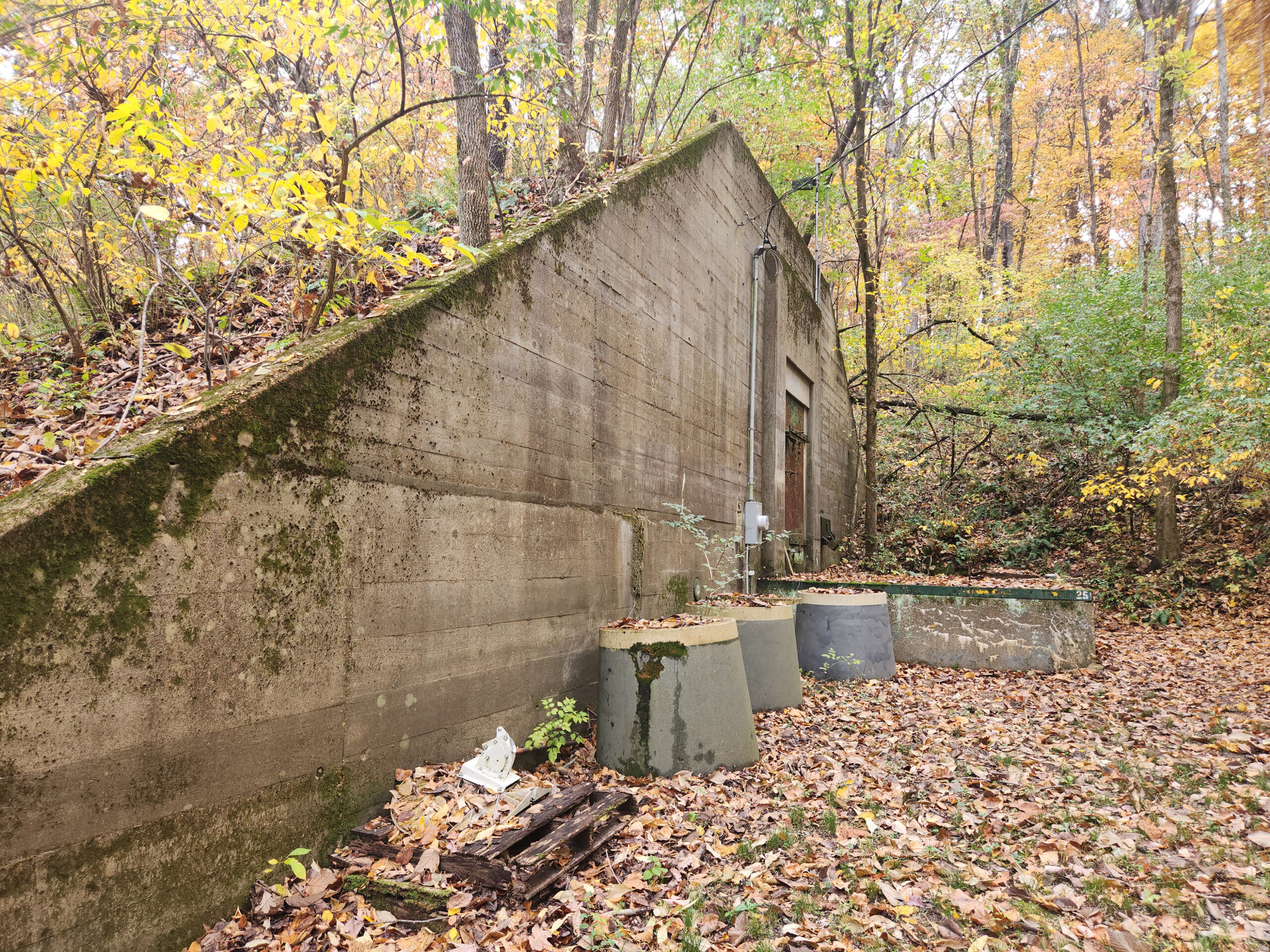
At WashU, Yermakova began to create for students some of the conditions that had supported their own experiments. Visiting Tyson Research Center early in the fellowship drew them toward its landscape and former military structures. In spring 2024, they led thirteen graduate students in a semester-long artistic-research program, supported by the humanities center’s Mellon-funded doctoral-education initiative.63
The concurrent seminar Topics in Embodied Communication: Listening was cross-listed across performing arts, music, comparative literature and philosophy-neuroscience-psychology. It considered human and nonhuman auditory systems and multimodal listening, including vibration. Turning a disused wartime storage bunker into a concert venue brought practical difficulties, including the absence of electricity in many of the structures. Its resonance meant that a visitor stepping inside already altered the soundscape.64
On April 14, Marina Kifferstein on violin and Florent Ghys on bass and electronics joined Yermakova on piano, accordion and foot percussion. Later in the month, students presented work and discussed methods with Lawrence Abu Hamdan, Salomé Voegelin and one another. Poetry used echoing walls; an installation gathered audio messages; dancers led silent walking; sound work investigated histories of animal testing. Yermakova organized a shared setting, while the students remained authors of different inquiries.65
At Tyson, the earlier ambition to connect learning and performance reached graduate researchers with projects of their own. The question included how their exploratory work could gain a place inside university research. The site, gathering, course and invited interlocutors gave participants ways to try a method, present it publicly and revise it after discussion.66
The Ocean Memory relationships continued into Invisible Kelp Forest, published in 2024 with composer Eli Stine. The work takes the form of a fictional scientific journal inspired by Ursula K. Le Guin. Grant-supported snorkeling and aquarium visits informed its imaginative translations of underwater chemosensation. Stine made the accompanying sound pieces; Yermakova proposed treating the prose itself as a score for bodily engagement. The collaboration extends listening toward other sensory worlds while keeping its speculative format explicit.67
The image could not be loaded. View the original using the source link below.
11. A continuing practice in Oregon and beyond
By the April 2025 Critique and Creation symposium, Yermakova was listed with Willamette University and presenting Bunkers Turned Inside-Out. The Princeton-organized event, held at the American Academy of Arts and Letters in New York, placed artistic inquiry within questions of institutions, places, models, archives and interpretation. The bunker research had become part of a wider professional conversation.68
The same year, Yermakova composed music for Luiza Pârvu and Toma Peiu’s Caution: Once Upon a Time, a River / Once Upon a Time, a Sea. The nine-channel installation brings Arizona’s dry riverbeds into relation with the desiccated Aral Sea, using archival material, video and decommissioned televisions. Its soundtrack also traveled through a local radio broadcast in Tempe. Composition could thus work inside an audiovisual project and reach listeners beyond the gallery.69
In 2026, Yermakova received a Guggenheim fellowship in music composition. By that April, they were a visiting assistant professor in interdisciplinary humanities at Willamette. The recognition belongs to the composing strand of a career that still includes historical research and teaching.70
Their teaching in Oregon has also included Pacific Northwest College of Art. The announced book Bunker, for Bloomsbury’s Object Lessons series, approaches bunkers as objects that escape familiar historical and disciplinary categories. Its publication date remains unconfirmed. The direction connects the later site-based work with the earlier problem of how to study things that inherited categories make difficult to understand.71
The work has grown through a sequence of changes in responsibility: a student sustaining several commitments, a researcher learning to work in unfamiliar archives and studios, a composer making scores others can use, and a teacher organizing conditions for new inquiries. The connections depend on trained skills and on relationships maintained across places. Their continuation also requires ordinary resources: time, equipment, rehearsal rooms, collaborators and appointments long enough to develop a project.72, 73
Sources and notes
Sources checked through October 5, 2026. Dated appointments and plans are described as recorded at the time.
University of Helsinki, Yermakova biography, undated; MTF Labs biography. The announced Bunker is not treated as a published book.↩︎
Yermakova, Bodies, GLFCAM, March 16, 2023. Composer’s rehearsal reflection; distinct from the 2022 essay in note 24.↩︎
ICT ART CONNECT 2013 program, p. 3, Yermakova’s Flow and biography. A contemporaneous description of a developing feedback-score practice.↩︎
Harvard, Critical Media Practice, program description. A secondary field, not a second doctorate.↩︎
APRA Foundation Berlin, 2022 fellowship biography, proposal and report. The report includes a planned February 2024 performance; only its completed presentations are described as completed.↩︎
VISION LAB, Firebird film credits and Heller’s interview with Yermakova, 2021, transcript edited by Grace Jackson. The interview describes filming during the pre-vaccine pandemic; release year does not establish filming year.↩︎
Marcelino Benito, A Delightful Dance, Northwestern Magazine, summer 2009. Its mathematical-biology plan differs from the completed Oxford degrees.↩︎
Marcelino Benito, A Delightful Dance, Northwestern Magazine, summer 2009. Its mathematical-biology plan differs from the completed Oxford degrees.↩︎
Axel Mueller, November 2015 CV, p. 11, mentoring record. The entry also retains an earlier Oxford program description; completed degrees follow Yermakova’s CV.↩︎
Northwestern Brainvolts, past personnel, undergraduate roster. The dated CV in note 12 specifies auditory-neuroscience research in 2005–2007.↩︎
University of Washington Chemical Engineering, Catalyst, spring 2009, p. 8, Amgen summer placement in Danilo Pozzo’s laboratory.↩︎
ABC7/Associated Press, Northwestern Rhodes Scholars, November 24, 2008, selection and undergraduate research experience.↩︎
Yermakova, February 2022 CV, pp. 1–4. Self-reported roles and dates; the artistic-leave itinerary is incomplete.↩︎
Yermakova, Non-Classical Logics of the Late Russian Empire, UCLA, May 26, 2019, six-page handout.↩︎
Yermakova and Alexandru Baltag, A Dynamic-Epistemic Logic for Mobile Structured Agents, 2012. Abstract and publication record; full proofs were not evaluated.↩︎
WashU Center for the Humanities, Meet Anya Yermakova, interview, September 26, 2022.↩︎
Yermakova, February 2022 CV, pp. 1–4. Self-reported roles and dates; the artistic-leave itinerary is incomplete.↩︎
ICT ART CONNECT 2013 program, p. 3, Yermakova’s Flow and biography. A contemporaneous description of a developing feedback-score practice.↩︎
Harvard History of Science, Anna (Anya) Yermakova, alumni research-interest profile.↩︎
Harvard, Critical Media Practice, program description. A secondary field, not a second doctorate.↩︎
Yermakova, 2013 fabrication course project record, How to Make (Almost) Anything, MIT.↩︎
Teri Rueb, Other Order, 2014, project credits and support; indexed documentation.↩︎
Peter Del Tredici and Teri Rueb, Other Order: Sound Walk for an Urban Wild, Arnoldia 75(1), 2017, 14–25. Creators’ account of production and reception.↩︎
Harvard CMP, Yermakova project profile, complete indexed text. Proposed interactive outcomes are not assumed completed.↩︎
Central Square Theater, Yermakova speaker biography and Arcadia conversation schedule, April 28, 2016, teachers and 2015 Institute co-founding.↩︎
Central Square Theater, Yermakova speaker biography and Arcadia conversation schedule, April 28, 2016, teachers and 2015 Institute co-founding.↩︎
Northwestern Office of Fellowships, Yermakova biography, undated doctoral-period description of the Institute role; no continuing directorship is inferred.↩︎
Harvard CMP, ArtScience for Historiographic Methods, March 1, 2018. Complete indexed announcement.↩︎
Yermakova, Bodies, Forecast Journal 10, 2022, 59–69, complete public PDF text retrieved through Drive. A first-person reflection finalized in August 2022.↩︎
Yermakova, Non-Classical Logics of the Late Russian Empire, UCLA, May 26, 2019, six-page handout.↩︎
Yermakova, logic curates sound curates motion, 2019 St Petersburg production description and credits, documented in the prior research pass; direct access failed during this revision.↩︎
Yermakova, ArtScience as a Method for Historiographic Research, January 22, 2019, indexed essay and captions on the 2018 Djerassi residency.↩︎
Yermakova, ArtScience as a Method for Historiographic Research, January 22, 2019, indexed essay and captions on the 2018 Djerassi residency.↩︎
Yermakova, February 2022 CV, pp. 1–4. Self-reported roles and dates; the artistic-leave itinerary is incomplete.↩︎
Yermakova, Concerto for Charango and Orchestra, May 23, 2019, release notes and credits.↩︎
Yermakova, Concerto for Charango and Orchestra, May 23, 2019, release notes and credits.↩︎
Universidad Andrés Bello, Charla en Campus República combinó arte y matemáticas, 2019, event report and Yermakova’s explanation.↩︎
Yermakova, mytho-logicking, December 12, 2020, release notes and production credits.↩︎
Yermakova, mytho-logicking, December 12, 2020, release notes and production credits.↩︎
Yermakova, February 2022 CV, pp. 1–4. Self-reported roles and dates; the artistic-leave itinerary is incomplete.↩︎
Yermakova, Ocean Memory, in the body, complete indexed production description, hydrophone and transmission details.↩︎
Yermakova, Ocean Memory, in the body, complete indexed production description, hydrophone and transmission details.↩︎
Members of the Ocean Memory Project, The Ocean Carries “Memories” of SARS-CoV-2, Scientific American opinion, August 15, 2020. Scientific description and metaphor are combined in a collective essay.↩︎
Harvard DASH, dissertation record and abstract, May 14, 2021. The full dissertation download was unavailable in this pass; its argument is summarized from the abstract.↩︎
Harvard DASH, dissertation record and abstract, May 14, 2021. The full dissertation download was unavailable in this pass; its argument is summarized from the abstract.↩︎
VISION LAB, Firebird film credits and Heller’s interview with Yermakova, 2021, transcript edited by Grace Jackson. The interview describes filming during the pre-vaccine pandemic; release year does not establish filming year.↩︎
Tatarchenko, Yermakova and De Mol, Part I and Part II, IEEE Annals 43(4), 2021, 43–69. Repository abstracts and metadata.↩︎
Tatarchenko, Yermakova and De Mol, Part I and Part II, IEEE Annals 43(4), 2021, 43–69. Repository abstracts and metadata.↩︎
VISION LAB, Firebird film credits and Heller’s interview with Yermakova, 2021, transcript edited by Grace Jackson. The interview describes filming during the pre-vaccine pandemic; release year does not establish filming year.↩︎
Harvard, Critical Media Practice, program description. A secondary field, not a second doctorate.↩︎
Melody Jue, Ocean Memory, Long Now, March 18, 2026, transcript sections on conference organizing and subsequent collaboration.↩︎
Yermakova, Bodies, Forecast Journal 10, 2022, 59–69, complete public PDF text retrieved through Drive. A first-person reflection finalized in August 2022.↩︎
WashU Center for the Humanities, Meet Anya Yermakova, interview, September 26, 2022.↩︎
Danspace Project, Sensoria program, June 9–11, 2022, pp. 3–5, credits, brooks’s note and support.↩︎
Neil Welch, Mangal program, June 18, 2022. An announced program and access arrangements, not a reconstruction of individual improvised actions.↩︎
Jue, Yermakova, Cram and Stine, Invisible Kelp Forest, Plant Perspectives 1(1), 2024, 189–203. The authors distinguish speculative translation from data sonification; the fictional journal is part of the work.↩︎
WashU Center for the Humanities, Artistic Research at Tyson, spring 2024 retrospective, program, credits and participant documentation.↩︎
ACLS, 2022 cohort terms, May 31, 2022. Published support amounts do not establish personal receipts or total earnings.↩︎
APRA Foundation Berlin, 2022 fellowship biography, proposal and report. The report includes a planned February 2024 performance; only its completed presentations are described as completed.↩︎
Yermakova, February 2022 CV, pp. 1–4. Self-reported roles and dates; the artistic-leave itinerary is incomplete.↩︎
Yermakova, Bodies, GLFCAM, March 16, 2023. Composer’s rehearsal reflection; distinct from the 2022 essay in note 24.↩︎
WashU Center for the Humanities, Meet Anya Yermakova, interview, September 26, 2022.↩︎
WashU Center for the Humanities, Artistic Research at Tyson, spring 2024 retrospective, program, credits and participant documentation.↩︎
Liam Otten, Exploring the Humanities at Tyson, WashU, April 10, 2024. Pre-event interview used for course and preparation details.↩︎
WashU Center for the Humanities, Artistic Research at Tyson, spring 2024 retrospective, program, credits and participant documentation.↩︎
Liam Otten, Exploring the Humanities at Tyson, WashU, April 10, 2024. Pre-event interview used for course and preparation details.↩︎
Jue, Yermakova, Cram and Stine, Invisible Kelp Forest, Plant Perspectives 1(1), 2024, 189–203. The authors distinguish speculative translation from data sonification; the fictional journal is part of the work.↩︎
Princeton, symposium date, schedule and participants, April 5, 2025.↩︎
Root Films, Caution installation documentation, 2025, authors, music credit, format, radio broadcast and support.↩︎
Harvard CMP, April 23, 2026 Guggenheim announcement, complete indexed item confirming the fellowship and dated Willamette visiting appointment.↩︎
University of Helsinki, Yermakova biography, undated; MTF Labs biography. The announced Bunker is not treated as a published book.↩︎
Harvard CMP, Yermakova project profile, complete indexed text. Proposed interactive outcomes are not assumed completed.↩︎
ACLS, 2022 cohort terms, May 31, 2022. Published support amounts do not establish personal receipts or total earnings.↩︎