Queer East is a London-based cultural organisation, developed from 2019 and launched as a festival in 2020, whose screenings, tours and year-round collaborations bring queer East and Southeast Asian cinema and live arts into British public life. Its defining intervention is curatorial: it changes which works circulate, who gets to interpret them, and where audiences encounter them. The annual festival is the most visible part of an expanding organisation, rather than the entirety of its work.
Founded by Yi Wang, Queer East describes its purpose as responding to Asian underrepresentation across screens, stages and cultural decision-making. Its scope includes diaspora communities, making it as concerned with Asian life in Britain and elsewhere as with work produced in Asia. Its home is an office at Somerset House Exchange; its public activity is dispersed across partner venues.1
Origins: three dates, three different beginnings
There is a useful distinction between the project’s beginnings, its first festival and its incorporation. Wang dates his involvement to 2019, when he secured support through Brent 2020, London’s Borough of Culture programme. Film Hub London and the Taiwanese Ministry of Culture’s UK office also backed the early project. His account locates the impetus in his experience as a London cinemagoer: the city’s abundant film culture offered too little access to Asian work.2
Queer East’s first screening was presented through Fringe! in 2019, according to Wang’s later interview with t’ART. That precursor should not be confused with the inaugural festival edition.3
The first festival was planned for 18 April–2 May 2020. COVID-19 forced its postponement, but an online version began on 18 April. Taiwan’s Ministry of Culture documented nine Taiwanese works in the online Focus Taiwan selection, presented within QE: HomeSexual. This was already a transnational collaboration: Taiwan’s cultural office worked with a new London organisation to reach audiences whose physical gathering had become impossible.4
An October 2020 relaunch announced 36 films from 13 countries, combining online access with cinema screenings beyond London in Manchester, Nottingham and Bristol. Partnerships included Barbican Cinema on Demand and Iris Prize. The pandemic therefore did more than delay the debut: it accelerated a multi-platform, multi-city form.5
The organisation behind the programme
The legal entity, Queer East CIC, was incorporated on 28 July 2020, company number 12774214. Companies House identifies it as an active community interest company limited by guarantee without share capital. It is consequently more precise to call it a CIC or nonprofit cultural organisation than a registered charity. Its registered activities cover cinema exhibition and support for performing arts.6
The public officer register lists three active directors: Yi Jyun Wang, appointed at incorporation; Yueqiao Yang, appointed in March 2023; and Xiaoxing Dong, appointed in September 2024. These are legal directorships, which should be distinguished from festival production and programming credits. The register establishes a corporate structure but does not explain how artistic decisions, budgets or internal accountability are negotiated.7
The current team credits Wang as Festival & Programme Director; Isabelle Utzinger-Son in operations and project assistance; Emily Jisoo Bowles for short films; Bart Seng Wen Long for DAYTRIP; and Max Percy for the performing-arts industry day. Marketing, guest services, copy-editing, design, public relations and internships appear alongside a much larger network of guest curators. This is the visible anatomy of a small organisation extending its reach through specialised collaborators, rather than a single curator working alone. The credits do not establish employment status or full-time-equivalent staffing.8
From a founder’s selection to shared curatorial authority
Wang described a major change in 2024: thirteen invited curators brought different ages, disciplines and cultural perspectives into the programme. In the same interview, he acknowledged the limits of his own Taiwanese perspective and argued that representation must include curatorial authority. Film selection becomes a form of shared interpretation, not simply a larger menu of identities.9
The organisational mechanism is now explicit. The 2026 guest-programme call describes an initiative begun in 2024 to decentralise programming. A staff-and-external panel would choose three proposals, including from applicants new to film programming. Criteria included originality, feasibility, audience appeal and cultural context. This is distributed authorship within an institution that still selects, supports and frames the work, rather than the disappearance of editorial oversight. International applicants could participate remotely, but the call said their travel and accommodation would not be covered.10
Up Next: Future Film Curators Lab develops another route into programming. Its 2025/26 edition targeted early-career participants outside Greater London, with workshops, mentorship and practical teaching in licensing, marketing, event management and writing. Participation was free, with a £350 curation fee and travel/accommodation bursaries. Participants were to create short-film programmes for the festival and national tour. This connects access to culture with access to the work of presenting culture.11
The published calls also make the working cycle legible: proposals enter through an open application, a panel selects them, the artistic director and team help refine them using submitted films and suggestions, and the resulting event receives an individual curatorial credit. For 2026, the guest-programme deadline was 15 January and decisions were due by 8 February, ahead of the May–June festival. The public record does not expose negotiation over every screening licence or the final approval process.
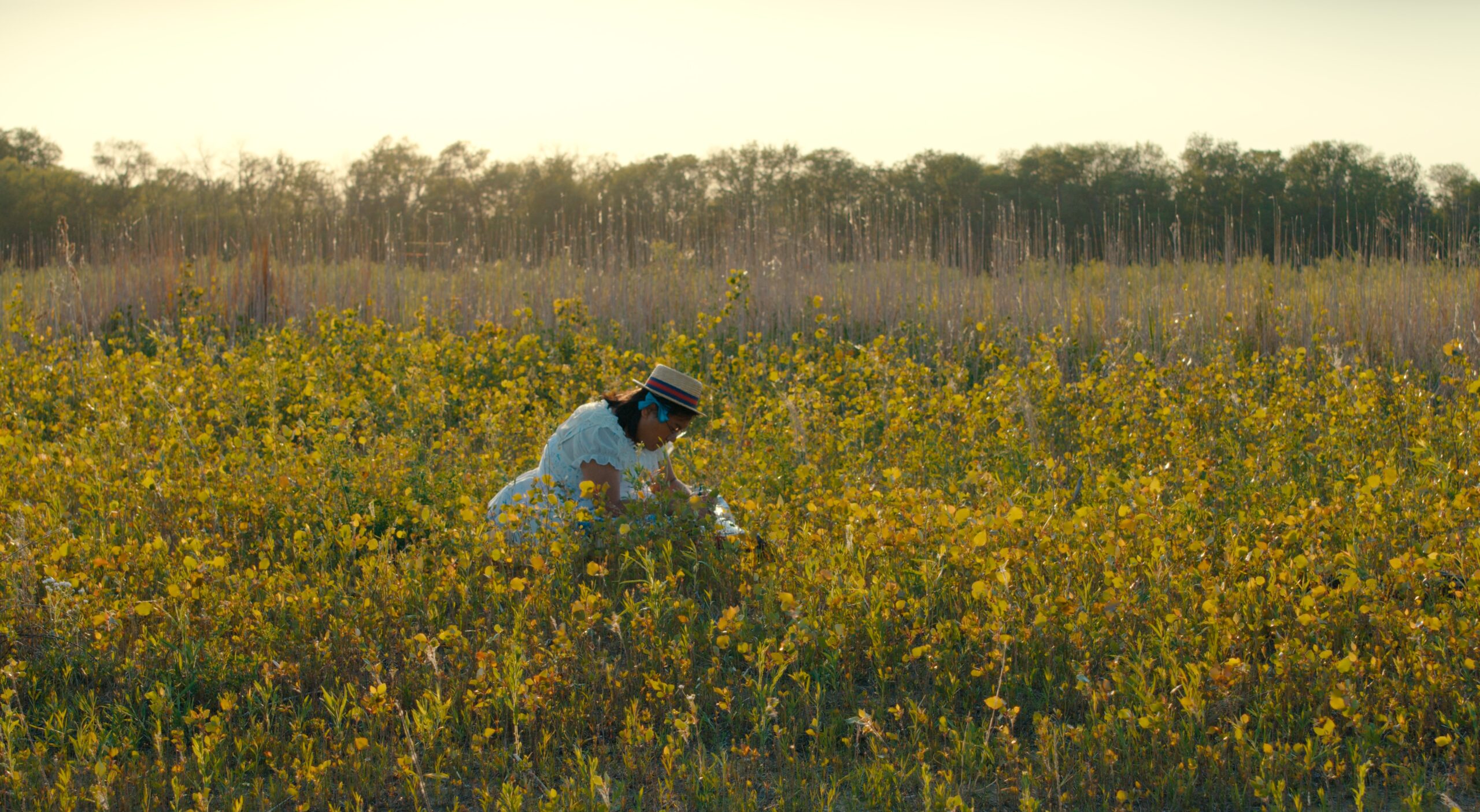
The results are visible in individual credits. Homecomings, developed by David Bakum and Leah Lapautre in the first lab cohort, brought migration, transness, ancestry and belonging into a 2025 Museum of the Home screening and workshop. Holly Rowley’s 2026 programme Out of the Shadows, Into the Streets! placed collective resistance and care in conversation through four films. These credits let audiences see who made the argument connecting the films.12, 13
The image could not be loaded. View the original using the source link below.
Wouldn’t Make It Any Other Way (Hao Zhou, 2024), included in the Up Next-curated Homecomings programme.
Queer East official programme; film still; no separate photographer identified · Rights retained by the source and respective rights holders; no open licence stated. · Image sourceA festival extending beyond the cinema
Queer East’s 2023 programme announced its first two international dance productions, presented with The Place. That edition also offered more than fifty titles from seventeen countries and a fifteen-film Focus Korea selection spanning the 1960s to contemporary work. Dance was an enlargement of the festival’s existing question about queer experience, rather than an unrelated addition to a film brand.14
A later production reveals how international capacity reaches the festival. No. 60, presented at The Place on 19 May 2026, originated with Pichet Klunchun Dance Company in Bangkok, with commissioning/co-production from Singapore’s Esplanade and co-production from TPAM in Yokohama and Taipei Performing Arts Centre. Its credits separately identify choreography, dancers, sound, lighting, stage management, production and international distribution. Queer East presents work made possible by this prior network; the evidence does not justify claiming it produced or commissioned the original piece.15

The image could not be loaded. View the original using the source link below.
No. 60, presented at The Place during Queer East 2026. The festival presented an existing international production.
Queer East official programme; asset filename credits Hideto Maezawa · Rights retained by the source and respective rights holders; no open licence stated. · Image sourceBy 2025 the programme encompassed cinema, performance, visual arts and literature. Its published division of labour assigned feature films, performing arts and literature to Wang; short-form work to Bowles and nine Up Next participants; and visual arts to guest curators Aki Hassan and april forrest lin 林森. The four-week edition announced more than one hundred titles.16
The seventh edition, held from 1 May to 6 June 2026, combined seventeen short-form programmes containing over ninety shorts with features, archival work, performance and industry activity. Its opening was the restored 1986 Taiwanese film The Outsiders at the Barbican. Restorations and 35mm screenings placed historical queer images alongside new productions. Beyond, a distinct strand, widened the frame to films from India and Turkey and their diasporas. Its presence makes the geographical remit a developing curatorial question, rather than an immutable border.17

The image could not be loaded. View the original using the source link below.
The Outsiders (Yu Kan-Ping, 1986), whose restoration opened Queer East 2026.
Queer East official programme; film still; no separate photographer identified · Rights retained by the source and respective rights holders; no open licence stated. · Image sourceThe 2026 guide makes the remaining concentration of responsibility visible: Wang retained feature films, performing arts and events, alongside five lab participants and over twenty guest curators and collaborators. It also described £7 tickets and sliding-scale prices for selected screenings and events, while directing audiences to individual venues for physical-access information. Access therefore depends partly on the festival’s pricing choices and partly on facilities controlled by partner organisations. The guide’s colophon credits Northend for printing and Standard Format for design, reminders that the public programme also depends on material production.18
An industry day adds another layer: cultural exhibition can also build professional relationships. In 2025, participating organisations included MilkTea, Hong Kong Film Festival UK and Sine Screen, while Taiwanese filmmakers Ping-Wen Wang and Tzu-Hui Peng discussed their practice. This positions Queer East within a wider ecology of Asian film exhibition rather than as its sole representative.19
Touring, partnership and the economics of continuity
On the Road takes selected festival work beyond London. The 2025 announcement named destinations including Glasgow, Sheffield, Bradford, Edinburgh, Manchester, Bristol and Birmingham, and paired screenings with conversations, workshops and local partnerships. It explicitly acknowledged BFI support through National Lottery funding. The announcement’s headline promised more than fifteen cities, while its provisional list named fourteen; the dependable conclusion is a substantial national tour, not an audited final city count.20
The organisation says it relies substantially on sponsors and supporters. Its year-round partners page includes Eaton HK, MC2, ‘Queer’ Asia, Taiwan Culture in Europe, UK Asian Film Festival and WMA. These relationships span cultural institutions, community networks and international partners; the page does not identify every partner as a cash funder or disclose financial terms.21
Public grants reveal something more specific about institutional growth. City Bridge Foundation records a £60,000 grant approved on 23 June 2025, spread over three years for staffing, venue hire and other costs associated with expanding year-round, community-focused London outreach. A separate City of London culture-fund record lists £8,000 for Queer East’s LGBTQ+ cinema and live theatre at the Barbican. These awards show support for both sustained community infrastructure and individual cultural presentation. They do not constitute a full operating budget.22, 23
What this institution makes possible
Queer East’s strongest contribution can be understood as the construction of routes: between films and audiences, archives and contemporary experience, emerging curators and established venues, London and regional cities, Britain and Asian cultural networks. Its growth is not simply numerical. A project initiated by one dissatisfied cinemagoer has developed mechanisms through which other people can programme, contextualise and circulate work.
That interpretation should remain proportionate to the evidence. Programme announcements demonstrate ambition and activity; they do not independently measure audience impact, financial resilience or an equitable distribution of decision-making. Xi W. Liu’s scholarly interview identifies sustainable funding and the pandemic among the organisation’s central challenges. The question for the next stage is how an expanding public programme can maintain the resources, care and shared authority that make its distinctive work possible.24
Research cutoff: 14 October 2026. See the accompanying research appendix for source scope, chronology, unresolved questions and relationship records.
Research scope and evidence
This research covers the Queer East organisation and its festival, touring, curatorial-development and year-round activity through 14 October 2026. It is a public-document study, without interviews commissioned for this profile. The essay distinguishes institutional statements, retrospective founder recollections, legal records and the researcher’s synthesis.
Identity and chronology decisions
- Queer East’s website is queereast.org.uk. The similarly named project using queereast.co.uk, now branded Queer Edge, is a different organisation and is excluded.
- 2019 identifies early project activity and its first screening, supported by two later interviews. It is not substituted for the first festival year.
- 2020 identifies the inaugural festival edition, independently documented by a contemporaneous Taiwanese government announcement and the festival’s October relaunch notice.
- 28 July 2020 is incorporation of Queer East CIC, company 12774214. The public cultural programme predates the company.
- Legal directors and festival job titles are separate kinds of evidence. The officer register names Yi Jyun Wang; the festival credits Yi Wang. The profile reports those names in their respective records and does not derive a private biography from registration details.
- The current About page describes the seventh edition in 2026. The Past Editions page retains a stale introductory count of five festivals while linking six annual editions, 2020–2025. Dated edition announcements are the stronger chronology evidence.
- The 2025 tour announcement’s headline and provisional city list do not agree numerically. No final audited destination count is asserted.
- The 2025/26 curators-lab call anticipated a late-April festival; the final 2026 programme supersedes that planning date.
Main source register
All sources accessed 14 October 2026. Each linked source is cited at the corresponding point in the essay. Publication dates below are dates explicitly provided by the source, where available.
| Source | Date / location | Source identity and use | Limits |
|---|---|---|---|
| Queer East About | Current, checked 2026-10-14; Story and Team | Institutional mission, current public roles and organisational contact | Credits do not establish headcount, contractual status or full-time-equivalent employment |
| Queermunity interview | 2021-06-06, updated 2021-09-08; questions on origins and online work | Founder testimony, early resource history | Retrospective self-report, not an independent impact evaluation |
| Finn Brown, t’ART interview | 2024-04-10, updated 2024-04-16; curation, art forms and influence sections | Founder testimony concerning curatorial change and limits | Institutional spokesperson’s account; no corroborating internal decision records |
| Taiwan Ministry of Culture | April 2020; opening paragraphs | Contemporary partner/government account of launch and Taiwan collaboration | Government is a supporting party, not an independent evaluator |
| Hybrid first-edition announcement | 2020-10-05 | Contemporary institutional announcement of adaptation | Describes announced programme, not verified attendance |
| Companies House overview | Current record | Legal type, incorporation and registration | Registry filings do not establish all actual decision-making arrangements |
| Companies House officers | Current register, appointment dates | Statutory directorships | Does not by itself disclose budget approval or creative authority |
| Guest-curatorial call | 2025-12-19; assessment/support/deadlines | Published intake, selection and development workflow | No panel minutes, rejected proposals or final contracts reviewed |
| Up Next call | 2025-10-30 | Entry requirements, curriculum and compensation | Published offer, not proof of each payment or participant experience |
| Homecomings | Festival 2025 event record | Named curatorial credit and screening/workshop output | No audience evaluation |
| Out of the Shadows, Into the Streets! | Festival 2026 event record | Named curatorial credit and programme composition | No account of internal editing process |
| 2023 programme guide | Welcome section, 2023 | Historic programme scope and first dance partnership | Festival’s own account |
| 2025 programme guide | Practical Information / Welcome | Historic division of curatorial labour | Large PDF exceeded web fetch limit; indexed opening text was available |
| 2026 full programme announcement | 2026-04-01; Short Form and Beyond sections | Final announced dates, format and scope | Announced output, not attendance or impact |
| 2026 programme guide, official Linktree link | Practical Information, printed p.1; Team and Colophon | Current division of work, pricing and material production | PDF text inspected; no independent access audit |
| Industry Day 2025 | Programme schedule | Named collaborators and professional exchange | Shared participation does not imply permanent alliance |
| On the Road 2025 | 2025-10-02 | National circulation and explicitly credited BFI/National Lottery support | Provisional destination list; headline count discrepancy |
| Partners | Current page | Named year-round partners and self-described reliance on support | Logo/credit cannot establish cash payments or contract duration |
| City Bridge Foundation public committee pack | 2025-09-10; printed p.54 | Formal approval record and restricted purpose | Approval is not proof of full disbursement or total organisational income |
| City of London culture grants | 2024/25 award schedule | Formal award record for a defined programme | Not the overall festival budget |
| Xi W. Liu, East Asian Journal of Popular Culture | Volume 10, October 2024, pp.299–311; online 2024-12-26 | Scholarly interview abstract identifies research themes | Only public abstract accessed; full article was not read and detailed findings are not attributed to it |
What remains unknown
The sources reviewed include the official website and current/historical programmes, two substantial founder interviews, a scholarly interview abstract, company overview/officers, partner reporting and public grant schedules. They provide considerable evidence of programme design and external support. They do not establish:
- Full operating income, expenditure, reserves, ticket-income share, cash flow or the proportion of support received in kind. Full filed accounts and grant reporting would help distinguish budgets, approvals and realised income.
- The board’s relationship to artistic programming, budget vetoes or succession arrangements. Articles, board records and multi-role interviews would be needed.
- Staff working hours, employment terms, freelance rates beyond the published lab offer, workload distribution or turnover. Credits should not be read as a labour audit.
- Individual licence negotiation, rights-holder fees, subtitle production, restoration arrangements or responsibility for archival preservation. Screening restored work does not establish ownership of the restoration or archive.
- Audience composition, return attendance, accessibility outcomes or changes in film-distribution opportunity attributable to the organisation. Public reach claims and programme size cannot supply those measures.
- Participant and rejected-applicant perspectives on decentralisation. Selection procedures show a route into the programme, while the experience of that route remains underdocumented here.
- A verified institutional conflict or labour dispute. This research did not find one in the reviewed sources; that is not evidence none exists. The documented interruption is the pandemic-delayed inaugural edition.
Interpretation revised by evidence
The initial frame of a founder-led film festival became narrower than the evidence. Dated role credits, open calls, curator training, non-film work and restricted-purpose multi-year support justify treating Queer East as an expanding cultural organisation. At the same time, distributed programming should not be confused with collective ownership or equal governing authority: the final programme retains named central responsibility and formal gatekeeping.
Relationship records
The following records distinguish documented roles, funding and programme relationships. They do not imply private relationships.
| From → To | Relationship / scope | Known period | Evidence status and source | Profile link |
|---|---|---|---|---|
| Yi Wang → Queer East | Founder; festival/programme director | Project from 2019; current director credit checked 2026-10-14 | Founder testimony plus current institutional credit: 2021 interview, About | Yi Wang |
| Queer East CIC → Queer East festival | Legal institutional vehicle for named festival | Company from 2020-07-28; current programme | Direct company record and 2026 guide company colophon: registry, guide | Not applicable |
| City Bridge Foundation → Queer East CIC | Approved restricted-purpose outreach funding | Approval 2025-06-23; three-year award | Formal record, not disbursement verification: committee pack p.54 | Not applicable |
| Taiwan Ministry of Culture → Focus Taiwan | Cultural-office collaboration and support | 2020 first edition | Supporting-party contemporary report: Ministry | Not applicable |
| The Place → Queer East festival | Partner venue for dance productions | Verified 2023 edition; later programme relationship separately documented | Institutional programme: 2023 guide | Not applicable |
| Emily Jisoo Bowles → Queer East | Associate programmer / short-film programme | Verified 2025 guide and current 2026 credit | Direct programme credit: 2025 guide, About | None located in this research |
| Holly Rowley → Up Next 2025/26 | Participant and credited curator | 2025/26 cohort and 2026 event | Direct output credit: programme page | None located in this research |